


 Shkruar nga Pamfleti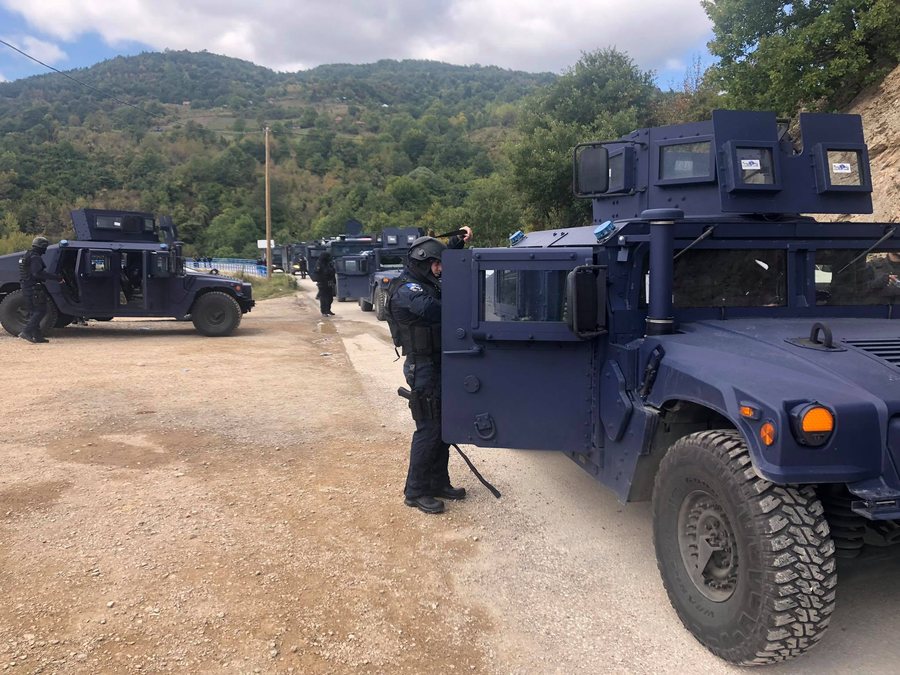
Preliminary intelligence analysis suggests that those involved in the deadly clash near the village of Banjské in northern Kosovo on September 24 were linked to Serbian special forces and Russian military intelligence...
Terror swept through a small village in northern Kosovo last Sunday, sparking new tensions in a restive part of the country.
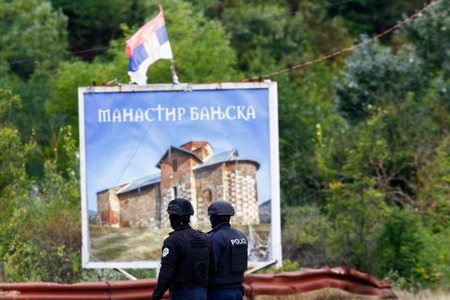
At least 30 armed attackers blocked a road in the Serb-dominated village of Banjska in northern Kosovo and then attacked an Orthodox monastery. As a result of the conflict, 3 people were killed.
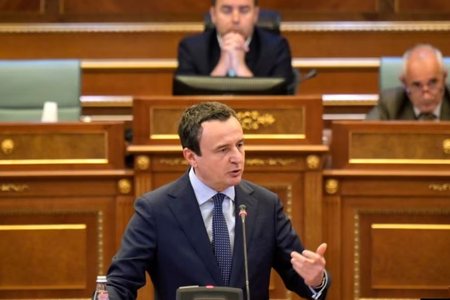
Kosovo Prime Minister Albin Kurti said that one policeman was killed and two others were injured. After police initially repulsed the attack, the attackers, dressed in military fatigues and wearing face masks, barricaded themselves in a Serbian Orthodox monastery where monks and pilgrims are allegedly being held hostage.
The fight started in the early hours of Sunday morning when two trucks without license plates blocked a bridge leading to Banjska. Police arrived and were met with a barrage of heavy weapons fire.
Kosovo police confiscated a heavy armored vehicle, 24 SUVs, 29 anti-tank grenade launchers, 150 explosive dynamite, 142 mortar shells, 75 hand grenades, seven rocket launchers and eight anti-tank mines, and more, according to the Interior Minister of Kosovo Xhelal Sveçla and Police Director Gazmend Hoxha.
US intelligence is saying the terrorist group that attacked the north this weekend is linked to Serbian special forces and Russian military intelligence.
At least this is what Rebekah Koffler, president of Doctrine & Strategy Consulting and a former officer of the US Defense Intelligence Agency, told Fox News Digital.
" Preliminary intelligence analysis suggests that those involved in the deadly clash near the village of Banjské in northern Kosovo on September 24 were linked to Serbian special forces and Russian military intelligence. The attackers appeared to be professionally trained and some of them spoke Serbian and Russian. While the presence of Wagner's mercenaries could not be confirmed, I do not exclude the possibility of their participation in these recent events ," said Koffler.
Koffler also warned about Russian intervention: " Neither Russia nor Serbia, who are staunch allies, do not recognize Kosovo's independence. It is their long-term goal to change the situation. There are indications that Russia and Serbia are working together to ignite another massive Serb-Albanian conflict, to create justification for the deployment of Serbian forces to ensure 'peace and stability' .
" Covert destabilization operations carried out by mercenary groups like Wagner are an old standard craft used by Putin when he needs to hide the hand of the Russian government. It would be consistent with the Russian doctrine of lateral escalation if Putin helped Vucic to conduct a destabilization campaign in Kosovo to divert the attention of Washington and NATO forces from Ukraine. What Putin fears most is the deployment of NATO forces in the arena in Ukraine ," she added.
Kosovo's ambassador to the US, Ilir Dugolli, also spoke to Fox News Digital. He expressed his conviction that Belgrade is responsible for the latest attack in the north.
" There is no doubt that Belgrade is fully responsible for systematically inciting and sponsoring violence against Kosovo's democratic institutions ," said Dugolli. / Fox News


Lini një Përgjigje