


 Shkruar nga Pamfleti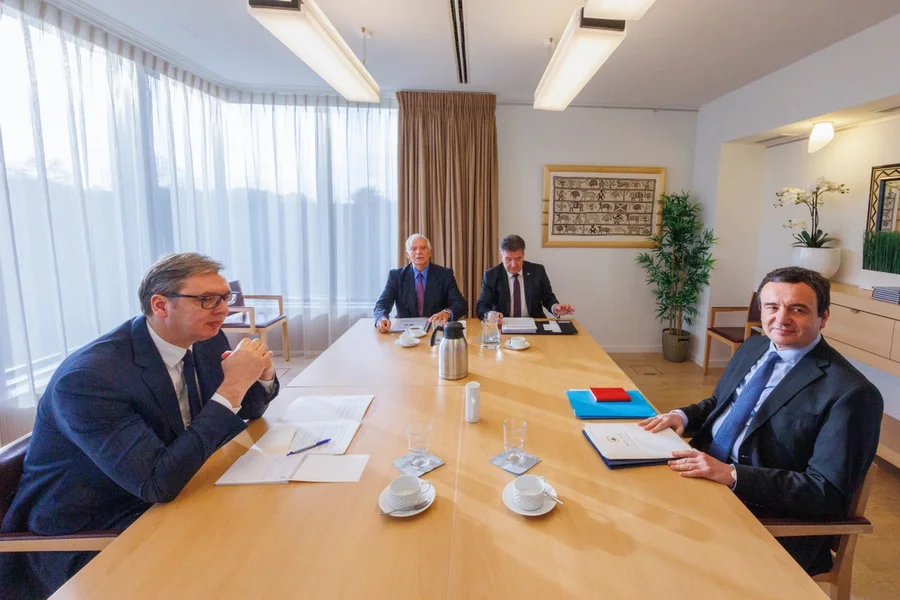
Experts on political issues in Kosovo and Serbia, Artan Muhaxhiri and Dushan Janjiq, believe that the draft statute of the Association of municipalities with a Serbian majority is being kept secret from the public in order to give time to the Prime Minister of Kosovo, Albin Kurti, and the president of Serbia, Aleksandar Vucic, to prepare the public that they have accepted compromises.
This draft statute was presented to Kosovo and Serbia on October 21 by representatives of the European Union (EU), the United States (USA), France, Germany and Italy.
Afterwards, the two sides stated that the document was "acceptable" to them, but details about its content have not yet been released.
Kurti and Vucic have justified keeping the content of this document secret by saying that they were asked to do so by the five Western emissaries.
Kosovo and Serbia reached agreement on the Association in 2013 and then in 2015 on the principles for its establishment.
In 2015, the Constitutional Court of Kosovo found that the agreement was not in full compliance with the Constitution, therefore official Prishtina refuses to implement that agreement.
On the other hand, Belgrade has insisted that the Association be formed as an agreement was reached in Brussels, and not that some points be harmonized with the Constitution of Kosovo, as proposed by the Constitutional Court of Kosovo.
Meanwhile, at the end of February this year, both sides accepted the EU's proposal for the normalization of relations, and then in mid-March, the annex for its implementation. That agreement, among other things, provides that the members of the Serbian community in Kosovo will be given a certain level of self-management.
Afterwards, some foreign diplomats confirmed that this self-management is related to the formation of the Association of municipalities with a Serbian majority.
"The change of attitudes is among the reasons for the non-publication of the statute"
Political analyst and sociologist, Artan Muhaxhiri, said that the Prime Minister of Kosovo, Albin Kurti, has been strongly opposing the Association for years, therefore, according to him, he needs time to prepare his opinion for the new reality.
"Continuous confrontations with previous prime ministers regarding this issue were one of the main pillars of his political campaign. Therefore, Kurt now needs time to slowly create a new and suitable political context, which would rationalize his essential changes in the approach to the Association", he said.
On the other hand, as Muhaxhiri points out, Serbian President Aleksandar Vucic needs time to prepare the public in Serbia for the inevitable: "choosing a special model and format for the recognition of Kosovo's independence".
"The joint statement of Macron, Scholz and Meloni on the necessity of rapid progress, in the sense that Kosovo establishes the Association and Serbia de facto recognizes [Kosovo], is the clearest orientation of the geostrategic and geopolitical plans for the future of our region ", he added.
European leaders such as French President Emmanuel Macron, German Chancellor Olaf Scholz, Italian Prime Minister Giorgia Meloni said in a joint statement on October 27 that Kosovo and Serbia "must fulfill their obligations step by step, in parallel" .
They also said that the de facto recognition of Kosovo by Serbia is expected, which was also repeated by the president of the European Commission, Ursula von der Leyen, on October 30.
Leyen explained that Kosovo should form the Association, while Serbia should recognize the documents and institutions of Kosovo.
Muhaxhiri emphasizes that the Association of municipalities with a Serbian majority is considered one of the main pillars of the agreement between Kosovo and Serbia "because it structurally and systematically determines the long-term integration and institutional cooperation between the municipalities with a Serbian majority and the institutions of the Kosovo state".
Does the "hiding" of the statute harm the process of forming the Association?
Dushan Janjiq from the Belgrade Forum for Ethnic Relations believes that "secret documents" and negotiations, without public participation, create room for manipulation by politicians in Kosovo and Serbia.
"In fact they misuse that dialogue for some of their political purposes. For example, he [Vucic] says 'we will never recognize Kosovo', while Kurti 'I will never accept the Association'. Everything they agree on, if the public rejects it when they find out [the details], it's a waste of energy and a cause of conflict," Janjic told Radio Free Europe.
He added that "the imposition of solutions is not healthy in a democracy".
"The draft statute as it is should not be hidden at all", assessed Janjic, who claims that he had access to that document, but that he cannot give more details.
He only said that the statute starts from the implementation of the basic agreements of 2013 and 2015, which were reached within the dialogue for the normalization of relations, but that it "properly redefines the definition of a self-governing framework for the essential autonomy of the Serbian community".
"This is what exists in Croatia as the Serbian National Council, this is what the minorities in Serbia and Montenegro have in a certain way, but not in the essential sense," he said, adding that at the moment the Serbs in Kosovo have won "the maximum possible".
He affirmed that the Association's latest statute defines well the relations with the central authorities.
Për jetësimin e Marrëveshjes për Asociacionin e komunave me shumicë serbe në Kosovë, aktualisht ekzistojnë katër draft-statute dhe draft-vizione: Draft-statuti i Ekipit Menaxhues, draft-vizioni i kryeministrit të Kosovës, Albin Kurti, draft-statuti i kryeministrit të Shqipërisë, Edi Rama, dhe draft-statuti për Asociacionin i hartuar nga organizata gjermane Friedrich-Ebert-Stiftung (FES).
Janjiç beson se procesi i zbatimit të Marrëveshjes për Asociacionin do të fillojë në fillim të vitit të ardhshëm, pra pas zgjedhjeve parlamentare dhe lokale në Serbi, të cilat janë caktuar për 17 dhjetor.
Çfarë tha Kurti për draft-statutin?
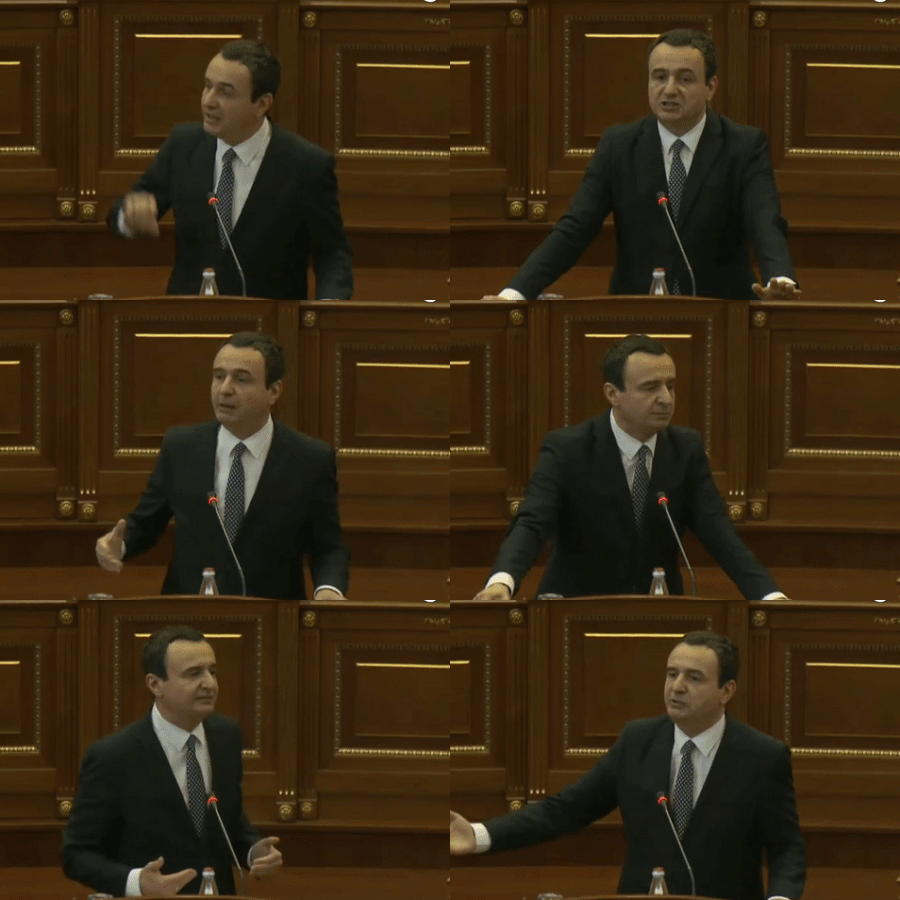
Më 3 nëntor, Kurti tha para deputetëve të Kuvendit të Kosovës se përfaqësuesit e “pesëshes së madhe” i kanë kërkuar garanci se nuk do ta publikojë draft-statutin për t’i shmangur “keqpërdorimet”.
Ai theksoi se mund ta paraqesë vetëm vlerësimin e tij politik, dhe se beson se dokumenti sqaron situatën në lidhje me njohjen e Kosovës.
Lideri kosovar, po ashtu, tha se draft-statuti “ e ndërpret trashëgiminë mosnjohëse të Republikës së Kosovës që ishte çimentuar në marrëveshjet e vitit 2013 dhe 2015”.
Ai, megjithatë, tha se draft-statutin zyrtarisht ende nuk e ka pranuar, por nguli këmbë se ai është shkruar me kujdes ndaj germës së Kushtetutës, më shumë sesa frymës së saj.
Kurti shtoi se në draft parashihet që ky dokument të shkojë për shqyrtim në Gjykatën Kushtetuese të Kosovës.
Në marrëveshjen e parë të Brukselit të vitit 2013 mbi parimet që rregullojnë marrëdhëniet ndërmjet Kosovës dhe Serbisë, gjashtë pikat e para i referohen Asociacionit të komunave me shumicë serbe.
Në atë marrëveshje shkruhet se ky Asociacion do të themelohet në bazë të statutit dhe se shpërbërja e tij mund të ndodhë vetëm me vendim të komunave pjesëmarrëse.
Dy vjet pas nënshkrimit të marrëveshjes së parë të Brukselit, Kosova dhe Serbia nënshkruan edhe një marrëveshje për Asociacionin e komunave me shumicë serbe, e cila harmonizoi parimet e përgjithshme dhe elementet kyçe.
Marrëveshja e vitit 2015 përbëhet nga 22 pika, të cilat specifikojnë kornizën ligjore, qëllimet, strukturën organizative, marrëdhëniet me autoritetet qendrore, buxhetin dhe mbështetjen për Asociacionin e komunave me shumicë serbe.
Disa prej qëllimeve përmenden se janë: forcimi i demokracisë lokale; kryerja e mbikëqyrjes së plotë për zhvillimin e ekonomisë vendore; kryerja e mbikëqyrjes së plotë në fushën e arsimit; kryerja e mbikëqyrjes së plotë në kujdesin parësor dhe dytësor shëndetësor dhe social; kryerja e mbikëqyrjes së plotë në koordinimin e planifikimit urban dhe rural; ofrimi i shërbimeve për anëtarët e saj në përputhje me ligjet e Kosovës.
Sipas Marrëveshjes së Brukselit, Asociacioni i komunave me shumicë serbe duhet të ketë një Kuvend, një kryetar që përfaqëson Asociacionin para autoriteteve qendrore dhe jashtë Kosovës, një zëvendëskryetar, një këshill, një bord, një administratë, një zyrë për ankesa, ndërkaq që do të duhej të përcaktohej me statut.
Çfarë tha Vuçiçi?
Even the president of Serbia, Aleksandar Vučić, has said that he cannot speak in public about the details of the draft statute of the Association of municipalities with a Serbian majority, but that the document is "a good basis for the future".
"You see, we behaved very correctly and no details or anything else appeared anywhere in the newspapers, because this is the agreement," said Vucic.
On October 26, Vuçiqi said that he is fully ready for the formation of the Association, but added that Serbia cannot accept Kosovo's membership in the United Nations or Kosovo's independence.
Then, on November 2, he repeated that "it is a lie that he is ready to sign the independence of Kosovo".
What has the EU ordered?
Radio Free Europe addressed the EU with the question why the draft statute for the formation of the Association is being kept secret from the public, but has not received an answer.
The EU's special envoy for the dialogue between Kosovo and Serbia, Miroslav Lajcak, said at the end of October that this is a modern European way to solve the sensitive issue of minority protection in accordance with the best European practices and standards. and which "does not coincide with the red lines of the parties that were previously defined".
He confirmed that both sides had comments and questions regarding this European proposal and expressed the hope that in the coming weeks the open questions and doubts will be clarified.
He announced a meeting between the chief negotiators of Pristina and Belgrade to discuss the next steps in the implementation of the Agreement for the normalization of relations.



Lini një Përgjigje