


 Shkruar nga Pamfleti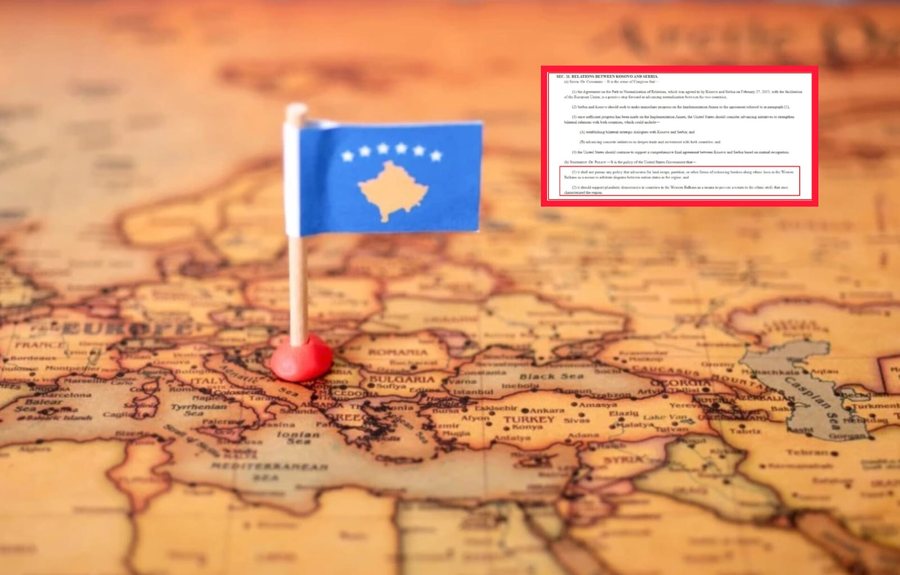
If the "Western Balkans Democracy and Progress Act" is passed by the US Congress and Senate and signed by President Donald Trump, it will make the United States legally committed to its foreign policy not supporting territorial division, secession, or any other border change based on ethnicity in the Western Balkans, including the borders between Kosovo and Serbia...
A bill called the "Western Balkans Democracy and Progress Act", which includes a ban on changing existing borders in the Western Balkans, was referred to the US House Foreign Affairs Committee and the House Judiciary Committee on October 9 of this year for consideration.
This proposal is part of Section 11 of the draft law, which deals with relations between Kosovo and Serbia, and emphasizes that the agreement on the normalization of relations between Belgrade and Pristina, reached on February 27, 2023 with the support of the European Union, should be implemented quickly. The law also promotes bilateral talks, concrete initiatives to increase trade and investment, as well as support from the United States for a final agreement. For the first time, this draft law also includes a paragraph on “non-change of borders”.

ARTICLE 11. Relations between Kosovo and Serbia:
(1) The Agreement on the Roadmap towards the Normalization of Relations, which was adopted by Kosovo and Serbia on 27 February 2023, with the facilitation of the European Union, is a positive step forward in advancing normalization between the two countries;
(2) Serbia and Kosovo shall endeavour to make immediate progress on the Implementation Annex to the agreement referred to in paragraph (1);
(3) once sufficient progress has been made on the Implementation Annex, the United States should consider advancing initiatives to strengthen bilateral relations with both countries, which could include;
(A) establishing bilateral strategic dialogues with Kosovo and Serbia;
(B) advancing concrete initiatives to deepen trade and investment with both countries;
(4) The United States should continue to support a final comprehensive agreement between Kosovo and Serbia based on mutual recognition.
(b) Policy statement of the United States Government that—
(1) will not pursue any policy that supports territorial exchanges, partition or other forms of border redrawing along ethnic lines in the Western Balkans as a means of arbitrating disputes between nation-states in the region; and
(2) should support pluralistic democracies in the Western Balkan countries as a means of preventing the return of the ethnic conflict that once characterized the region.
If the "Western Balkans Democracy and Progress Act" is approved by the US Congress and Senate and signed by President Donald Trump, it will make the United States legally committed to its foreign policy not supporting the division of territories, secession, or any other border change based on ethnicity in the Western Balkans, including the borders between Kosovo and Serbia, as well as the possible separation of Republika Srpska.
The deadline for consideration of this bill has not yet been set, and committees may request testimony, changes, or amendments before the bill returns to the appropriate House for a vote. The bill must pass committee, and the committee may make changes or not approve it at all. If it passes committee, it goes to the House of Representatives or Senate for a vote, depending on where the procedure began. Only after approval by both houses and signature by the president does it become law.
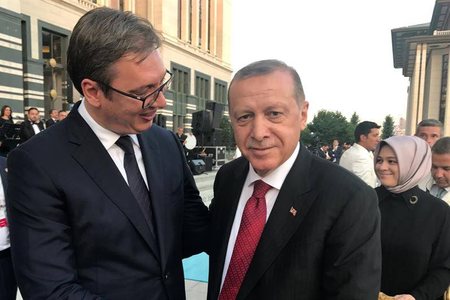
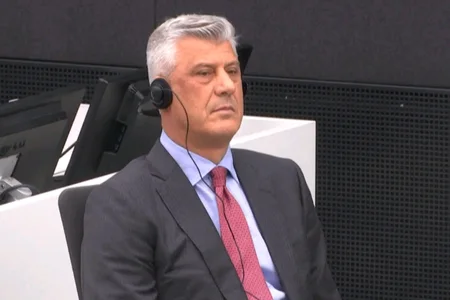
We recall that discussions on the exchange of territories between Kosovo and Serbia began more intensively around 2018, after several years of deadlock in the dialogue mediated by the European Union. The idea envisaged changing the borders, mainly for the Serb-majority areas in northern Kosovo and Albanian areas in other parts of Serbia. The then President Hashim Thaçi, as one of the supporters of this idea along with Serbian President Aleksandar Vučić, said that the idea is not a division, but a correction of the borders. But this idea was strongly opposed by the political spectrum in Kosovo, but also by some of Kosovo's allies.
One of the main reasons for the opposition was the fear that this would also encourage the departure of Republika Srpska from Bosnia and Herzegovina, while also straining relations in other countries in the region, such as Macedonia and Montenegro.



Një tjetër bllof i një administrate që nuk di të bëjë diplomaci! As serbeve as kosovarëve nuk u intereson vendosja e njohjes reciproke dhe respektimit të kufijve shtetërorë të secilit. Kosovës sepse ajo mund të mbijetojë si shtet vetëm duke u qarë përditë nga rreziku serb,duke mbajtur në kufij KFOR dhe duke qenë nën mbrojtjen e vazhduar të Perëndimit teksa realisht ëndërron Perandorinë Osmane! Serbëve jo se jo sepse e konsiderojnë Kosovën pjesë të vendit të tyre. Prandaj këto copa letre nuk vlejnë as për t'u përmendur fare,plus që administrata e Trump sot ka nevojën urgjente të ruajë rolin e liderit në botë ,rol që lëkundet nga hyrja prepotente ne skenë e Kinës dhe rikthimi i egër i Rusisë Mendoni ju se përpara një marrveshje me këto fuqi të mëdha ku të konfirmohej roli lider i Amerikës,do pyeste më Trump për" grykën e Kaçanikut"? Këto lajme janë karavidhe nga shporta e bythëshqyerve sorosianë që duan t'a shesin sapunin për djathë.. Çështja e Kosovës nuk ka për t'u zgjidhur kurrë ,sepse shqiptarët nuk dinë të formojnë shtet