


 Shkruar nga Dragan Šormaz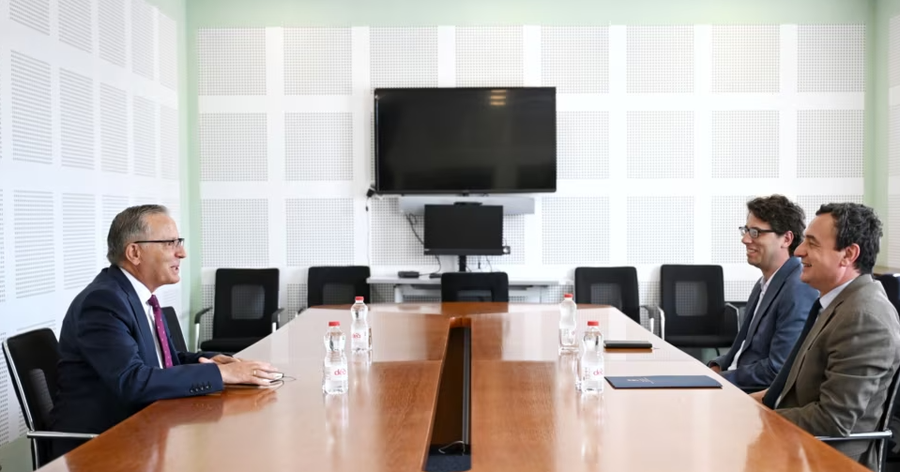
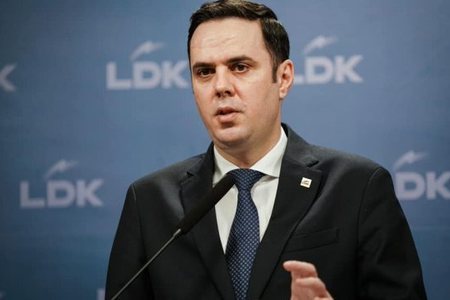
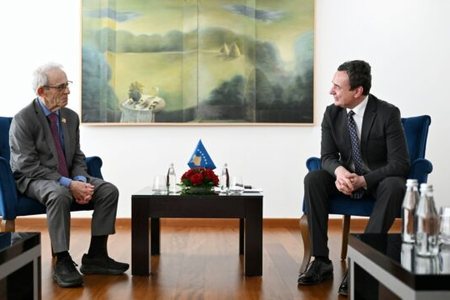
After meeting with the leader of the Democratic Party of Kosovo, Bedri Hamza, the acting Prime Minister, Albin Kurti, said that the conversation was constructive, but did not produce a concrete result for the formation of new institutions. Hamza, on the other hand, confirmed that his party will remain in opposition, adding that the LVV has the responsibility for the formation of institutions.
"Based on the conversations we have had and the discussions we have had, normally correct, our position is that PDK is an opposition party for this mandate and we wish success to Mr. Kurti and all those who meet, talk, to give the country institutions, including all institutions," Hamza told reporters.
Kurti said that the meeting took place in a constructive manner and in an atmosphere of willingness and "interest in giving Kosovo new institutions."
"Currently, I cannot say that we have any concrete results, any achievements that I could share with you," Kurti said, adding that the meetings aim to ensure that the country has an Assembly, Government and president within the constitutional deadlines.
Kurti said that as the leader of the winning party in the June elections, his responsibility is for the formation of the Government, but reiterated the position that on the issue of the president, the responsibility lies with all parties.
He reiterated his stance on a consensual figure for the post of president, emphasizing that such a candidacy would be in accordance with the Constitution.
"At the starting point, we would have a consensual figure. So, someone who does not belong to any political party, someone who is beyond the controversies of the current scene, someone who has proven national, professional, civic values and in this way be an expression of unity as our constitutionality requires. This is not our idea and our request, but this is the spirit and letter of the Constitution," Kurti said.
According to him, LVV, PDK and LDK together have sufficient numbers to constitute all institutions.
But, during his statement after the meeting, Hamza said that the responsibility for the formation of institutions belongs to LVV, emphasizing that all other parties cannot elect the new head of state without Kurti's party.
"The LVV must find partners, according to its needs and criteria and their interests, to provide the country with institutions," Hamza told reporters.
Meanwhile, Kurti stated that with 53 mandates from the LVV, and those of the non-Serb minority community parties, he has over the 61 votes needed for the Government, but did not indicate whether voting for the new executive will proceed immediately after the constitution of the Assembly.
"We are interested in giving time to discussions, consultations, so that the legislature has not only a speaker and a government, but also a president," Kurti said.
A meeting with LDK leader Lumir Abdixhiku and Kurti is scheduled for 18:00.
The meetings between political leaders come two days after the certification of the results of the June snap parliamentary elections, which were held after months earlier, parties failed to reach consensus on the country's new president.
Kurti has also invited the leader of the Alliance, Ardian Gjini, to a meeting, but he has rejected the invitation, arguing that his party has already presented six conditions that Kurti would have to meet in exchange for supporting the creation of institutions.
Political analyst Ilir Deda assessed these meetings as positive, but stressed that it is high time "for political leaders to provide answers for the creation of institutions with one or two meetings at most."
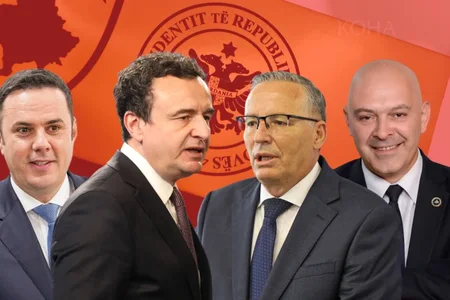
Deda told Radio Free Europe that holding new elections would be very harmful for the country, adding that "Kurti, Hamza and Abdixhiku have an extraordinary responsibility to come to an agreement together and give Kosovo a functional government, a president and political stability in the next four years."
According to the final results of the June 7 elections, Kurtiti's LVV won 53 seats, PDK 22 seats, LDK 18 and the Alliance seven.
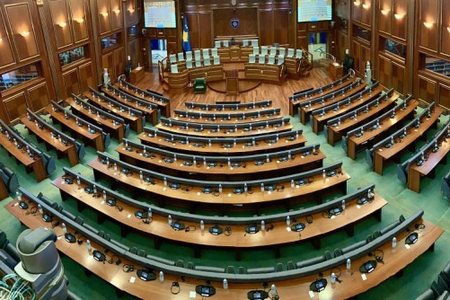
After the certification of the results, the deputies of the new legislature are faced with the task of constituting the Assembly, forming the Government, and electing the president.
The first two require 61 votes in the 120-seat Assembly. Kurti's party has the votes for the first two processes, as it counts on the votes of non-Serb minority parties - which have ten mandates.
However, there is still no agreement or consensus about the name of the president.
The president requires the presence of two-thirds of the deputies in the Assembly for the vote in the first two rounds to be valid.
In the absence of a political agreement, this is impossible for any parliamentary party.
The Constitution stipulates that the president must be elected within 60 days of the constitution of the Assembly.
If this does not happen, the Assembly is dissolved and the country goes to new elections. If the country goes to elections again, then they would be the fourth parliamentary elections since February 2025.
Parties' positions
A day earlier, LVV official Arbërie Nagavci told Radio Free Europe that her political entity has the necessary votes to form a new government and that it will seek consensus with other parties on the election of the president.
This party demands that the president be a consensual, non-partisan figure, as months ago it proposed two figures from civil society, Feride Rushiti and Hatixhe Hoxha, for the post of president. However, the LVV did not reach an agreement with the opposition parties and these candidacies failed to receive the necessary votes.
The three opposition parties, PDK, LDK and the Alliance, have presented several conditions for possible cooperation with Kurti's party.
Hamza said that before talking about possible government cooperation, there are a number of topics, such as salaries and pensions, energy capacities, American gas, and Kosovo's membership in the European Union, that will need to be addressed with the LVV.
For LDK, "a prerequisite for political existence," according to Abdixhiku, is Kosovo's strategic orientation, including American gas.
Meanwhile, among the Alliance's six conditions are that Kosovo accept the American gas project, the construction of a coal-fired power plant, and several other conditions related to the economy.
Political expert Ilir Deda told Radio Free Europe that all the demands of the opposition parties are in the interest of Kosovo and, according to him, they aim to increase the well-being of citizens and deepen "Kosovo's partnership with the United States."
Kurti's incumbent government is facing calls from the US Embassy, opposition parties and chambers of commerce to become part of regional liquefied natural gas (LNG) network initiatives, which are supported by the United States.
Two days ago, Chargé d'Affaires at the US Embassy in Pristina, Anu Prattipati, reiterated the call for Kosovo to be supplied with US LNG "to secure future US investments."
However, so far, the Kosovo executive has not given any signals that they are willing to become part of these initiatives, while the acting Minister of Economy, Artane Rizvanolli, and Kurti have mentioned the idea of gasifying domestic coal./ REL


Lini një Përgjigje