


 Shkruar nga Pamfleti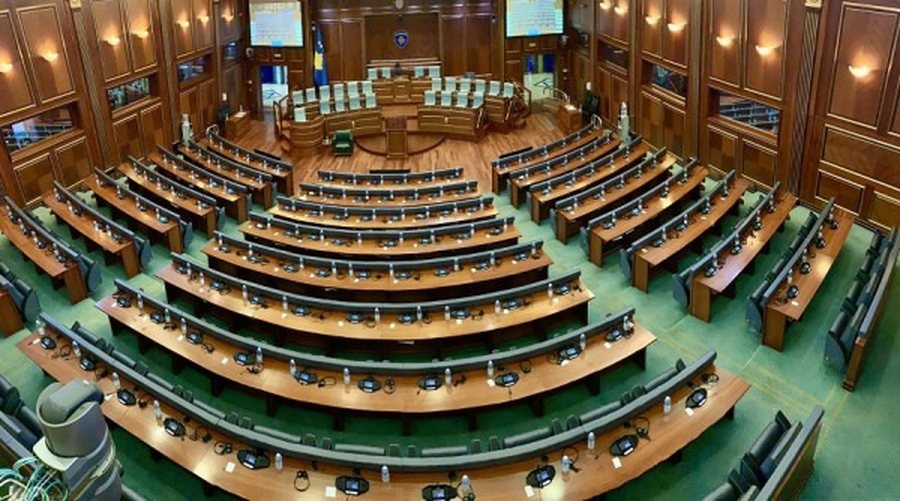
The Central Election Commission (CEC) has certified the results of the early parliamentary elections, about a month after they were held. The June 7th elections were the third parliamentary elections that Kosovo has held in less than a year and a half.
The Vetëvendosje Movement (LVV) won 53 seats. The opposition parties, the Democratic Party of Kosovo (PDK) won 22 seats; the Democratic League of Kosovo (LDK) 18 seats and the Alliance for the Future of Kosovo (AAK) seven seats.
At the CEC meeting held on Wednesday morning, the head of this institution, Kreshnik Radoniqi, announced that there are only changes in the list of Alliance MPs, as two elected MPs have resigned from their mandates. As a result, Adrian Gjini and Daut Haradinaj will be replaced by Bekë Berisha and Burim Ramadani.
What does certification of results mean? What are the next steps towards the formation of new institutions and what deadlines does the law foresee? Can the process be unblocked if the parties do not reach an agreement?
We explain these and the procedures that follow certification below.
What after certification?
After the certification of the election results, the Speaker of Parliament and Acting President of the country, Albulena Haxhiu, is tasked with calling a constitutive session of the Assembly.
According to the Constitution, the hearing must be held within 30 days of the certification of the results.
In this session, the Assembly is constituted, the Speaker and Deputy Speakers are elected, and then the procedures for the formation of the new Government continue.
After the constitution of the Assembly, Haxhiu nominates the winning party of the elections as the mandate to form the Government, in this case the Vetëvendosje Movement.
Radio Free Europe asked Haxhiu's office when it plans to call the constitutive session, but has not received a response.
Naim Jakaj, a researcher at the Kosovo Law Institute (IKD), tells Radio Free Europe that, although the constitutional deadline for holding the constitutive session is 30 days from the certification of the results, it can be called much earlier.
“Since the election results are already known, there is no objective reason for the process to drag on,” he says.
For example, in the last parliamentary elections, held months ago, the elected deputies constituted the Assembly and voted for the new Government within a single day - in a single session on February 11.
This became possible after representatives of the parliamentary parties and the then Speaker of the Assembly, Dimal Basha, had previously agreed on the agenda, including the voting in batches of the Deputy Speakers of the Assembly.
The process was also facilitated by the convincing victory of the party of the incumbent Prime Minister, Albin Kurti, the Vetëvendosje Movement.
Can the process take longer?
Since the ruling party appears to have the votes to constitute the Assembly and form the Government, these two processes are not expected to encounter obstacles.
However, another issue could keep the country in institutional and political crisis: the election of a new president.
Kurti's party has won 53 seats in the 120-seat Parliament, and needs at least 61 for the new Parliament and Government.
Given Kurti's cooperation so far with non-Serb minority parties - which enjoy 10 seats - then the votes for this process are not expected to be a problem.
LVV official Arbërie Nagavci told REL a few days ago that the ruling party has secured the votes to form a new government and that it will seek consensus with other parties to elect the president.
According to Jakaj, Kurti will be forced to sit down with opposition parties to find a political agreement, to ensure that the country will have long-term functioning institutions.
"A party that puts the interest of the state first must keep in mind that any delay in the formation of institutions produces costs for the country, whether in European integration, economic development, the implementation of reforms or the loss of important opportunities for citizens," says Jakaj.
What happens if no agreement is reached?
The presence of 2/3 of the deputies in the 120-seat Assembly is required for the vote for the president of Kosovo to be valid.
In the absence of a political agreement, this is impossible for any parliamentary party.
The Constitution stipulates that the president must be elected within 60 days of the constitution of the Assembly.
If this does not happen, the Assembly will be dissolved and the country will go to new elections, says Jakaj.
So far, political parties have not held talks on a possible political agreement for the president.
Kurti has expressed his openness to talks with other parties, while Nagavci told REL that their party "will do everything" within its mandate to achieve the necessary votes to elect a new president.
The PDK has said that the party would be open to talks with all parties, not excluding the LVV, while the LDK has set several preconditions for an agreement on the creation of new institutions, including the issue of American gas.
Jakaj underlines that the parties' statements so far "show that the path towards an agreement will not be easy."
"Kurti has expressed readiness for dialogue with other parties. But, here, full transparency would be needed to know if there is a real will. Public statements are not enough. There is no obstacle for the parties to immediately start discussions on a political agreement, because any delay increases the risk of a new institutional crisis and the repetition of elections," Jakaj emphasizes.
If the country goes to the polls again, it would be the fourth parliamentary election since the beginning of 2025./ REL


Lini një Përgjigje