


 Shkruar nga Pamfleti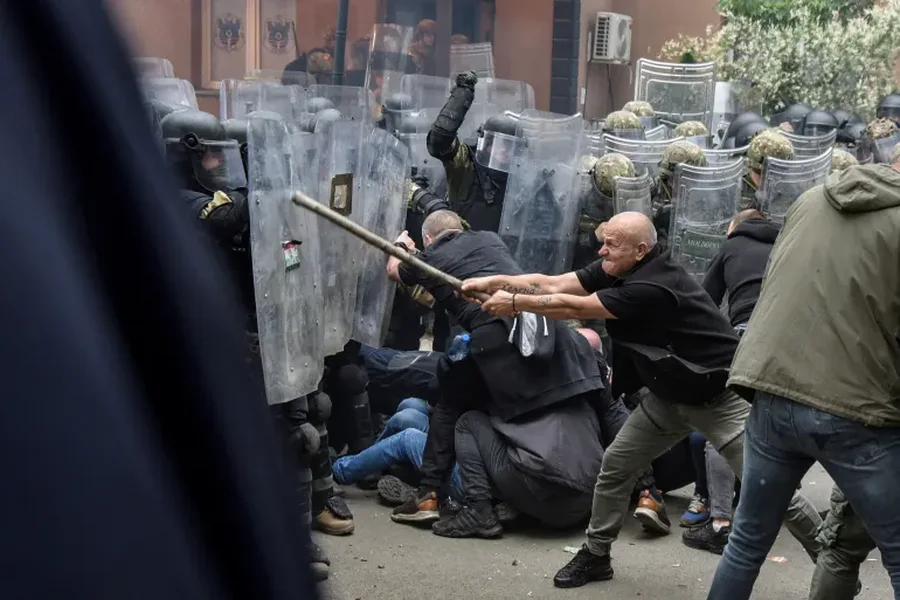
In Bosnia, as in Kosovo, the US and the EU seem uninterested in curbing Russian influence; instead, they have sought to accommodate militant nationalists backed by Moscow. Why? Because the West has come to the conclusion that it is not worth the time or effort to deal with people like Vucic, Dodik or Covic in a region as peripheral to its interests as the Western Balkans.
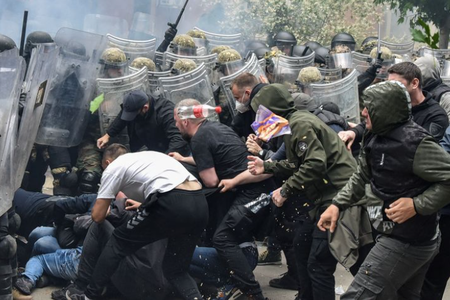
Images of militant Serb nationalists wielding pipes and throwing stones attacking NATO peacekeepers in the northern Kosovo town of Zvecan in late May put the Balkan country in the international spotlight once again. Violence erupted in the country's Serb-majority north after Kosovo police escorted mayors to work who had recently been elected in local elections that ethnic Serb residents had boycotted.
The news that Serbia had simultaneously put its military on high alert had many people unfamiliar with Balkan affairs wondering if another armed conflict would break out in Europe.
The answer is no, we are not on the verge of another Balkan war. But this does not mean that the situation in Kosovo is not alarming.
Apart from the violence, what is raising concern in the region is the role that the United States and the European Union have played in fueling a dangerous new phase of Serbian nationalist militancy in Kosovo and the Western Balkans more broadly.
Kosovo declared its independence from Serbia in 2008, supported by the USA, United Kingdom, Germany, France and Italy, also known as Quint.
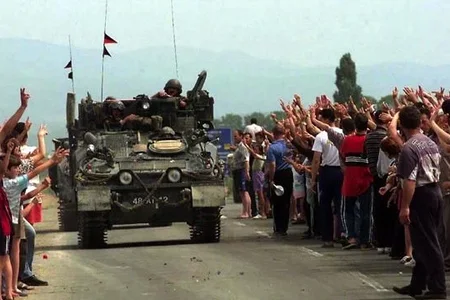
It came after nearly a decade of international oversight under the UN Interim Administration, which was established at the end of the Kosovo War. During this interim period, Kosovo remained nominally part of the then Federal Republic of Yugoslavia as an "autonomous province", but Belgrade exercised no actual authority over any aspect of the territory's governance, except for a limited presence in part of of the municipalities with a Serbian majority in the north.
Kosovo had also enjoyed a considerable degree of self-government during the socialist period, although its ethnic Albanian majority was a frequent target of repression. In 1989, when Slobodan Milosevic took power in Belgrade, he installed a new constitutional regime in Kosovo and turned the region into a veritable police state with ethnic Albanians stripped of almost all civil liberties. This draconian rule eventually resulted in armed resistance by the Albanian community and ultimately in the military intervention of NATO.
Over the past 15 years, the US and the EU have sought to secure a normalization agreement between Pristina and Belgrade. Despite successive rounds of high-level talks, the two sides remain as far apart as ever on a solution – as the clashes in Zveçan neatly illustrate.
But this is not about equal guilt. The problem remains almost entirely on the Serbian side.
The increasingly autocratic regime of Serbian President Aleksandar Vucic is categorical in his refusal to accept Kosovo's sovereignty. At the last round of talks held in Ohrid in March, Vučić refused to even sign the supposed deal he had "agreed on", telling Serbian citizens in a subsequent speech that he did not want to "make a deal international legal agreement with the Republic of Kosovo".
In media linked to the Serbian regime, the ethnic Albanian community, which makes up 92 percent of Kosovo's population, is routinely referred to with ethnic slurs, while the government in Pristina is described as the "provisional" local authorities. And in Serb-majority northern Kosovo, Belgrade maintains a kind of clandestine occupation, administered through a network of ultra-nationalists and local gangsters, as The New York Times recently detailed.
But Serbia's reactionary stance is not limited to Kosovo.
The Serbian leadership and large segments of the public that have been inundated by more than three decades of revisionist state propaganda exist in their own world. Neither Belgrade nor much of the Serbian public acknowledges that the Milosevic regime – in whose last cabinet Vucic served as information minister – was the main architect of the breakup of Yugoslavia or of the subsequent decade of conflict that engulfed the region.
They falsely claim that Serbia did not wage wars of aggression against Slovenia, Croatia, Bosnia-Herzegovina and Kosovo between 1991 and 1999. They also falsely claim that Serbia did not orchestrate a systematic, genocidal campaign of extermination, terror and deportations against the non-Serb population of Bosnia between 1992 and 1995, which disproportionately affected the Bosnian community.
In fact, the genocidal violence directed against Bosniaks by Milosevic and his Bosnian Serb proxies was so severe that roughly half of all casualties during the Yugoslav Wars and 82 percent of all civilian deaths during the Bosnian War were ethnic Bosniaks. .
Post-war Bosnia has remained riven by dysfunction and strife due to the US-brokered Dayton Peace Accords and the extreme degree of autonomy granted to ethnic chauvinist elements under the country's new constitution. In the Republika Srpska entity, which Milosevic's genocidal purge created as a Serb-majority region loyal to Belgrade, Milorad Dodik's separatist regime undermines even the most modest reforms while explicitly pushing for the breakup of Bosnia, with the Russians and Serbian aid.
In light of Russia's full-scale invasion of Ukraine, one would think that there would have been severe political and diplomatic consequences for Serbia and its proxies due to their close ties to the Kremlin and their expansionist machinations in Western Balkans. But exactly the opposite has happened.
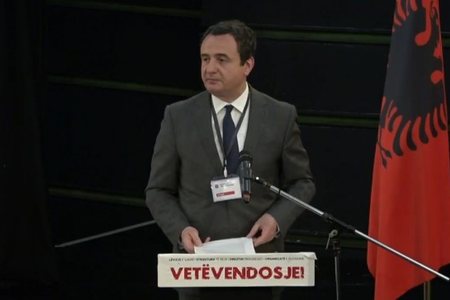
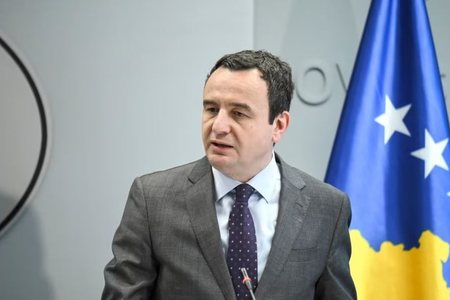
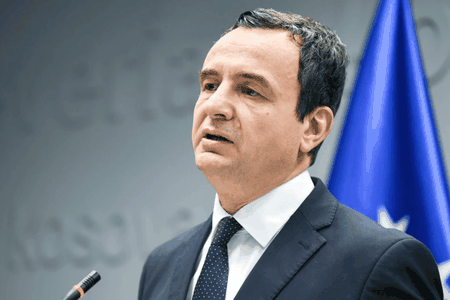
For example, in the case of clashes between Serbian nationalists and NATO peacekeepers in Zveçan, Quint condemned the country's prime minister, Albin Kurti, for sending the police to escort the newly elected mayors to their offices in the north.
The US also excluded Kosovo from the NATO-led Defender 23 military exercises and threatened local officials with sanctions. Washington's ambassador to Pristina, Jeffrey Hovenier, also said that his country will no longer help Kosovo in its search for international recognition. On the other hand, Serbia and Vucic suffered no consequences.
Republika Srpska's Dodik has also faced no consequences for regularly meeting with Russian President Vladimir Putin, whom US and European officials have repeatedly called a "war criminal". The unit is still receiving EU funding for various development projects, and although Dodik is under US and British sanctions, he continues to openly lobby US officials in Washington.
The Bosnian Serb leader is also not the only anti-state actor in Bosnia to benefit from a curiously high degree of Western appeasement. Dragan Covic, head of the Croatian nationalist HDZ party, which also enjoys Kremlin patronage, appears to have his interests directly protected by the internationally appointed Office of the High Representative (OHR).
Last October, the OHR used its broad executive powers to rewrite Bosnia's electoral laws in its favor and then in April of this year changed the Federation entity's constitution in order to install an HDZ-dominated government.
In Bosnia, as in Kosovo, the US and the EU seem uninterested in curbing Russian influence; instead, they have sought to accommodate militant nationalists backed by Moscow. Why? Because the West has come to the conclusion that it is not worth the time or effort to deal with people like Vucic, Dodik or Covic in a region as peripheral to its interests as the Western Balkans.
The US and EU have instead opted for a kind of Kabuki politics, maintaining a performative stance of opposition to militant nationalists but expending political and diplomatic capital to help them achieve their goals in the fleeting hope that this it will calm them down.
The result, of course, has only been a bolder form of nationalist extremism in the Balkans – much of it sponsored by the West.
Unfortunately, both the US and the EU seem fully committed to this course, as evidenced by their surreal reactions to the violence in Zvecan. This is likely to remain so until the domestic public, including the Bosnian and Kosovar diaspora in the West, and their legislative allies, can effectively demonstrate why the dual Western relationship in the Balkans is dangerous to the stability and security of Europe.
Until then, however, Belgrade is likely to continue fomenting chaos, knowing that Washington and Brussels will look the other way./ Adapted from Al Jazeera, Pamphlet


Lini një Përgjigje