


 Shkruar nga Pamfleti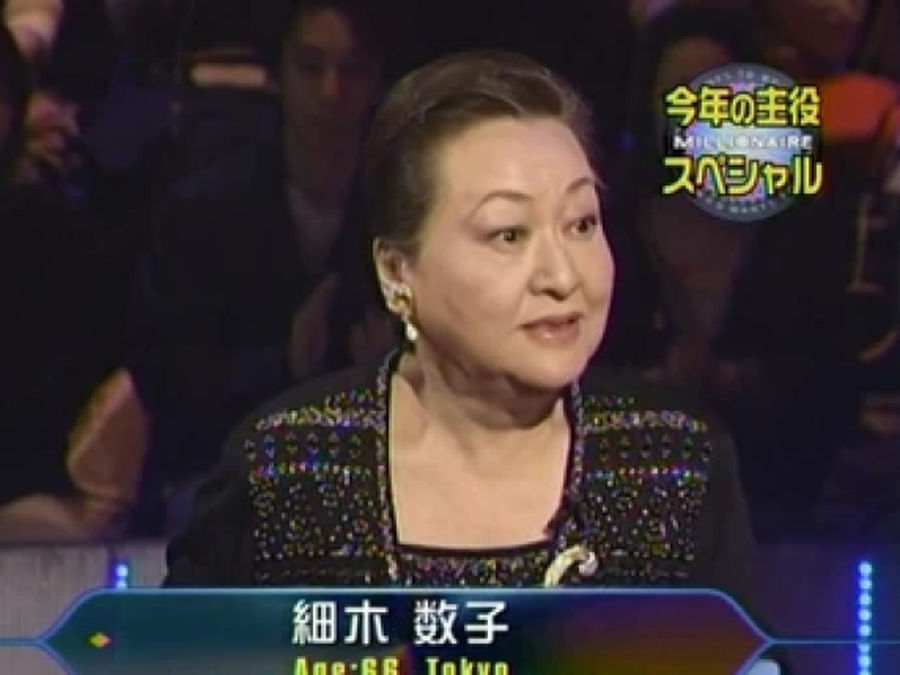
Kazuko Hosoki has been one of the most popular fortune tellers in Japanese history. For more than twenty years, she was considered a figure of great public influence, becoming a social phenomenon in the early 2000s. Her book on horoscopes, based on her system called “Rokusei Senjutsu” (Six Star Astrology), sold an estimated 50 million copies in 1982 and entered the Guinness Book of Records as the best-selling astrology book in the world.
Hosoki was born in Tokyo in 1938 and grew up in difficult economic conditions after World War II. She has said that as a child she scavenged for food in the slums, an experience that influenced her ambition to achieve success. At a young age, she became involved in the nightlife of Tokyo's Ginza district, where she ran several clubs and earned the nickname "Queen of Ginza." These venues were frequented by important figures, including politicians and representatives of the business world.
According to some sources, her rise was also accompanied by questionable financial practices and links to organized crime. After a major financial loss, she changed her career direction. In 1983, she married Japanese stockbroker Masahiro Yasuoka, who died a few months later, leaving her a considerable fortune.
With these financial means, Hosoki focused on astrology and created her own system of fortune-telling. Unlike traditional Chinese models, which are based on the four elements of birth (day, month, year, and hour), her system used six “stars” and relied primarily on the year of birth. She formulated cycles of fortune, including “golden years,” “waiting years,” and “difficult years,” which she believed were associated with risks and failures.
Hosoki was known for her direct and often harsh style of communication. On television shows, she would give blunt advice about the personal and professional lives of guests, often using critical language. This style of communication became part of her public image and helped increase her audience, but it also caused controversy.
During the 2000s, she hosted successful television programs and published dozens of books, many of which became bestsellers in Japan. At the same time, she expressed conservative views on the role of women in society and supported some controversial political positions.
However, her career was marred by numerous accusations of spiritual fraud. Some former followers alleged that she exploited people's fears to sell objects such as amulets and other products at high prices. Others criticized her for exerting excessive influence over individuals' personal decision-making.
From 2008, Hosoki began to gradually withdraw from public life, leaving the activity to her daughter, Kaori Hosoki. However, the latter was unable to repeat the same level of success.
Kazuko Hosoki died in 2021 at the age of 83 from respiratory failure. Despite the controversy, she remains a well-known figure in Japanese pop culture, associated with the combination of superstition, media, and personal influence on the public.








Lini një Përgjigje