


 Shkruar nga Pamfleti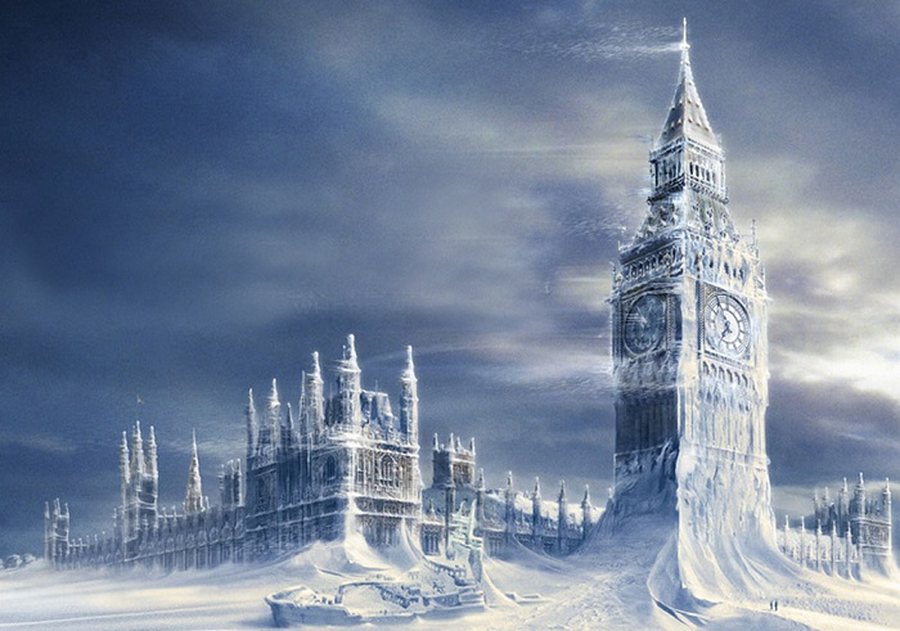
A recent study from the University of California at Riverside, published in the journal Science, suggests an unusual scenario for the future of Earth's climate: a new ice age, triggered by the planet's own natural mechanisms.
"A previously overlooked mechanism in Earth's carbon cycle could become an 'exaggerated' corrector for global warming: instead of stabilizing the climate, it could cool it to the point of plunging the planet into a new ice age," the study says.
According to the study, at the heart of this scenario is the carbon cycle, where rain absorbs carbon dioxide (CO?) from the atmosphere and breaks down rocks, releasing calcium and phosphorus that end up in the ocean. These feed plankton, which through photosynthesis absorb CO2 and, when they die, sink to the bottom of the ocean, removing it from the atmosphere for very long periods. Studies of the sediments themselves show how the carbon cycle has undergone drastic changes during glacial and interglacial periods.
This "cooling mechanism" could continue beyond necessity, acting like a non-stop air conditioner, and thus, in the very distant future, tens or hundreds of thousands of years, could trigger extreme cooling and an ice age.
However, the researchers emphasize that this process has no immediate impact, and global warming remains the main threat for the coming centuries. Global warming remains the main threat for the coming centuries. According to them, global warming will continue in the coming decades with tangible consequences, from an increase in extreme events to rising sea levels. For this reason, the researchers explain, emission reduction policies and adaptation strategies remain the main priority.
Current climate models cannot accurately predict the long-term impact of this phenomenon, so reducing emissions and adapting to the climate change that is already occurring remains a priority.








Lini një Përgjigje