


 Shkruar nga Amy Kazmin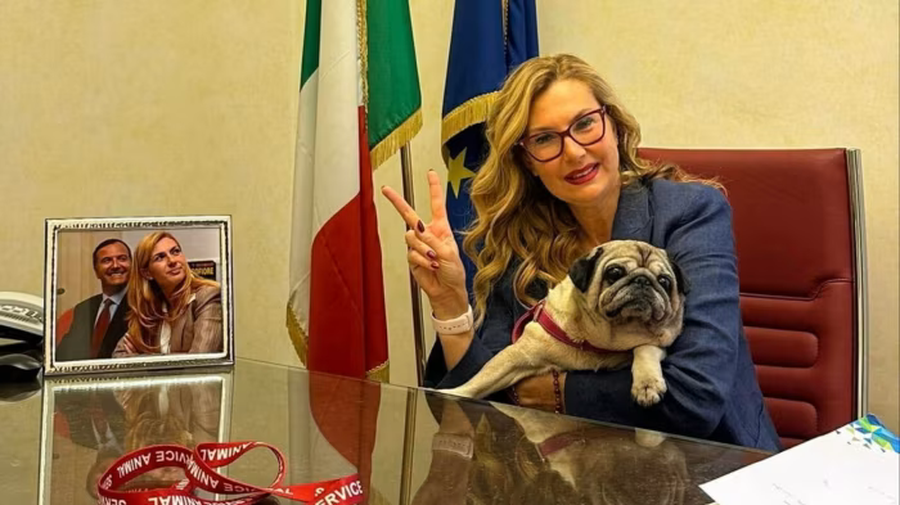
With fewer children and grandchildren to pamper, Italians are channeling more of their emotional energy, and money, towards a growing group of pampered pets, with dogs the favorite.
Rome's newest luxury airport hotel is designed to be a calming oasis for its guests. Rooms, with underfloor cooling, are infused with aromatic oils like lavender, tea tree and peppermint, and each has a private lawn. The property offers arnica massages, a shared garden where guests can socialize, and large screens for video calling with distant loved ones.
However, weary human travelers won't find support here. With a capacity for 40 overnight guests, Dog Relais is an airport hotel for dogs whose traveling owners need safe shelter for their pets while they're away.
The hotel, which opened in July, is part of the country's rapidly expanding pet services industry, catering to animals whose status has risen at the same time as Italy's annual birth rate has fallen sharply. With fewer children and grandchildren to care for, Italians are channeling more of their emotional energy, and money, into a growing group of beloved pets, with dogs the favorite.
Official pet ownership rates in Italy, around 40 percent of households report having at least one pet, may still be much lower than those in the UK and the US, at 60 percent and 66 percent respectively. But Tortorella, who also runs a dog daycare in central Rome, says that while Italians have always loved dogs, "in the last 10 years, dogs or cats have really been treated as family members. It's a new, pet-friendly culture. They do the same things for their dogs as you would do for a child."
From doggy daycare with pick-up and drop-off services, to specialized pathology labs, to organizing solemn pet funerals, new enterprises are meeting the needs of the entire pet lifecycle.
In 2022, Italians spent 6.8 billion euros on pet care, according to Nomisma, an Italian consultancy. While dogs used to be fed table scraps, people are increasingly careful about what they give them.
"They worry about what they eat, the quality. Now people cook for their pets," Tortorella said.
In Rome, dogs have access to public places that are often off limits to animals in other parts of the world. In California, for example, it is illegal to take dogs into grocery stores or restaurants. Here, however, no one sees them at all in grocery stores, indoor restaurants, or shopping malls. My local grocery store even has two designated shopping carts for dogs to ride. They too have trespassed the corridors of power. Senator Michaela Biancofiore recently won the right to bring her beloved 12-year-old dog, Puggy, to work, setting a precedent.
Not everyone is happy with the newfound importance of pets. The late Pope Francis repeatedly criticized couples who choose to have more pets than children, which he said “diminishes” humanity.
But politicians are embracing the trend. Prime Minister Giorgia Meloni’s government has started allocating 250,000 euros a year for an “animal bonus” to help elderly pet owners on limited incomes cover some of their veterinary costs. Penalties for crimes against animals were recently toughened.
Guglielmo Giordano, founder of the rapidly growing animal pathology lab MyLav, said the status of pets has changed profoundly from simple animals to "centers of love."
This fits with what I've seen. In my neighborhood park, I'm touched by a man who holds his old dachshund in his arms, gently sets it down on the grass to wander, and then carries it back home. For many Italians, dogs are simply more loyal companions than other people./ FinancialTimes







Lini një Përgjigje