


 Shkruar nga Francesca Rigotti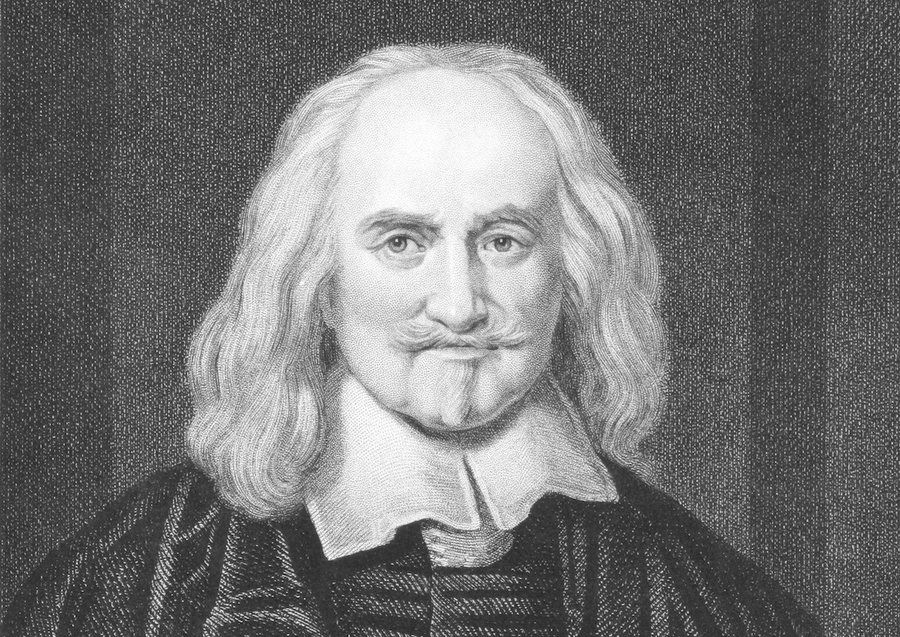
Gli individui concordano di creare una società civile e di sottomettersi al potere sovrano...
Un elemento chiave per comprendere il pensiero del filosofo inglese Thomas Hobbes è la paura, un sentimento che, a suo dire, lo accompagnò fin dalla nascita. Hobbes racconta che sua madre, terrorizzata dalla minaccia di un'invasione delle coste britanniche da parte dell'Invincibile Armata di Filippo II di Spagna, diede alla luce prematuramente due "gemelli": lui e la paura. L'invasione non avvenne mai, ma la paura rimase e divenne un tema centrale del suo pensiero politico. Per tutta la vita, Hobbes cercò di trovare un modo per domarla costruendo un ordine che garantisse la sicurezza.
Grande conoscitore della letteratura classica greca e latina e maestro di queste lingue, Hobbes fu un pensatore eclettico, un convinto materialista e un forte critico della metafisica tradizionale. Contribuì a diversi campi del sapere, come la storia, la giurisprudenza, la geometria, l'ottica, la teologia, l'etica e la teoria della traduzione. Nel suo sistema filosofico affrontò quasi tutte le principali discipline dell'epoca, organizzandole in tre parti: la filosofia naturale o fisica, dedicata al corpo; l'antropologia, dedicata all'uomo; e la filosofia politica, incentrata sul cittadino e sullo Stato.
Questo progetto si concretizzò in tre opere fondamentali, che costituiscono un unico sistema filosofico: De Cive (Il cittadino, 1642), De Corpore (Sul corpo, 1655) e De Homine (Sull'uomo, 1658). Attraverso di esse, Hobbes si propose di spiegare le leggi che governano la materia, l'uomo e lo Stato, avvalendosi del metodo matematico e in particolare dei principi della meccanica, che considerava il fondamento di tutte le scienze naturali.
Materialismo e meccanicismo: il corpo al centro della filosofia
Hobbes non fu solo un materialista, ma anche un meccanicista. Era convinto che fosse possibile costruire una scienza altrettanto rigorosa per il mondo umano e politico quanto per quello fisico. Per lui, un corpo è tutto ciò che occupa una porzione di spazio ed esiste indipendentemente dai nostri pensieri. Le proprietà fondamentali dei corpi sono l'estensione e il movimento. Da questa prospettiva deriva anche il suo materialismo: non esistono sostanze immateriali, come tradizionalmente si intende l'anima.
Anche i sentimenti, gli istinti, i desideri, l'istinto di autoconservazione e la volontà, secondo Hobbes, non sono altro che forme particolari di movimento del corpo. È proprio l'istinto di autoconservazione, un impulso fondamentale della natura umana, a costituire il fondamento della sua etica e della sua politica. Questo spiega perché la questione della sicurezza, come mezzo per superare la paura, occupi un posto centrale in tutto il suo sistema filosofico.
This idea finds its fullest expression in his most famous work, Leviathan (1651), one of the masterpieces of political philosophy, which has exerted a profound influence on modern thought. Leviathan, the biblical monster mentioned in the Book of Job, becomes for Hobbes the symbol of the modern state. It represents a powerful and indivisible power, endowed with extraordinary authority to guarantee order and security.
According to Hobbes, the state exists to protect the lives and safety of its citizens. People turn to it for protection and freedom from fear. This idea is also symbolically presented in the famous engraving on the frontispiece of Leviathan, where the giant representing the state is made up of thousands of little human figures, men and women, who come together to form his body. They are seen from behind, facing the sovereign, as individuals seeking refuge and security. In this way, the state appears as an artificial man, created to protect natural man.
The state exists to protect the lives and security of its citizens; the giant figure symbolizing it on the cover of Leviathan is constructed by a multitude of people, united in a single political body.
Contractualism: from the state of nature to civil society
Hobbes was a supporter of absolute monarchy, but also a theorist of contractualism, according to which political power stems from the agreement of individuals. Contractualism claims that the state arises from a contract, a symbolic pact between individuals, through which they decide to leave the state of nature.
In this hypothetical state, people are free and equal, but they enjoy no guarantee of their lives and property. For this reason, each becomes a threat to the other. This is where Hobbes' famous formula, homo homini lupus, "man is a wolf to man," comes from. In the absence of a common authority, people would fight each other and live in a state of constant uncertainty.
To escape this reality, individuals agree to form civil society and submit to sovereign power. In Hobbes' theory they give up almost all of their rights in favor of the sovereign, while later contractualist philosophers, such as John Locke, Jean-Jacques Rousseau, and Immanuel Kant, defended the idea that individuals surrender only a portion of their rights, paving the way for a more liberal and democratic concept of the state.
The theme of fear, and consequently of security, also appears in Hobbes's conception of religion. Drawing on the Latin poet Statius and especially Lucretius, Hobbes claims that religion arose from human fear. He quotes the well-known Latin phrase primus in orbe deos fecit timor, "fear was the first to create the gods in the world".
Sebbene lo abbia accompagnato per tutta la vita, la paura non impedì a Hobbes di vivere e creare fino a tarda età. Mantenne una mente lucida e un'attività intellettuale ininterrotta. Del suo sistema filosofico, espresso principalmente nelle opere De Cive, De Corpore, De Homine e Leviatano, tre idee fondamentali rimangono particolarmente importanti: il binomio paura-sicurezza, la concezione materialista e meccanicistica dell'uomo, con il corpo al centro dell'analisi, e il contrattualismo, attraverso il quale l'umanità passa dallo stato di "lupi" alla costruzione della società civile. / Adattato da "Pamphlet" del "Corriere della Sera"





Pamfleti, termi "shoqeri civile" eshte perkthyer gabim. Termi korrekt eshte "shoqeri e civilizuat". Qe prrfaqeson nje stad me te avancuar te marrdhenieve shoqerore se ajo e "shoqerise natytore". Mire do te ishte ta korrektonit! Keshtu edhe vete perkthyesi do te mesonte pak me shume!