


 Shkruar nga Pamfleti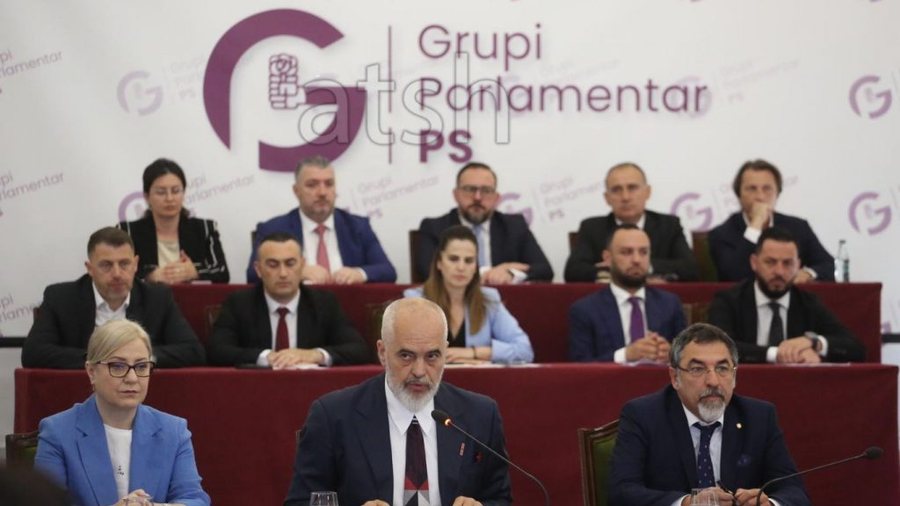
The Committee for Production Activities is dissolved, divided into 3 separate committees...
After a quiet and silent summer, Edi Rama has returned to office and has immediately begun to pull the strings of institutional reorganization. Meetings with key figures of the majority – Belinda Balluku, Elisa Spiropali, Niko Peleshi, but also with business names like Behgjet Pacolli, are not simply a resumption of work after the holidays, but signal a profound change in the political and legislative architecture of the “Rama 4” government, which is expected to officially start in September.
The focus of the discussions was not on the new names of ministers, as is usually the case in the SP Assembly, but on the new structure of parliamentary committees. The Socialist Party has drafted a plan to increase the number of permanent committees from 8 to 11, aiming for a more profiled division, which fits the chapters of the negotiations with the EU and the "Albania 2030" agenda.
According to the new plan:
The Committee on Productive Activities will be divided into three separate committees:
Energy Committee
Committee on Infrastructure, Environment and Digitalization
Committee on Agriculture
The 11th Commission will be headed by Fatmir Xhafaj, which currently functions as a special commission for “Deepening Reforms for Good Governance, the Rule of Law and Anti-Corruption.” This is expected to become permanent, with the participation of the opposition.
But Xhafaj's involvement in this role is not an ordinary development. The commission he heads has been sharply criticized as a political instrument to control the new justice system and to interfere with the essence of the 2016 reform. Rumors have increased that this commission is no longer a legislative initiative, but a "political weapon" that can be used to change the balance of power.
The establishment of this commission with 74 votes in the Assembly, despite the institutional boycott of justice institutions such as the Constitutional Court, SPAK, etc., has raised great concern among the opposition and the international community. Fatmir Xhafaj, once the originator of the Justice Reform, is today seen as the man who can divert it, in the name of a "reform" that comes at a time when SPAK has become a real obstacle to political corruption.
In this reorganization, the Socialists envisage that 7 committees will be led by the majority and 4 will be handed over to the opposition. But it has not yet been decided which of these four committees will be left to the opposition, another maneuver that could be used to balance or neutralize critical voices in the Assembly.
This entire movement is being prepared quietly, away from the public eye and awaiting an official “green” light from the SP Assembly in September. Until then, Rama seems to be laying the foundations of a new structure – not only in the names of the government, but also in the mechanisms that will control parliamentary life and the fate of the justice institutions./ Pamphlet





Lini një Përgjigje