


 Shkruar nga Pamfleti
Habermas, a prominent figure in the intellectual history of post-war Germany, is best known for his theory of political consensus building. Widely considered one of the most influential philosophers of the 20th century, he also helped shape the discourse around European integration and the formation of the EU.

Renowned German philosopher and sociologist Jürgen Habermas has died at the age of 96, his publishing house announced.
Habermas, a central figure in Germany's intellectual history after World War II, is best known for his theory of political consensus building. He is widely considered one of the most influential philosophers of the 20th century and has contributed to shaping the debate on European integration and the creation of the European Union.
Although he came from the neo-Marxist tradition of the Frankfurt School and was often regarded as a philosopher close to the Social Democratic Party, his influence extended beyond party divisions. German Chancellor Friedrich Merz, of the conservative Christian Democratic Union, described him as “one of the most important thinkers of our time.”
“His analytical acumen shaped democratic debate far beyond our country’s borders and served as a beacon in a turbulent sea,” Merz declared. “His voice will be missed.”
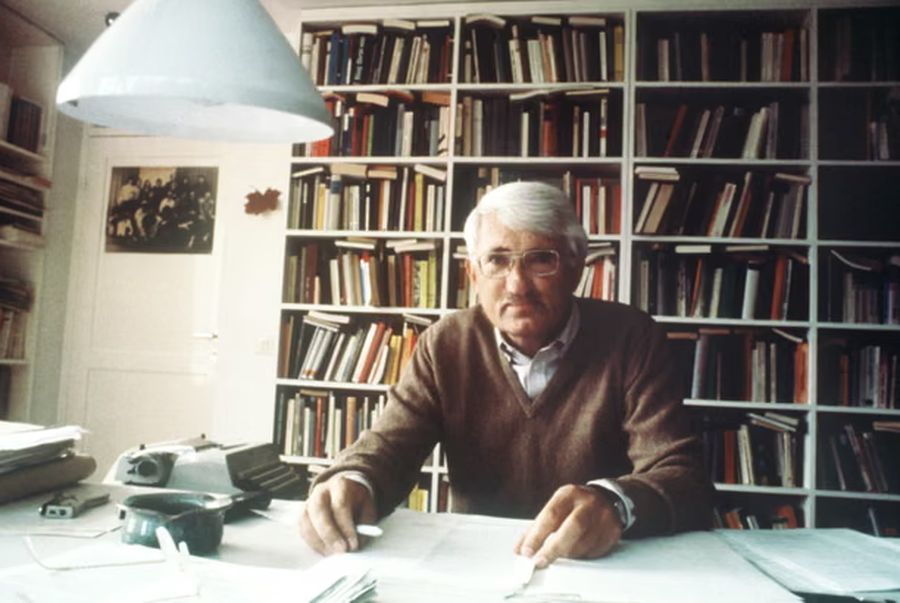
Habermas's career, which spanned seven decades, focused on the foundations of social theory, democracy, and the rule of law.
His belief that the formation of public opinion is essential for the survival of democracies explains why Habermas continued to write books and newspaper articles well into his old age. In an interview with The Guardian in 2015, he criticized then-Chancellor Angela Merkel, saying she was “risking Germany’s post-war reputation” with her government’s tough stance during the Greek debt crisis.
In recent years, his interventions in public debates have often drawn criticism from younger intellectuals. In 2022, he criticized the German Green Party's Foreign Minister, Annalena Baerbock, for her condemnations of Russia's war in Ukraine, which he described as "too self-confident and aggressive" and "high-pitched and harsh."
His statement that Israel's war on Gaza following Hamas attacks on October 7 was "justified in principle" was met with disbelief by many philosophers who follow the Frankfurt School tradition of critical theory, who also published a critical paper.
His latest work, Things That Need to Be Improved, was published in December last year. In it, he argues that we should not “let pessimism have the last word,” arguing that it is possible “to face the crises of the present with determination and ultimately overcome them.”
The publishing house Suhrkamp Verlag announced that Habermas died on Saturday in Starnberg, near Munich. He is survived by two of his three children.
Jürgen Habermas was born on June 18, 1929, into a bourgeois family in Düsseldorf. After birth and in early childhood, he underwent two operations for a cleft palate, a condition that caused him difficulty speaking.






Njerezimi humbi nje mendjendritur! E konsideroj me shume vlere teorine e Tij se si teknologjia mund te influencoje ne kohezionin social.