


 Shkruar nga Pamfleti
This situation has highlighted the weaknesses of the waste management system, local and central government, while significantly increasing concerns about the long-term consequences on the environment and public health.
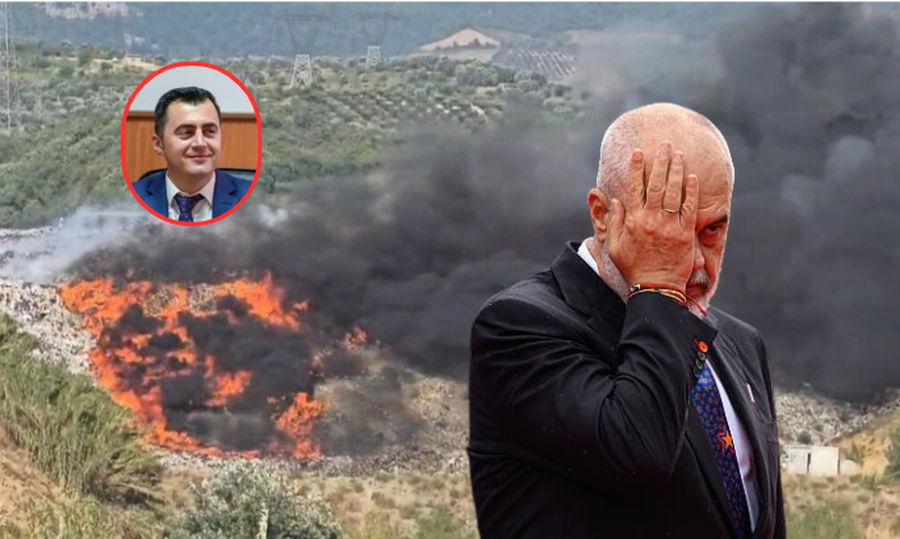
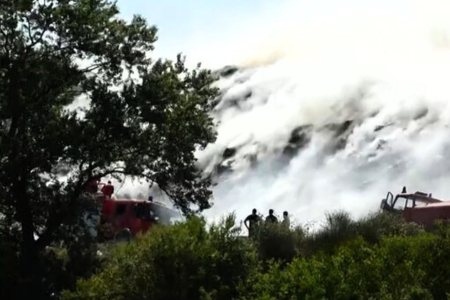
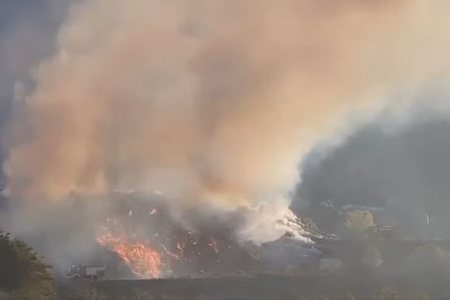
Now on the fifth day, the urban waste field in Elbasan continues to release smoke and toxic gases that blanket the city from fires in the landfill.
It seems that Prime Minister Edi Rama's order to extinguish the remaining fires overnight last night (July 4) has gone up in smoke.
Minister Arbjan Mazniku, Mayor Gledian Llatja and Prefect Ilir Bejtja were present at the landfill yesterday, closely monitoring the situation.
Even though there is no fire, the remains continue to burn deep within, poisoning an entire city.

Although it has been engulfed in flames several times in different years, this is the first time that the fire in Elbasan's Ladfill lasts for days.
Firefighters from Elbasan and neighboring municipalities, civil emergencies, and the army with its vehicles continue to be engaged on the ground.
With temperatures above 40 degrees, Elbasan is facing an environmental emergency, with thousands of citizens breathing toxic air for 5 days.
The situation is also difficult in neighboring municipalities whose urban waste has been left on the streets, as under these conditions they can no longer deposit it in the Elbasan landfill.
Meanwhile, a new crisis has emerged, the lack of soils, which are essential to managing the ongoing emergency. Since the fires are spread across several layers of debris and are deep, large quantities of soil are needed to provide effective coverage.
In this context, during the last night, about 50 trucks with soil from different areas of Tirana arrived at the Elbasan landfill, a necessary logistical reinforcement that aims to keep the situation under control, at least for the time being. However, experts say that this is only a temporary solution.
Deep-seated combustion, a process difficult to stop with conventional means, can continue for weeks or even months if not intervened with long-term strategies and modern mechanisms for controlling and extinguishing subsurface fires.
This situation has highlighted the weaknesses of the waste management system, local and central government, while significantly increasing concerns about the long-term consequences on the environment and public health.



Lini një Përgjigje