


 Shkruar nga Pamfleti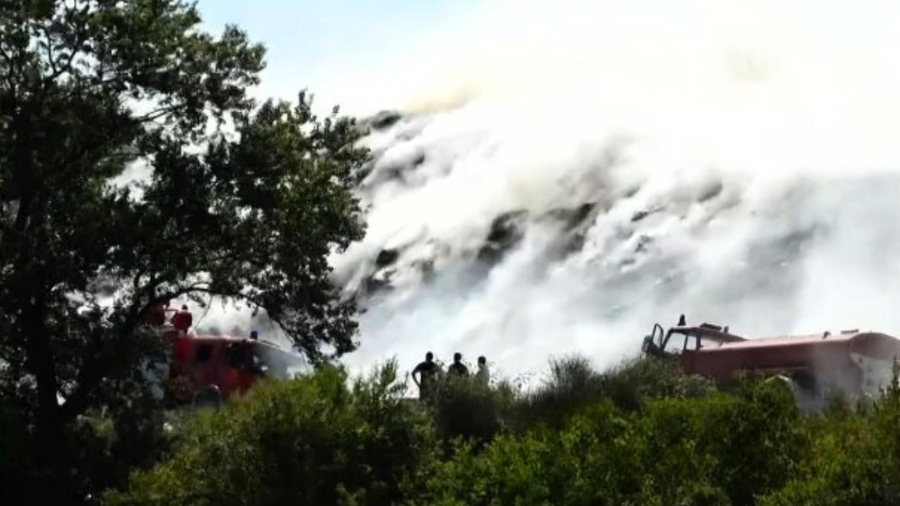
A typical summer fire at a municipal waste dump in the central city of Elbasan turned into an uncontrollable blaze.
The heat wave that has suffocated Europe this week has spread eastward, fraying nerves with escalating street protests in Serbia and leaving a river in the Czech Republic filled with dead fish as the effects of global warming accelerate.
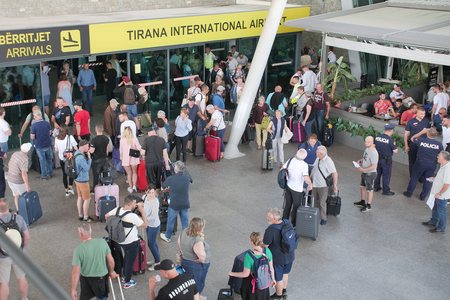
In Albania, across the Adriatic Sea from an Italy still scorched by unusually high temperatures, a routine summer fire at a municipal waste dump in the central city of Elbasan turned into an uncontrollable blaze.

Exhausted by temperatures reaching 41 degrees Celsius, firefighters struggled to control it. And with clouds of toxic smoke billowing from the landfill, protesters gathered outside the Ministry of Tourism and Environment in Tirana, the capital, declaring that it had been renamed the "Ministry of Smoke and Pollution."
As in Western European countries hit by this week's heat wave, the elderly in Albania were suffering the most.
In the Czech Republic, wildly fluctuating temperatures have been blamed for a mass fish die-off in the Thaya River in the southeast of the country near Austria. The heat has increased bacteria and sediment that are dangerous to fish, and authorities in the area, near the town of Breclav, have installed pumps to aerate the water. But about 30 tons of fish died this week, starved of oxygen in the river near a hydroelectric power plant.
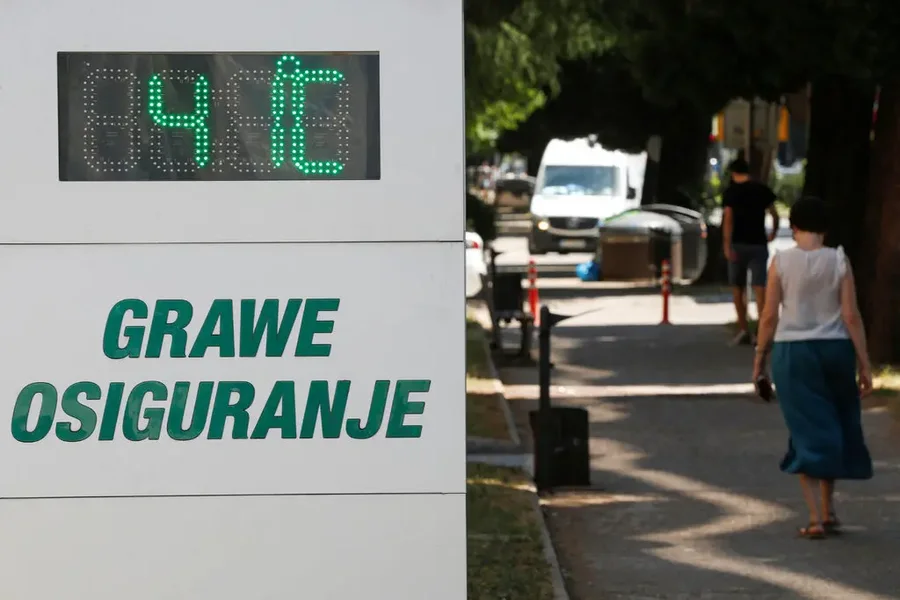
A power outage shut down Prague's metro system and left people trapped in elevators, but it was not immediately clear whether it was related to the heat and strain on the electrical system from increased use of air conditioners. The power company said there had been a fault in a transmission line.
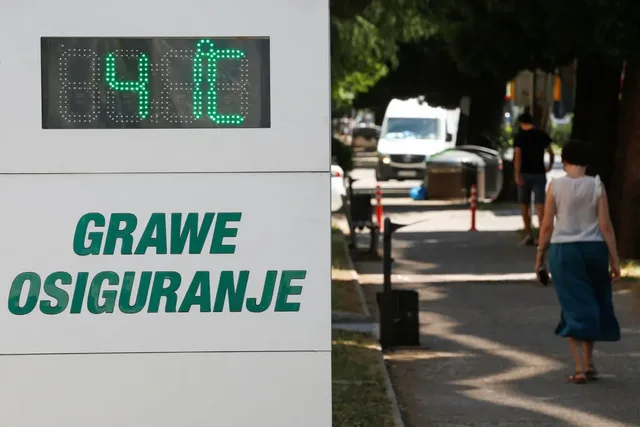
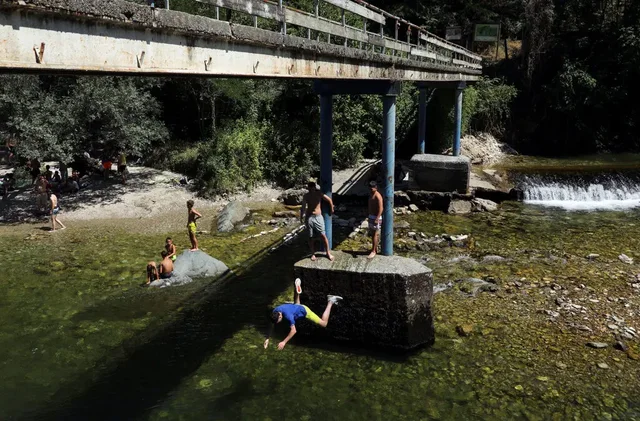
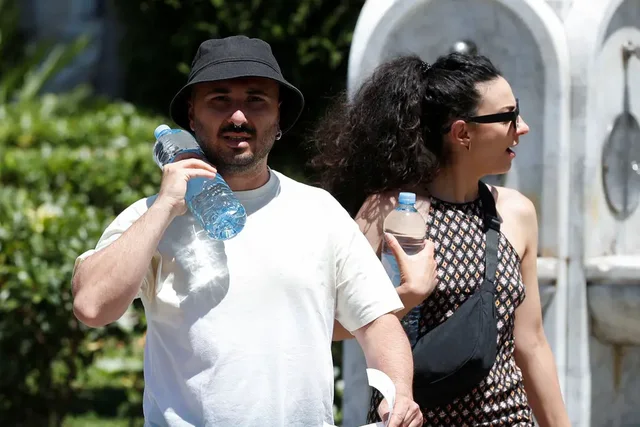
In the southern Balkans, a region accustomed to hot summers, authorities issued red heat warnings as parts of Albania, Bosnia and Herzegovina, Montenegro and Serbia faced unusually high temperatures.
In Belgrade, the Serbian capital, which has been the center of anti-government protests for months, temperatures of 37 degrees Celsius on Friday added to an increasingly tense atmosphere.
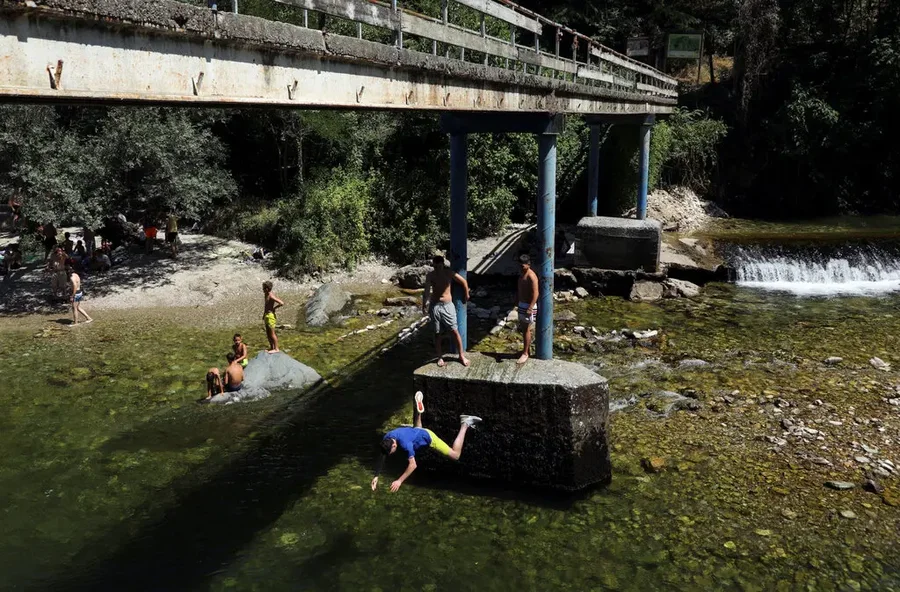
Nerves were tense as police officers in heavy riot gear tried to clear streets barricaded by groups of protesters, many of them students. The protests began in November and, after months of no violence, have become increasingly confrontational in recent days as temperatures soared and police began to crack down more forcefully. The heat was even more intense in neighboring Bosnia, with temperatures reaching 41 degrees Celsius in the city of Mostar.

Poland and the Baltic states to the north experienced some relief on Friday with cooler weather after months of intermittent rain, strong winds and unusually cold temperatures for the season. After soaring to 30 degrees Celsius on Thursday, the temperature in Vilnius dropped sharply on Friday. Temperatures in neighboring Poland also fell, with Warsaw touching 21 degrees Celsius.
In Montenegro, cafe owners complained of a sharp drop in revenue as customers stayed home. However, some in Eastern Europe said they couldn’t understand all the commotion, saying it was summer and it was supposed to be hot./ Adapted from “Pamphlet” by “TheNewYork Times”







Lini një Përgjigje