


 Shkruar nga Pamfleti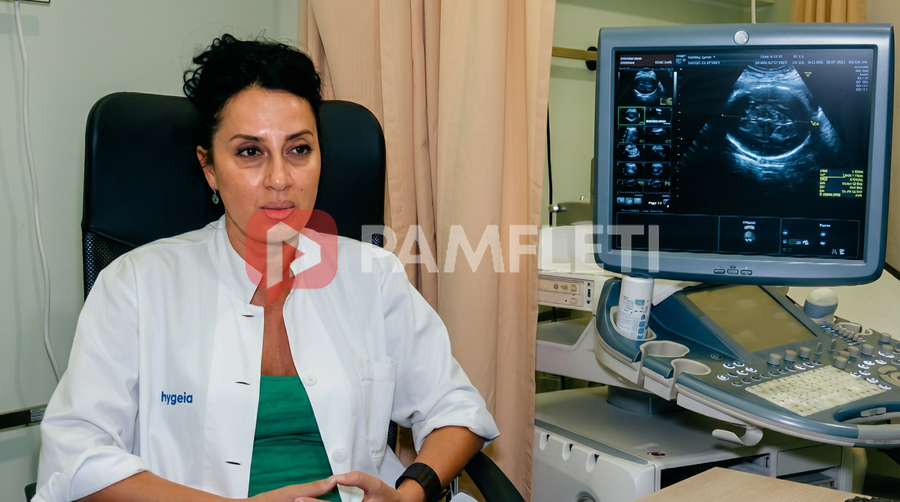
The debate about healthcare in Albania is filled with criticism, scandalous cases and strong accusations, often fair, but rarely is there space to see the other side of the system, that of doctors who work every day without noise and without media protection...
The discussion about healthcare in Albania has for years become a constant clash between shocking cases, serious institutional failures and deep citizen disappointment, where each new episode increases distrust and strengthens the conviction that the system is malfunctioning and that responsibility is often lost along the way. This debate is necessary and cannot be avoided, because without it there is no accountability and no improvement. However, in this whirlwind of criticism, there is rarely room for another, quieter discussion related to the daily fatigue, personal responsibility and professionalism of doctors who continue to practice their profession without becoming part of the public noise.
It is for this reason that the Pamphlet today focuses on the practice of a specific doctor, Enriketa Kroi , not to single her out as a perfect figure or to minimize the problems of the healthcare system, but to show that beyond the general appearance there are other ways of practicing medicine. The choice to focus on Kroi is not related to any sensational case or personal promotion, but to the fact that her practice represents an approach that is rarely articulated publicly: one where the relationship with the patient and the way of communication are an inseparable part of the medical act.
Enriketa Kroi works as an obstetrician-gynecologist at Hygeia Hospital in Tirana and at the private clinic ARTEMISIA, dealing with the follow-up of pregnancies, the treatment of gynecological diseases and the assessment of breast problems and reproductive health at different stages of a woman's life. In gynecology, a diagnosis does not end the moment it is made, because pregnancy, a gynecological disease or a breast problem, like any other health condition, directly affect daily life and personal well-being, making it necessary for the patient to understand what is happening to her and why a certain medical decision is being made.
In her daily practice, the visit is not limited to an examination and the provision of a recommendation, but is accompanied by clear explanations about the health condition, treatment alternatives and the consequences of each choice, which helps the patient not to remain simply a passive beneficiary of a decision, but to be involved in the process. This way of working, although not measurable by statistics, is an element that directly affects the woman's experience with the health system and the trust she builds in the doctor.
Beyond her clinical work, Dr. Enriketa Kroi has also been involved in scientific research, collaborating on studies published in medical journals. In 2010, she co-authored a study published in the Journal of Prenatal Medicine , which analyzed 738 women with preeclampsia, or high blood pressure during pregnancy, and showed that the ratio between the fetal cerebral and umbilical arteries can help predict complications and guide medical care for high-risk pregnancies.
Another paper in which she appears as a co-author deals with gestational trophoblastic disease in ectopic pregnancies, highlighting the importance of histological examination for establishing the diagnosis and further follow-up of patients, while in 2014, in the Albanian Medical Journal, she contributed to a study on the use of shear wave elastography in the diagnosis of breast lesions, a method that helps in distinguishing benign from malignant masses and in avoiding unnecessary interventions.
This article does not aim to change the critical narrative on healthcare nor to relativize the deep problems of the system, but to add an element that is often missing in the public debate: the fact that within this system there are also doctors who practice their profession with responsibility, daily fatigue and an approach that does not require attention, but operates in silence. And precisely for this reason, today we stopped at Enriketa Kroi .






Artikull i vertete. Bravo Dr. Keti!
Bravo pamflet. Keti me e mira