


 Shkruar nga Pamfleti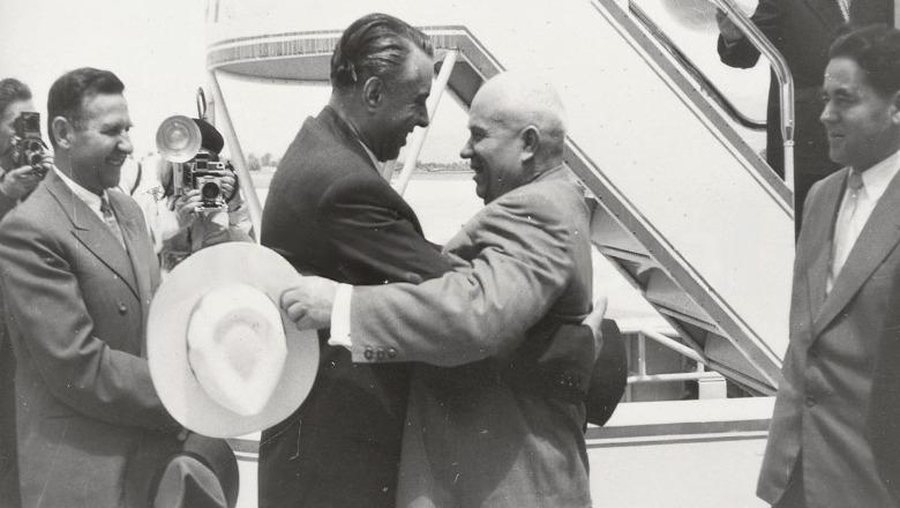
His life resembles a mountain that has a base, but also a top. He reached his peak because the Film Archive of the former Kinostudio "New Albania" holds hundreds of his recordings, documentaries and film-magazines, football matches and reports in and outside the country, sensational stories in the 50s - The 70s. But it also touched base, when, by the first cameraman for filming the leadership, he was convicted of agitation and propaganda and served 6 years in Spaç. This is Dhimitër Lala, the 93-year-old who today lives on a miner's pension, and no one remembered to give a special state pension to this man, who fought with a gun in his hand for the liberation of the country at the age of 13. , and also for having an extraordinary contribution to the establishment of Albanian cinematography and, more recently, a man who suffered in the terrible camp of Spaçi, the brutal violence of the communist regime of Enver Hoxha and his successor, Ramiz Alia.
In this exclusive interview for us, Dhimitër Lala tells the story of his life and the very interesting and previously unsaid details about Enver Hoxha's meeting with Khrushchev and former prime minister Mehmet Shehu with his Chinese counterpart, Çu En Lain.
Mr. Lala, where and when were you born?
I was born in the city of Pogradec, on October 2, 1931. I spent my childhood and education in this beautiful city by the lake. Even later, when I left Pogradec, I kept coming back. I left my mother, father, two brothers and two sisters there.
Why did you run away from Pogradec?
The 4th Assault Brigade came to the village and I joined them, I became a partisan. We took the road to liberate the north of the country and then we liberated Tirana.
You were very young at that time, was it difficult for you?
No, on the contrary, at that time it became fashionable for young boys and girls to join the National Liberation Movement. For prowess in war, I received the "Medal of Bravery", "Medal of Liberation" and "Medal of Remembrance". After the war, I attended "Skënderbej" school and was one of the first students in the military school.
In 1949, I attended higher studies to become an officer and graduated. I served a few years as a soldier in various duties, until November 1953, and then I was transferred to the "New Albania" Kinostudio.
Why were you passed over at Kinostudio?
The army has one thing, that if you are a careerist, you go, while I, who was more connected to art, made it a big fight to be demobilized. I had no inclination to be a soldier, because you had to be strict, to be like that, you had to be disciplined.
What task did they give you at Kinostudio?
First, I was put in charge of cinemas and very soon, assistant operator. I loved art very much, I felt myself very well among artists. I was lucky to meet and, of course, he taught me everything about the camera, Hamdi Ferhat, the first Albanian operator. Besides him, Mandi Koçi, or as she was known otherwise, also gave me a great help. "Maku", the former first photographer of Enver Hoxha's General Staff during the War.
When did you use the camera for the first time?
I still don't forget that moment, when during the inauguration of the Gjadri embankment, in 1956, Hamdi Ferhati handed me the camera and said: "Film"! I was flying with joy. As an assistant operator, I also worked in the first Albanian feature film, Hysen Hakan's film; "Her children". Then I moved on to chronicles and documentaries.
When did you switch to documentaries?
In 1958, I finally switched to chronicles and documentaries.
Did you like the new profession?
Of course a lot. I have fallen all over my Albania and I have not left a corner of it without filming. Likewise, I was present at many international meetings, where I filmed dozens of world personalities who visited Albania in the 50s-60s, from Nikita Khrushchev to Chu En Lai, as well as many trips abroad, to documentaries, from China to Northern Ireland.
Tell us any details about the leader of that time, Enver?
The truth is, I was very fast on the set and I didn't tire the leaders, no lights, no wait a minute, so they had me as their favorite. Enver Hoxha looked at me with a very sympathetic eye. I remember one time, when we had stopped at "Ujin e čerda", in Tepelena, for breakfast. He was with Nexhmija, his wife. I was shooting and he called me; "Dimitri, come here, sit and eat with us."
I stayed, I told him; "No, thank you very much, because I have eaten." My luck at that moment, Shefqet Peçi came and they got up to meet him and he sat with them, while I ran away. But Enver was attentive. He called Commander Muhamet Prodani and told him to get a letter and wrapped everything that was on the table and brought it to me to eat.
What about foreign personalities, any details from their "secret" conversations with Enver Hoxha?
When Khrushchev came, I was the first to have contact, because I went up to the plane. When the Soviet leader went down the stairs and met Enver, he said in his ear; "As long as I'm here, don't say anything to Tito..."! While I am telling you an interesting moment, which has remained in my mind. When I was in China with Mehmet Shehu, I, as an operator, entered the meeting room 10 minutes before making plans, when I heard Mehmet say to Çu En Lai:
"We, those who betray Marxism-Leninism, put a bullet in the forehead..."! While the Chinese leader's response surprised me, he reciprocated; "The head is not a cabbage, and this is not the right way. Take those who are against it, take them to a villa in the countryside, give them the works of Mao and Enver, and they will read them and change their minds".
Më treguat se në vitin 1971, nga Kinostudio “Shqipëria e Re”, ju transferuan në Televizionin Shqiptar, pse?
Në atë kohë udhëheqja e lartë kërkonte që Televizionin, ta fuqizonin dhe kështu, mua, Endri Kekon e Kristaq Dhamon, na kaluan aty për të dhënë përvojën tonë. Kristaqi me Endrin u kthyen, ndërsa unë mbeta, deri në vitin 1974.
Do të kisha vijuar edhe më tej, sikur të mos më kapte “lapsi i kuq” i partisë, i cili në kuadër të arrestimeve në Radio-Televizionin Shqiptar, gjeti rastin të më shkarkojë nga puna. Në prill të vitit 1975, më përjashtuan dhe nga partia, ndërsa më 12 tetor 1976, më arrestuan.
Përse ju akuzuan?
Fillimisht, bëra 7 muaj hetuesi dhe më dënuan 6 vjet, për agjitacion e propagandë, vite, të cilat i bëra të plota.
Po burgu si ishte për ju?
Situata ishte shumë e vështirë. Spaçi ka qenë kampi më i tmerrshëm, pasi të burgosurit punonin në minierë, tetë orë. Unë s’kisha ndihmë nga familja, pasi ato gjashtë vite që vuajta aty, nuk më erdhi njeri për të më parë e, më duhej të punoja e të merrja ndonjë lekë, për të blerë ndonjë gjë në dyqan.
Keni takuar ndonjë person publik ato vite në Spaç?
Po, kam pasur Maks Velon, Spartak Ngjelën, Fatos Lubonjën…! Fatosi ka qenë trim i madh. Nuk pranonte të punonte në minierë e i thoshte; “Unë jam i dënuar politik, pse duhet të punoj”, ndërsa ata e rrihnin, e fusnin në birucë, por ai prap nuk dorëzohej.
Ju jeni shprehur se; në burg nuk kishte heronj, por spiunë e provokatorë, në fakt, si ishte situate atje?
Kur isha në Kaushin e Tiranës, (para se të më çonin në Spaç) ku kishte dhe të dënuar ordinerë, shihja ca fytyra të verdha të strukur, e pyeta njërin; “Çfarë kanë këta që rrinë kështu”? E ai më shpjegoi që; ose i dalin dëshmitar në gjyq ndonjërit ose, i rekrutojnë, për t’i lënë në qeli me të burgosur politikë, për t’i spiunuar”.
Dhe mua më ndodhi kështu. Para se të më çonin në Spaç, më lanë në birucë me një djalë të ri dhe unë, sa shkova e përshëndeta e, po i bëja muhabet, kur mu kujtua po ajo fytyrë e verdhë, e i thashë vetes: “Kujdes Dhimitër”.
E pyeta: “Për çfarë ke rënë në burg”? Ai më tha se e kishin burgosur, pse kishte dëgjuar Radio Londrën. Aty e kapa që po gënjente, se Radio “Zëri Amerikës” po që dëgjohej, por Radio-Londra, jo. Kur më thirrën për të shkuar te hetuesi, unë vesha këpucët dhe pashë dhe pozicionin ku i kishte vënë ai. Kur u ktheva, pashë që ato kishin lëvizur, nuk ishin më në të njëjtin vend, pra e kishin thirrur dhe atë.
Je rikthyer ndonjëherë në Spaç?
Po kam shkuar pas viteve ’90-të, me një fotograf, për të bërë një ekspozitë.
Me kë bënit shoqëri, kur vuanit dënimin atje?
Shoqëria duhej zgjedhur mirë aty, sepse 70 për qind, ishin të rekrutuar nga operativët dhe spiunonin. Ne ishim nja 4 vetë nga Tirana, që rrinim bashkë.
Po vitet pas burgut, si ishin?
Kur u lirova nga burgu, punova te uzina “Dajti”, punëtor, ngarkim shkarkimi, 3 vjet, prej aty në “Misto Mame”, po punëtor ngarkim-shkarkimi, deri sa në 1987, dola në pension.
I kërkuat ndihmë Enver Hoxhës, kur ju burgosën?
No, no, no...! It's not even a question.
How are you living today, are you over 90 years old?
I live on my pension. I receive a miner's pension, because I worked in Spaç e, I have lost 16,000 lek (old), per month.
How is your day?
I'm staying at home with my wife, most of the time. Sometimes I go out for coffee with a friend. I have one son in Switzerland, while the other one died a few years ago. Memory.al




Lini një Përgjigje