


 Shkruar nga Pamfleti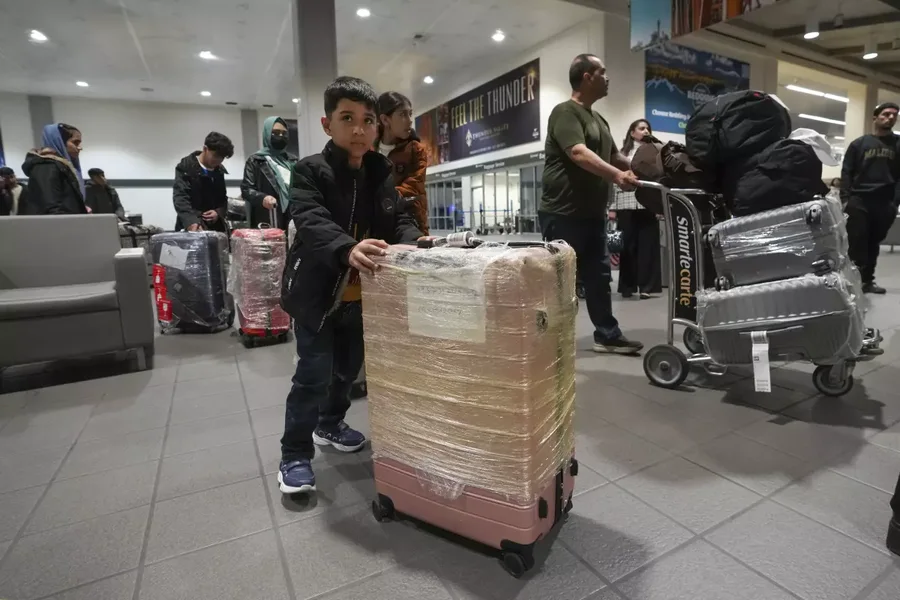
A deal the US made with Albania, a country where Afghans have been temporarily accommodated, expires in March. And beyond that, it is not known what will happen to them. Despite public statements by Prime Minister Edi Rama that Afghans can stay in Albania as long as they want, they were accommodated here, based on an agreement with the US
When Andrew Sullivan, executive director of No One Left Behind, thinks about the people his organization has helped resettle in America, one particular story comes to mind: an Afghan man in a wheelchair who was shot by a Taliban member for helping the U.S. during its war in Afghanistan.
The charitable organization of US military veterans, Afghans who once fled their country and volunteers in the US is stepping in to help Afghans like the man in the wheelchair who are at risk of being stranded abroad.
Their efforts come after the Trump administration took steps to prevent Afghans who helped America's war effort from trying to relocate to the U.S.
No one is helping Afghans and Iraqis who qualify for the special immigrant visa program, which was created by Congress in 2009 to help people who are at risk because of their efforts to aid the U.S. during the wars in Afghanistan and Iraq.
President Trump in January suspended programs for those refugees and cut off aid to groups that help them resettle in the U.S. Hundreds who were approved to travel to the U.S. had visas, but there are few ways to get there.
The situation for Afghans has become more desperate in some of the countries where many of them are temporarily settled. Pakistan, after hosting millions of refugees, has in recent years begun their mass exodus. Meanwhile, an agreement that the US made with Albania, a country where Afghans have been temporarily accommodated, expires in March. And beyond that, it is not known what will happen to them. Despite public statements by Prime Minister Edi Rama that Afghans can stay in Albania as long as they want, they were accommodated here, based on an agreement with the US, and above all based on a plan for their relocation to the United States.
Against developments with President Trump's administration, there are fears that it could announce a travel ban that could cut off all entry for Afghan citizens.
In an executive order signed on Inauguration Day, Trump told key cabinet members to submit a report within 60 days identifying poor countries, which could mean "a partial or complete suspension" of travelers from those countries to the US.
US State Department spokeswoman Tammy Bruce said Monday that the review was ongoing and no list had been finalized.
Afghans fleeing Taliban rule are urging Trump to lift the suspension of the refugee program.
But groups working with Afghans are concerned.
To qualify for a visa, Afghans must prove they have worked for the U.S. for at least a year. That means document verification by former supervisors, who were often affiliated with companies that no longer exist. They also undergo extensive background checks and medical examinations.
The organization has been raising money to provide flights and help Afghans when they land. Between February 1 and March 17, the group said it had successfully booked flights for 659 Afghans.
Sullivan and the organization's "ambassadors" - Afghans and Iraqis who have already immigrated to the US, many of them through the special immigrant visa program - have gone to Albania and Qatar to help stranded Afghans.
Aqila is one of those ambassadors who went to Albania. The Associated Press is identifying Aqila by her first name only because her family in Afghanistan is still in danger.
Aqila said many of the families didn't know what would happen when they arrived in America. Would they be homeless?
Afghans were given contact information for lawyers. They were also given brochures with information about their rights in English, Dari and Pashto.
Mohammad Saboor, a father of seven, worked as an electrician and air conditioning technician with international and American forces for 17 years. He and his family boarded a plane to Albania in the hope that they would soon be able to go to America. They landed in California on March 12, exhausted but safe.
Saboor said he has not felt safe in Afghanistan since the Taliban took control of the country in August 2021. He worried he would be killed as punishment for nearly two decades of working with the U.S. and its allies. He wondered what kind of future his children would have in a Taliban-controlled Afghanistan. / Adapted from Pamphlet from the Los Angeles Times/







Lini një Përgjigje