


 Shkruar nga Pamfleti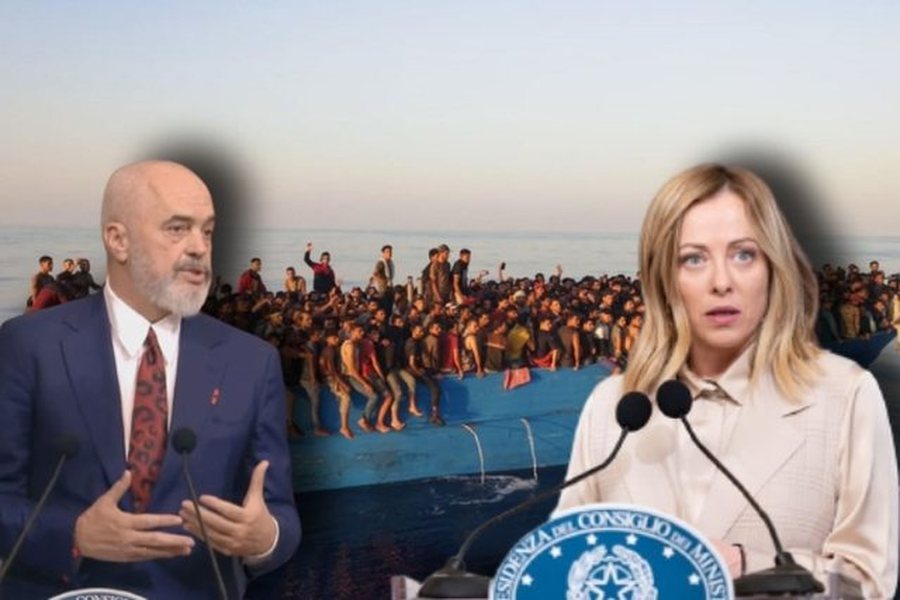
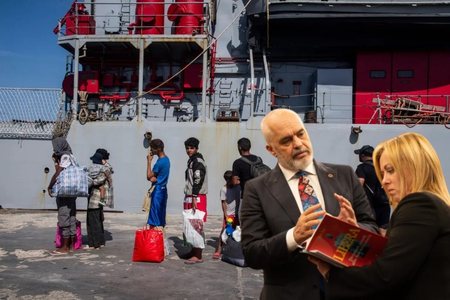
Migration experts and campaigners say an agreement between Italy and Albania to house thousands of migrants in the Balkan state while their asylum claims are examined reflects a worrying trend of European Union countries seeking to find a solution beyond their borders. block.
The exact details of the agreement announced on Monday during the visit of the Prime Minister of Albania, Edi Rama, to Rome are not yet known. Experts say this is similar to Denmark's maneuver to shelter migrants in Africa that was later suspended. The European Union has requested details of the agreement.
The European Commission, which oversees the implementation of European Union laws, suggested the deal could prove problematic if Italy sends migrants found in EU territorial waters to a non-EU country. However, the EC left open the possibility of implementing the agreement for migrants caught in international waters.
"For a ship within the territory, the recommendations of the asylum procedure must be applied," European Commission spokeswoman Anitta Hipper told reporters in Brussels.
This means that anyone caught in waters belonging to an EU member state will have the right to seek asylum there, and not be transferred to a third country.
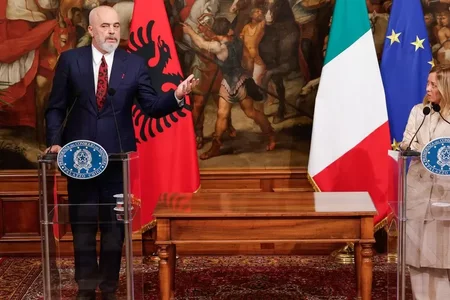
The Italian Prime Minister, Giorgia Meloni, and the Prime Minister of Albania, Edi Rama, a country that intends to join the EU, said that they have agreed to temporarily house in Albania thousands of migrants seeking asylum in Italy.
Under the agreement, if Italy rejects asylum requests, Albania will then deport the migrants. Children and pregnant women will be excluded from the agreement.
Italy will finance the construction of two centers in Albania, which can hold up to 3,000 migrants at a time, or up to 36,000 a year, given the fast 28-day asylum application period. Albania will provide security measures in the relevant centers under Italian jurisdiction.
Prime Minister Meloni has taken steps to try to curb the number of migrants heading to Italy, a 65% increase compared to a year ago. The agreement with Tunisia brokered by the EU failed.
"This is part of a wider trend to export migration policies," says Camille Le Coz with the Migration Policy Institute in Europe.
She noted that Denmark and Britain, which tried to relocate some asylum seekers to Rwanda before an appeals court intervened, have so far failed to implement similar measures.
"In practice, it's a policy that's a bit for media consumption and hardly enforceable," Ms Le Coz said.
Two years ago Danish lawmakers voted in favor of setting up a refugee reception center in another country, possibly in Africa. But the idea was criticized as undermining international cooperation and has since been shelved. Britain made a similar deal with Rwanda, which is being reviewed by the UK High Court.
Experts say that Italy's proposal conflicts with legal and legal issues.
For example, migrants rescued at sea by an Italian ship "are technically on Italian territory," said Giorgia Linardi, spokeswoman for the nonprofit sea rescue group Sea-watch.
If they are then sent to Albania, she says, this contradicts international law but also European law.
The agreement, as described so far, does not address how Albania will carry out the return of migrants to their countries of origin, something that Italy has difficulty doing.
"We are extremely concerned, because the people who are rescued from the military ships and sent to Albania risk de facto deportation", said Mattia Ferrari, with the charity association "Mediterranean Saving Humans".
"Deportation risks violating international norms, but above all it hurts humanity."
The International Rescue Committee (IRC) says the deal "deals a further blow to the principle of EU solidarity", stressing that closing borders would not prevent migration.
"It is time to shift the focus from borders to welcome," said Susanna Zanfrini, IRC representative in Italy. “Closing the borders will not stop people from seeking safety; on the contrary, it may force them to take even more dangerous paths." / VOA






Lini një Përgjigje