


 Shkruar nga Giorgio Leali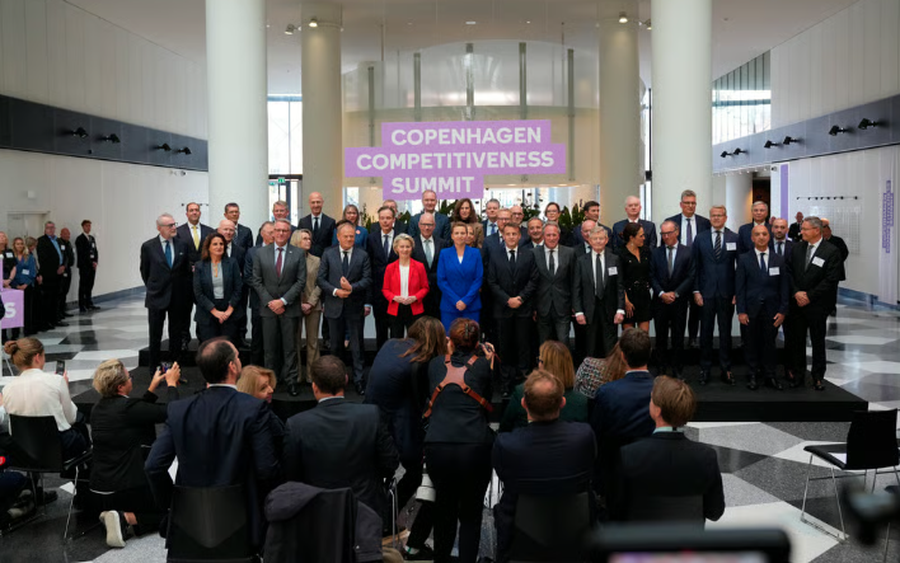
The once admired European Political Community has not produced significant results, but it is still useful for dialogue and the presentation of political initiatives…
French President Emmanuel Macron's much-hyped European Political Community is turning into a glorified meeting.
While more than 40 leaders from across Europe plan to attend the 7th edition of the event in Copenhagen on Thursday, expectations for concrete results are low.
Diplomats and analysts, some of whom were granted anonymity to freely criticize the event, or because they were not authorized to speak to the media, told Politico that what Macron had sold three years ago as “a new space for political cooperation” has turned into a diplomatic sideshow, especially given that Thursday’s meeting comes on the heels of a high-stakes summit in the Danish capital.
The picture they painted was of an event where no real business is done, but instead is used by leaders to meet with counterparts they haven't seen in a while or to showcase policy initiatives before a prestigious audience.
A diplomat from a non-EU country compared the EPC to speed meetings due to the large number of participants and their short duration, which leaves little room to go into detail on complex issues.
The French president launched the EPC three years ago, after Russia’s full-scale war in Ukraine, to give European countries vying for EU membership a seat at the new table. That the event has fallen short of expectations is somewhat of a surprise given Macron’s reputation as a geopolitical force, especially compared to his troubled domestic record.
The last EPC, held in Albania in May, produced few high-profile results. Most people remember the event because of a video that featured bizarre AI-generated versions of the leaders in attendance.
"I cannot think of a concrete and tangible result from the formal part of the EPC," said an EU diplomat.
European Union leaders now meet in European Councils, both formal and informal. The Group of Seven and the Group of 20 offer members and non-members the opportunity to meet on the sidelines of these summits. NATO members have the annual alliance summit to discuss defence issues as well. And the United Nations General Assembly.
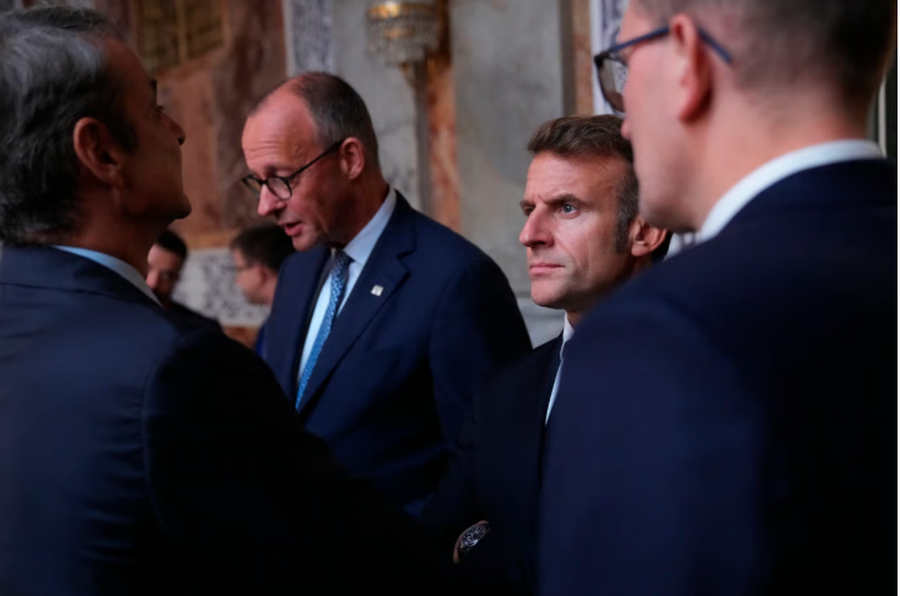
"There is a risk that the EPC will become just another multilateral platform for side meetings, and we have a lot of them," said Bojana Zorić, a policy analyst at the EU Institute for Security Studies.
She then added, "we had higher expectations," although she acknowledged that informal talks could be useful.
Although the meeting did not live up to the expectations raised by Macron, most of those who spoke to Politico said it would be a mistake to consider it a failure. Dialogue doesn't hurt anyone, after all.
Sylvain Kahn, a professor of European history at Sciences Po in Paris, said it was important to remember that the EPC’s goals were unclear from the start, despite Macron’s arrogant language. He said the initiative offers an opportunity to unite “all the countries that do not support the invasion of Ukraine in the same boat, which is steered by the EU. This is smart.”
A third diplomat, this one from another EU country, praised the EPC as “a good framework for cooperation, which mainly allows for some publicity and consensus-building in the country.”
France and Moldova used an earlier meeting to unveil an initiative to combat disinformation, and on Thursday Macron and Italian Prime Minister Giorgia Meloni will present a new joint effort to combat drug trafficking.
Macron's office believes the initiative's sustainability has proven its worth. When asked about the evolution of the EPC at a press conference, an Elysée official told reporters that the format remains useful because it "allows for informal strategic conversations or debates at leadership level."
But few, except the French, seem to be connected to this format.
“As long as it’s useful, we keep it there,” the first diplomat said, adding, “if at some point in the future we determine that its time is up, it has shown its value, but now it’s not. I don’t think anyone would have any bad feelings saying goodbye.” /Adapted from Politico/







Lini një Përgjigje