


 Shkruar nga Pamfleti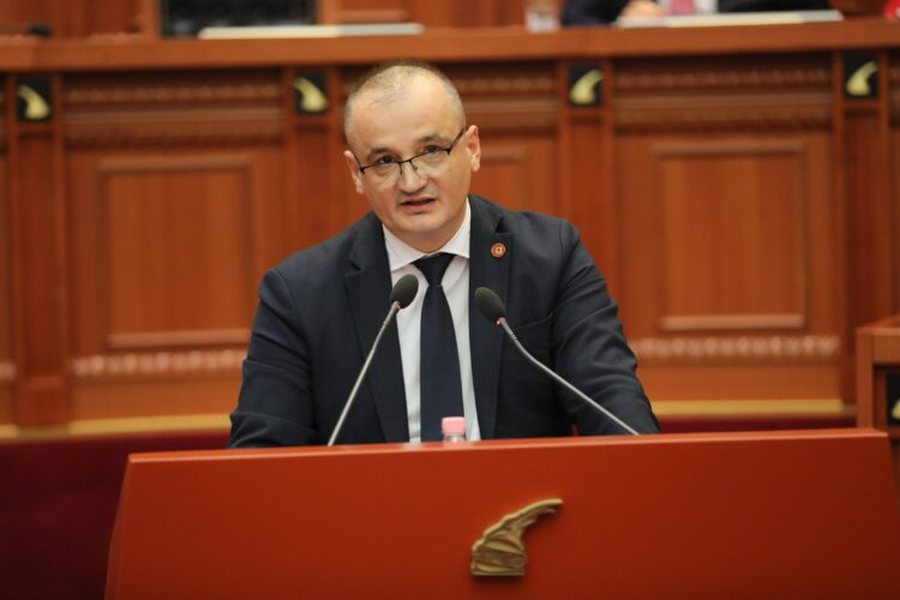
The SAI is the only institution that has not been captured by the majority. Rama used all means to crack down on the body, but the pressures have not stopped either the mayor or the auditors from uncovering violations in ministries, municipalities, and elsewhere.
Abuses in public administration seem to have reached their peak. Even though many officials are under investigation by SPAK, there is endless abuse of tenders in ministries, municipalities, and other bodies.
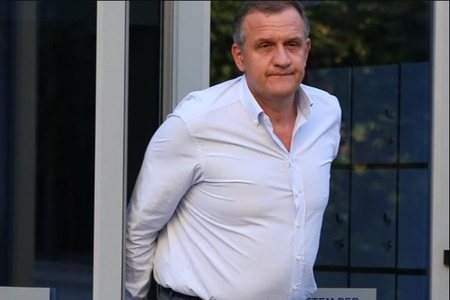
The only body that has the courage to speak out about the abuse that is taking place at the highest levels of this government is the Supreme State Audit Office. Today, the head of the Supreme State Audit Office, Arben Shehu, reported to the Assembly on its work during the past year.
For the sake of truth, the Supreme Audit Office is the only institution that has not been captured by the majority. Rama used all means to strike as an organ. A year ago, it was Eduard Shalsi who started the pressure on the head of the Supreme Audit Office and even the idea of dissolving it was raised. Also, everyone remembers the scenes in the Finance Committee. However, Arben Shehu has continued his work with correctness and according to the audits that the Supreme Audit Office has conducted during the past year, there has been 16 billion lek economic damage in the state budget.
Arben Shehu said today in the Assembly that 159 audits were conducted at all levels of government during 2024. These audits, he emphasized, were conducted in 205 entities, 97 of which are central government units, 75 are local government units, and 13 are independent institutions.
For these audits, 194 opinions were given, accompanied by 4378 recommendations and organizational and administrative measures. Shehu also emphasized that the level of acceptability of these recommendations has reached 90%, of which 70% have been accepted in full, partially or in process. According to him, during 2024, they have filed 13 criminal reports, which include cases where the audit has found actions or inactions in violation of the law. They have also made 35 materials available to the Prosecutor's Offices for investigations.
" During 2024, we conducted 159 audits at all levels of government. By type, 45 audits were financial, 43 compliance, 35 combined, 15 performance, 8 information technology, and 13 on the implementation of recommendations. They were conducted in 205 entities, 97 central government units, 75 local government units, 13 independent institutions, and 20 still public ," said Shehu.
Focusing on public procurement, he stressed that there were violations in the evaluation of projects, irregularities in contracts, restriction of competition and lack of internal control. Shehu confirmed that audits are also underway for Bankers Petroleum, the Thumanë-Kashar road and the energy ships in Vlora. Asked why payments continue for the PPP contracts of Check up Sterilization and dialysis, where the SAI itself has identified excessive payments for cases that have not been carried out
Details from the report
According to the report, in financial and combined audits, a number of issues have been identified that affect the quality of financial reporting and compliance with accounting principles and standards. One of the most widespread phenomena is related to the misclassification of expenses and income, which leads to the distortion of the financial statements of institutions and undermines their credibility.
Thus, cases of recording investment expenditures as operating expenses, or of realized revenues that were not recognized in the statements in a timely manner, have been identified, as in some central and local institutions. These problems stem from the lack of supporting documentation and the weakness of internal controls.
During 2024, the SAI conducted several compliance and combined audits, with the aim of assessing compliance with the legislation and regulatory framework in force by public institutions.
Overall, compliance audits have identified a widespread lack of compliance with the legal and regulatory framework, in procurement, fiscal reporting, contract implementation, etc. These problems are systemic and present at several levels of government.
One of the most widespread phenomena is the lack of budgetary discipline in all links of the financial cycle, including planning, approval, execution and reporting. In some cases, reallocations of funds towards projects that have not gone through the full evaluation process have been observed, accompanied by inefficient use of available funds.
Deficiencies in budget planning were found based on delays and inaccuracies in the preparation of budget requests by line ministries, submitting incomplete documentation and additional requests beyond the approved ceilings, for which the SAI recommended strengthening budgetary discipline and strict adherence to deadlines, formats and justification of new projects during the drafting of the annual and medium-term budget (MTBP).
Repeated violations have been observed in terms of respecting the legal deadlines for registering procurement orders, contracts and liquidating invoices in the SIFQ. This phenomenon is widespread in local self-government units, but is also present in central institutions and public companies.
In the field of administration of Public Private Partnership (PPP) contracts and concessions, violations of financing criteria, shortcomings in monitoring and in the assessment of long-term budgetary effects have been found. In some cases, payments have continued for services that have not been performed, or that have been performed in volumes lower than projected. Such phenomena have been observed in important contracts in the field of health, where the reporting of expenses has exceeded the approved budgets and liabilities have been liquidated in contradiction with the contractual content, including VAT.
Audits conducted during 2024 found problems in the field of procurement, widespread in central and local administration institutions, universities, hospitals and public enterprises. They are mainly related to ineffective procurement planning, restriction of competition, irregularities in the drafting and implementation of contracts, as well as the lack of internal control. In the audited municipalities, annual procurement plans were often not harmonized with budgets or real needs. In some cases, qualification criteria were set in such a way that limited competition, while in others there was a lack of supporting documentation for the evaluation and selection of operators. Procedures with only one competing operator, tender documents with unjustified or biased criteria, as well as unsubstantiated determination of the limit fund were also found. In some cases, procurement was used for services that were covered by existing contracts, leading to duplication of costs. Meanwhile, delays in contract implementation, lack of application of penalties, payments for unfinished or incompletely completed works have been noted. The structure of technical supervision and contract administration is often missing or does not function properly.
Problems in the administration of human resources in various public institutions were also identified. One of the most repeated findings was related to unfair dismissals and the lack of supporting documentation for the relevant decisions. Cases were identified where dismissals were made in violation of the Labor Code and specific civil service laws, without a regular disciplinary process or without providing an opportunity for appeal. These practices have brought additional costs to the state budget, for the decisions of the court winners. /Pamphlet




Bravo Arben, bravo KLSh. Bjeruni kokës këtyre hienat se po i pin gjakun këtj populli gjdo ditë.