


 Shkruar nga Pamfleti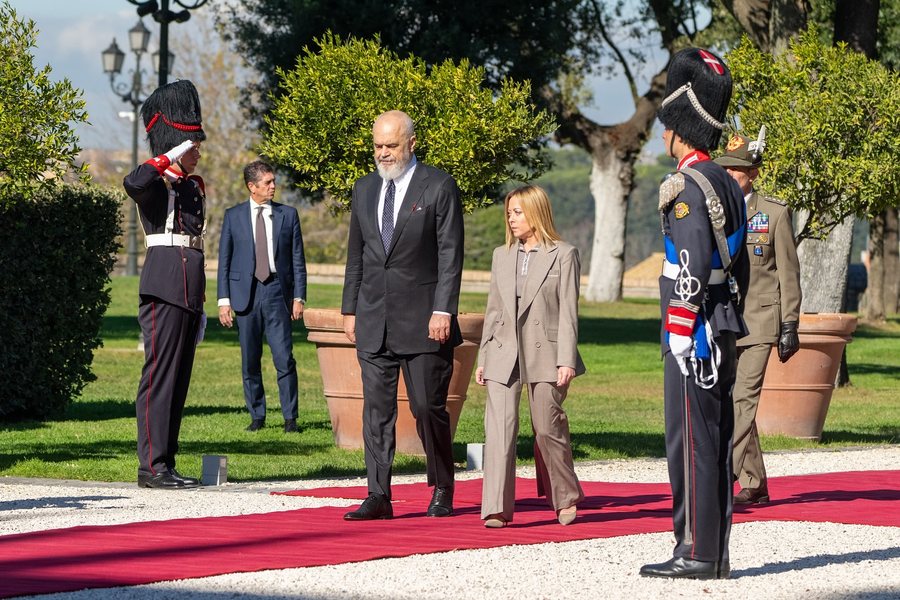
This is Corridor VIII, one of the ten pan-European routes, which will connect the port of Bari with that of Durrës in Albania...
At Villa Doria Pamphili, Giorgia Meloni met with Edi Rama and Albanian ministers at the first intergovernmental summit between the two countries. From Rome, the Italian Prime Minister relaunched an infrastructural and strategic solution strongly supported by Italy, especially in the context of tensions with Russia.
Sixteen agreements were signed, several technical issues were addressed, and a political promise was made to ease Albania's path to the European Union, as well as the protocol on migrants, which remains suspended.
However, experts at Palazzo Chigi highlighted another important issue addressed in the Roman talks: a project launched more than thirty years ago that has now returned to the spotlight with even greater urgency than before and with just as many challenges.
This is Corridor VIII, one of ten pan-European routes, which will connect the port of Bari with that of Durres in Albania. From there, along 1,300 kilometers of railway and 960 kilometers of road, the corridor will extend towards North Macedonia, Skopje and then to Bulgaria. The final terminals will be in Burgas and Varna, on the Black Sea coast. This energy and trade route has long been considered a priority for Italy, which aims to mitigate the additional costs caused by the war in Ukraine.
Invoices and delays
Some projects are still stuck between feasibility studies and technical complications. It is difficult to meet the expected deadline, which has been postponed several times by the respective governments. Corridor VIII was conceived in a completely different Europe: the idea of declaring the infrastructure on the Adriatic coast as a multimodal corridor was born with the amendment of the General Transport Plan (PGT) in 1991. The final deadline for completion still remains unclear. Meloni reiterated this at the press conference: “ The corridor will bring greater development, prosperity and security not only to Italy and Albania, but to Europe as a whole. ”
"Today we dedicated a significant part of our work to cooperation in the areas of energy, mobility, infrastructure and transport, " she said.
The main focus was “the construction of Corridor VIII”. This strategic pillar, according to Meloni, “ will bring the Adriatic coast even closer and transform this space into a strategic economic, logistical and energy corridor, especially for Southern Italy.”
Nuk është hera e parë që qeveria italiane flet me entuziazëm për qendrën e ardhshme logjistike që do të ndërtohet në Italinë e Jugut, një qendër që Meloni e cilëson si “strategjike”. Qeveria po planifikon zgjerimin e disa qendrave tregtare e energjetike, edhe pse me horizonte afatgjata. Në sektorin e energjisë, muajt e fundit është nënshkruar një marrëveshje trepalëshe mes Italisë, Shqipërisë dhe Emirateve të Bashkuara Arabe, që parashikon transportin e energjisë së rinovueshme nga Shqipëria në Itali. Tirana po përqendrohet fort në këtë fushë, ndërsa Roma pritet të jetë një ndër blerësit e parë.
Një projekt tjetër edhe më ambicioz
Ndërkohë, edhe më futurist është projekti IMEC (Korridori Indo-Mesdhetar i Evropës) – një linjë që do të lidhë Mumbain me Triesten, duke kaluar përmes Mesdheut, Gadishullit Arabik dhe Izraelit. Edhe për këtë projekt, Meloni po investon shumë politikisht.
SHBA-ja ka shfaqur interes të madh; zëvendëspresidenti amerikan J.D. Vance e ka diskutuar çështjen me Melonin dhe me kryeministrin indian Modi, ndërsa ministri italian i jashtëm, Antonio Tajani, ka emëruar diplomatin Francesco Talò si të dërguar të posaçëm për IMEC-un.
Ashtu si Korridori VIII, edhe IMEC është bllokuar nga pasiguritë që rrjedhin nga konflikti në Lindjen e Mesme. Por në rastin e aksesit drejt Detit të Zi, vështirësitë janë edhe më të ngutshme: qendrat italiane dhe dalja bullgare paraqiten si një përgjigje ndaj krizës energjetike dhe tregtare të shkaktuar nga pushtimi rus i Ukrainës – një reagim gjeopolitik dhe një hap drejt shkëputjes nga varësia ruse.
Pa hyrë në detaje të skenarit të luftës, vetë Rama falënderoi sot Tajanin, “i cili, si një evropian i bindur, ka qenë gjithmonë mik i Shqipërisë.” “Nëse sot Korridori – strategjik për Evropën dhe NATO-n, për tregtinë dhe mbrojtjen ka hyrë në një fazë të përshpejtuar, kjo është falë ministrit të Jashtëm italian, i cili po e ndjek personalisht projektin”, tha Rama.
Megjithatë, me një udhërrëfyes ende të paqartë, mbetet e vështirë të vërtetohet përshpejtimi real i projektit. Është e vërtetë që që prej vitit 2023, në Brindizi, kreu i Farnesinës u ka garantuar homologëve të tij përparimin e projektit, të cilin e quajti “një urë drejt Ballkanit, me Italinë në ballë.”
Një bosht strategjik që, siç shpjegoi Tajani, “do të hapë një fazë të re zhvillimi ekonomik” dhe do të ndihmojë gjithashtu “në luftën kundër trafikimit të qenieve njerëzore përgjatë rrugës ballkanike.”
Hekurudha dhe diplomacia tregtare janë mjete të rëndësishme për interesat italiane, por, siç thekson një burim zyrtar, ato shërbejnë edhe për ta mbajtur Ballkanin Perëndimor pranë familjes evropiane, pa e izoluar apo, më keq akoma, pa e shtyrë drejt Moskës.
Integrimi i Ballkanit Perëndimor në BE është një objektiv i shpallur i qeverisë italiane, një zgjerim që, në fjalët e Melonit, përfaqëson “ribashkimin e Evropës.”
Edi Rama has stated that he is willing to accept representation by an Italian European Commissioner: "It would be difficult to have two Commissioners for the same country, because in a way we are one country. Albania wants Europe; we are fanatics of European values ". The trade corridor is also a means to achieve this goal. / Adapted from "Pamphlet" by 'Huffington Post Italia'


Lini një Përgjigje