


 Shkruar nga Pamfleti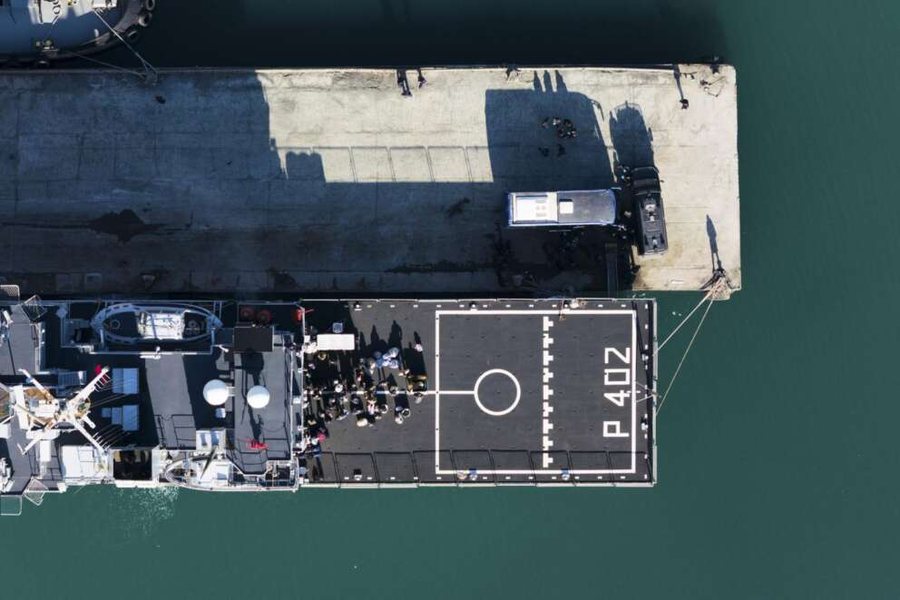
The right celebrates 90 accommodated, but "efficiency" is not measured in numbers, which in any case remain much lower than those foreseen in the initial project. It is the years of life of the detained persons that speak...
The migrant centers set up in Gjadra, based on the agreement between Prime Ministers Edi Rama and Giorgia Meloni, have reignited debates in Italy. Everything has to do with whether the centers work or not. The government has presented as a success the fact that 90 people have been accommodated in the Gjadra center, while for the left in Italy, the figures do not show success. The Italian deputy of the Democratic Party, Rachele Scarpa, in an article published in l'Unita , after a monitoring mission in Gjadra, writes that the stories of migrants who have been accommodated in Gjadra show the failure of the Meloni Government and the agreement signed with the Albanian side.
It focuses on the stories of two people, deported from Italy to Gjadra, with the aim of returning them to their country of origin, and then their return to Italy, after the Italian courts considered the process illegal.
The first is a Togolese citizen who had been in Italy for more than 10 years, with no criminal record, a specialized worker in a mechanical workshop. He works illegally because he is in an irregular situation, therefore vulnerable to blackmail and exploitation. He was detained during a check, transferred to Albania, then released by the Court of Appeal, which did not confirm the detention, and returned to work for the same employer who continues to refuse to regularize him. After voluntarily reporting to the police station after a new check, he was sent first to Trapani and then back to Albania.
The second is a Senegalese citizen with a wife and daughter in Brescia. He too had been previously detained in Albania and released for health reasons. After returning to Italy, he resumed work as a boat painter and managed to convince his employer to legalize him. He presented himself at the police station on his own initiative to start the residence permit procedure: he was first transferred to the CPR in Gradisca and then back to Albania. Togo and Senegal are countries with very low repatriation rates. It is legitimate to ask what concrete results this circulation produces.
Written by Italian MP Rachele Scarpa
On one hand, there is the narrative, the rhetorical game, the simple and simplified question: “Do these centers work or not in Albania?” The answer, just as simple, is immediately served: “They are full, so they work.” On the other hand, there is the reality, which, as always, is much more complex than that.
Kam ndier keqardhje kur pashë disa media dhe përfaqësues të ndryshëm të së djathtës të nxirrnin nga komunikata e gjatë që kam dërguar së bashku me Tavolinën për Azilin dhe Imigracionin pas vizitës inspektuese në qendrën e Gjadrit vetëm një të dhënë numerike, ta absolutizonin dhe ta linin të përdorej për propagandë. Thelbi u la jashtë. Sot dua të përpiqem ta rikthej atë.
Debati mbi qendrat e qëndrimit në Shqipëri nuk mund të reduktohet në një çështje eficience. Dhe, në çdo rast, efikasiteti nuk matet vetëm me shifra. Janë historitë e personave të ndaluar që flasin. Ka të paktën dy persona të deportuar tashmë një herë në Shqipëri në vitin 2025 dhe të rikthyer atje sërish këto ditë.
I pari është një shtetas nga Togo, në Itali prej më shumë se dhjetë vitesh, pa precedentë penalë, punëtor i specializuar në një punishte mekanike. Ai punon në të zezë sepse është në gjendje të parregullt, pra i shantazhueshëm dhe i shfrytëzueshëm. U ndalua gjatë një kontrolli, u transferua në Shqipëri, më pas u lirua nga Gjykata e Apelit që nuk konfirmoi ndalimin, dhe u kthye të punonte te i njëjti punëdhënës që vazhdon të refuzojë ta rregullarizojë. Pasi u paraqit me vullnetin e tij në komisariat pas një kontrolli të ri, u dërgua fillimisht në Trapani dhe më pas sërish në Shqipëri.
I dyti është një shtetas senegalez me bashkëshorte dhe vajza në Brescia. Edhe ai ishte ndaluar më parë në Shqipëri dhe ishte liruar për arsye shëndetësore. Pasi u kthye në Itali, rifilloi punën si lyerës barkash dhe arriti të bindë punëdhënësin ta legalizojë. U paraqit me iniciativën e tij në komisariat për të nisur procedurën e lejes së qëndrimit: u transferua fillimisht në CPR në Gradisca dhe më pas sërish në Shqipëri. Togo dhe Senegali janë vende me përqindje shumë të ulëta riatdhesimesh. Është e ligjshme të shtrohet pyetja se çfarë rezultati konkret prodhon ky qarkullim.
Është edhe rasti i një shtetasi iranian të ndaluar prej tre muajsh. Me kontekstin e paqëndrueshmërisë së rëndë në vendin e tij, riatdhesimi është i parealizueshëm. Megjithatë ai vetë tregon se vështirësia për t’u rregullaruar në Evropë e ka shtyrë në një gjendje të tillë varfërie sa të dëshirojë kthimin në Iran.
Së fundi, është dëshmitari kyç i vdekjes së dyshimtë të 25-vjeçarit Simo Said në CPR-në e Barit. Një i ri me origjinë algjeriane, ndihmësi i parë i Simo-s, i traumatizuar thellë, sot i transferuar në Shqipëri pavarësisht një kërkese për marrje dëshmie të depozituar nga avokati i bashkëshortes së viktimës. Si është e mundur që është larguar nga territori italian një person që duhet të dëshmojë në një procedim për një vdekje të ndodhur në një CPR? Nuk e shpjegoj dot.
Only after these stories can we talk about numbers. Until a few weeks ago, the CPR operated with 10 to 20 people, in a dynamic of constant emptying due to cases sent to the Court of Justice of the European Union, which forced Italian judges, applying the law, to return everyone to Italy. It would have been reasonable for the government to stop after the first referral. This did not happen.
Since February 17th, consulting the critical events register and reconstructing the data, because not even parliamentarians are guaranteed access to a complete list of attendance, I have estimated the arrival of around 75 additional people in the last two weeks, for a total that today is around 90. But the initial project spoke of 3,000 people per year. The section for asylum seekers, with over 830 places, is empty. The center at the port of Shengjin remains unused, a cathedral in the desert.
They celebrate 90 accommodated as if it were a sign of success. Even if we remain only in the dry terrain of numbers, we are not faced with an efficient model. If we add the stories, the suffering, the lack since April 2025 of written and reasoned decisions on transfers, which opens the scenario for hundreds of complaints and claims for compensation, the picture becomes that of a legal, financial and above all human impasse.
The new European Pact on Asylum and Migration will only enter into force in June 2026. None of that normative framework is currently applicable and its compatibility with the Italy-Albania Protocol, in its current form, is by no means certain. However, the government continues to preempt its implementation, transforming these structures into a political laboratory and a potential battlefield for clashes with the judiciary.
"It's full, so it works" is an effective slogan. But the reality is not a slogan. The reality is people coming in and out without a solution, witnesses being removed, repatriations impossible, half-empty centers presented as triumphs, rights being violated. All under the sign of a lack of transparency."
If it works like this, is it a success... /Pamphlet/






Lini një Përgjigje