


 Shkruar nga Pamfleti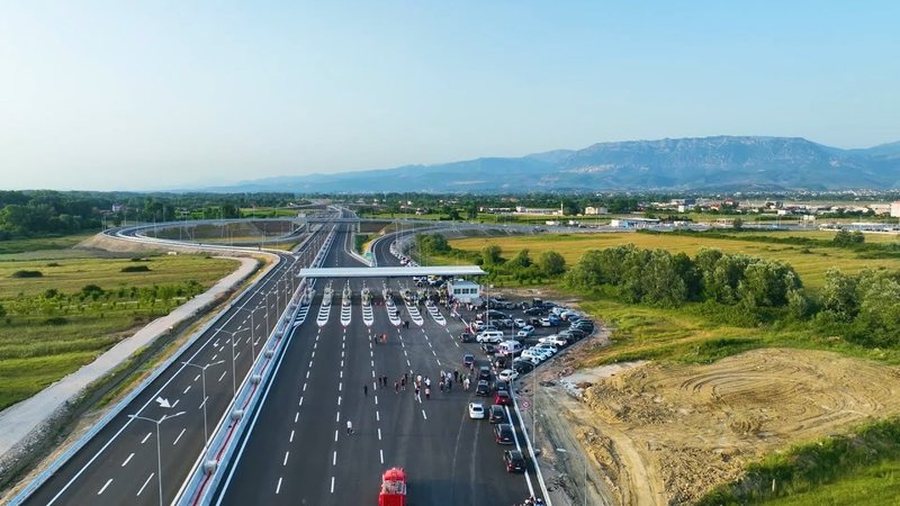
The Thumanë-Kashar road concession is back in the spotlight, this time for a practice related to the method of applying tariffs and the exchange rate.
The 21-kilometer segment was granted as a private investment concession, with the beneficiary company receiving the right to collect tolls for vehicles for a period of 35 years. Initially, in the 2018 competition, an investment of 225 million euros excluding VAT and a total cost to the state budget of 455 million euros over 13 years was envisaged.
However, following a series of legal developments and a decision by the Administrative Court of Appeal in 2021, which found in favor of the concessionaire, the procedure was reopened and the contract was renegotiated by the Ministry of Infrastructure and Energy. In the new version, the contract term was extended from 13 to 35 years and the projected revenues for the concessionaire amounted to approximately 1 billion 307 million euros.
Unlike the initial tender conditions, where no fee was foreseen, the new contract allows for the establishment of a toll for crossing the road. Currently, the fee for vehicles is 2.5 euros including VAT.
Where does the abuse lie?
According to the concession contract, the fee in lek must be calculated based on the official exchange rate of the Bank of Albania on the date of commencement of operation.
Payment on this axis began on January 4, 2025. The last official exchange rate at that time (December 31, 2024) was 98.15 lek per 1 euro. This means that the fee for vehicles should have been around 245 lek.
In practice, citizens pay 250 lek.
The difference of about 5 lek for each pass may seem negligible to the individual, but on an annual scale it produces significant financial effects.
According to the concessionaire's own data in the feasibility study, the first year's revenue from tariffs is expected to be around 26.85 million euros. Meanwhile, budget data shows that this figure has been exceeded and the state has not paid a subsidy.
Considering the flow of funds and the difference of 5 lek for payments in the local currency, the unfair advantage is estimated to be at least 500 thousand euros per year, if the majority of users pay in lek.
For two years of operation, this amount amounts to about 1 million euros.
Payment in euros? Not always possible.
Although the contract provides for the possibility of payment in euros, field tests show that the payment system often charges in lek, even when a euro bank card is used. This practically limits the choice of users and reinforces the application of the questionable exchange rate.
From a minimal difference for citizens, the scheme results in a considerable benefit for the concessionaire, while a portion of the revenue also ends up in the budget through VAT.
Under these conditions, the essential question remains: Are we dealing with an abusive practice that directly violates the public interest? / Piranhas








Lini një Përgjigje