


 Shkruar nga Pamfleti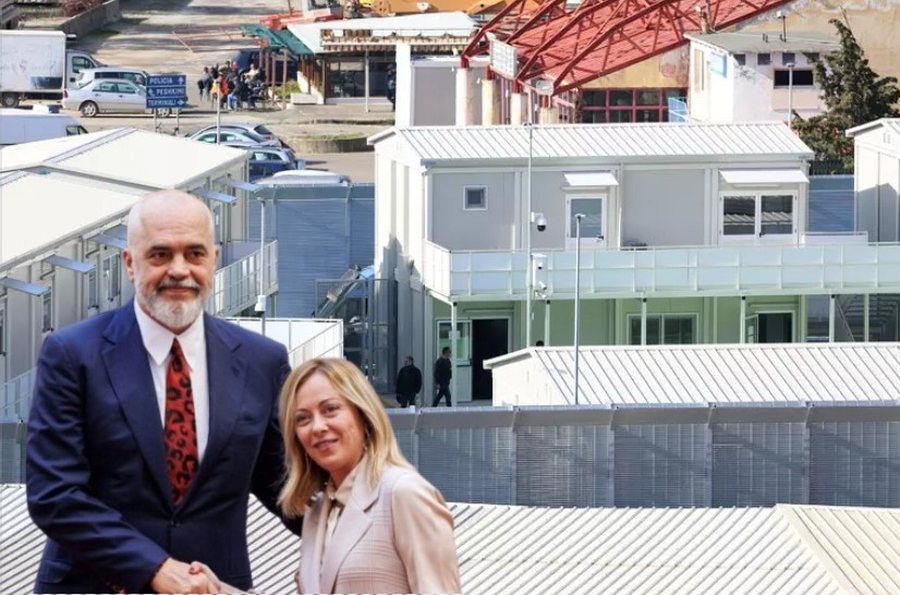
The Italian government aims to have irregular migrants and asylum seekers stay in closed centers outside the European Union and then be repatriated to their countries of origin...
The government of Prime Minister Giorgia Meloni, during today's meeting of the Council of Ministers, approved a new package of stricter measures on the issue of migration. According to the official announcement, the measures aim to align Italian legislation with the new European Pact on Migration and Asylum. To enter into force, they must be approved by Parliament, as the government opted for the procedure of a draft law rather than a legal decree.
The package provides that, in the event of a serious threat to public order or national security, entry into Italian territorial waters may be temporarily prohibited by decision of the Council of Ministers, following a proposal from the Minister of the Interior. The ban may last from one to six months.
Authorities will consider as serious threats the risk of infiltration by terrorist elements, extraordinary migratory pressure, health emergencies of global proportions, and international events that require special security measures.
According to Italian media, anyone who violates this "maritime blockade" will face a fine of between 10,000 and 50,000 euros. In the event of a repeat violation with the same vessel, the authorities will order its seizure.
The measures also foresee that migrants who attempt to enter Italian territorial waters, despite the ban, can be transferred to third countries with which Italy has signed special agreements. The Italian government aims for irregular migrants and asylum seekers to stay in closed centers outside the European Union and then be repatriated to their countries of origin.
According to analyses cited by Italian media, this provision directly refers to the memorandum of cooperation between Italy and Albania, as well as the two closed structures that Italy has set up in northern Albania.
Finally, the new package, which is expected to be reviewed by the Chamber of Deputies and the Senate in Rome, significantly restricts the use of mobile phones inside closed centers for irregular migrants and prohibits the taking of videos and photos with mobile phones.





Lini një Përgjigje