


 Shkruar nga Pamfleti
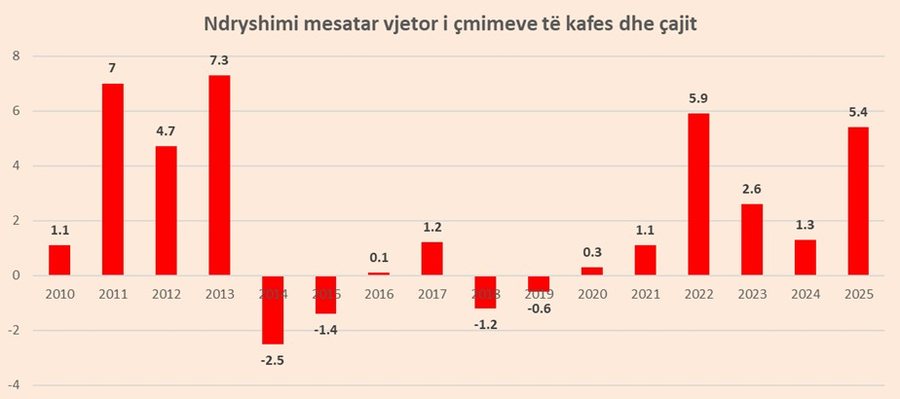
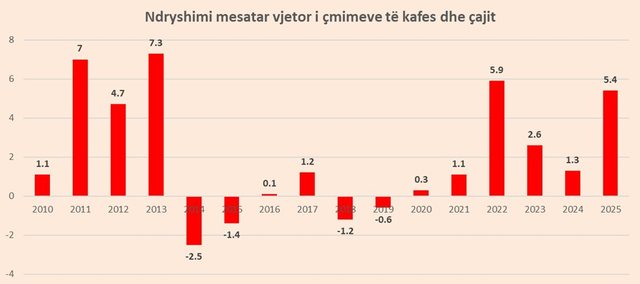
Last year, the average price of coffee increased by 5.4%, the highest rate since 2022. A cup of coffee in the preferred areas of Tirana now costs a minimum of 110 lek, up from 80-90 lek at the beginning of 2025, while in the suburbs it costs a minimum of 80-90 lek, up from 60-70 lek previously.
The price of coffee in our country goes beyond the affordability of the cup, as it directly affects the daily social ritual. Albania has a high density of bars in relation to the population and coffee is the meeting point for work, conversation and rest. From a small expense, coffee is turning into an unaffordable burden, especially for young people, pensioners and employees with fixed salaries.
Market sources claim that the price increase is coming from two main reasons. First and foremost, the price increase in international markets and the increase in consumption by tourists on the other hand.
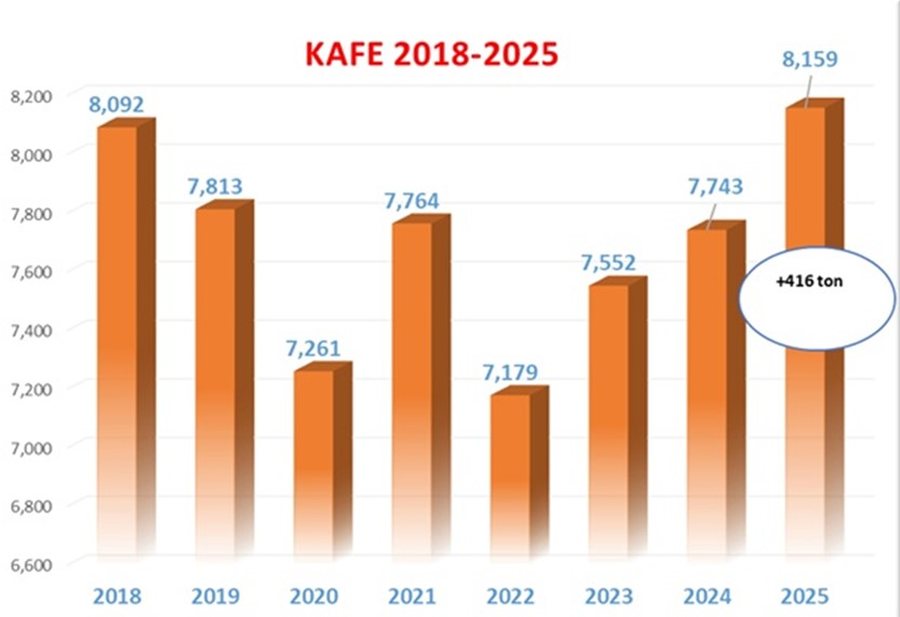
Coffee imports last year reached a record 8.1 thousand tons, up 5.3% compared to 2024, according to customs.
The main cause of the strong growth in the last year is related to the global supply of coffee caused by climate change.
Major producers, particularly Brazil and Vietnam, have been hit by episodes of extreme weather such as long droughts followed by heavy rainfall that have damaged yields. Coffee is a crop that is very sensitive to changes in temperature and rainfall, so even small deviations quickly translate into falling production and rising prices.
At the same time, global demand has continued to grow, especially in Asia and urban markets in developing countries, where coffee consumption is growing at a faster rate than in Europe and North America. This combination of growing demand and limited supply has created direct pressure on international prices.
Albania has also entered a phase where demand for coffee is being driven by visitor flows. With over 12 million tourists in 2025, coffee consumption in cities like Tirana, Durrës, Vlora or Saranda has become part of the tourism industry.
For businesses, this completely changes the pricing logic, as coffee is no longer sold only to the average Albanian, but also to the European tourist who is used to paying 3–5 euros for an espresso. If a large portion of customers are willing to pay more, the market price shifts up for everyone, even locals.
The increase in the price of coffee affects the structure of small businesses, which are massively linked to this product. In many Albanian bars, coffee accounts for a large part of turnover and profit.
In an environment dominated by tourism, the choice often leans towards increasing prices, shifting the business model increasingly towards the foreign consumer./Monitor







Lini një Përgjigje