


 Shkruar nga Pamfleti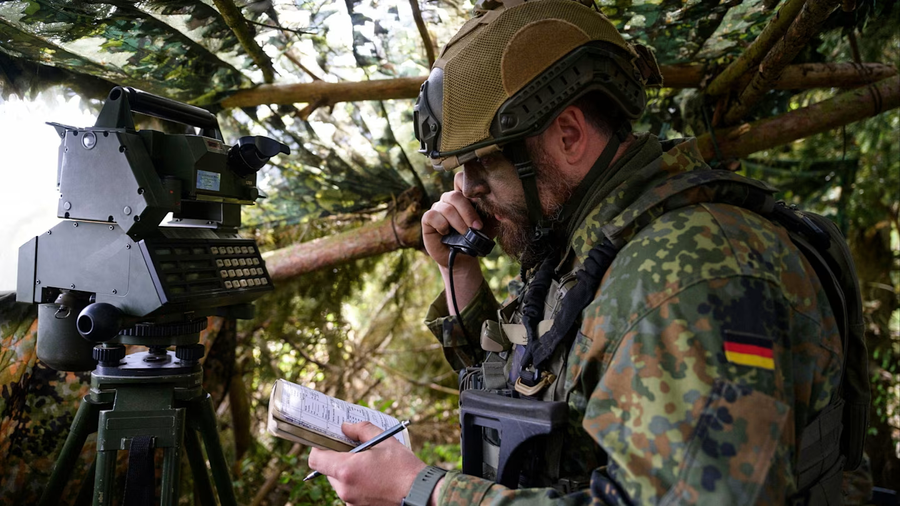
Next year alone, Chancellor Friedrich Merz's government plans to raise more than 200 billion euros from the markets, 12.5 percent more than this year...
Germany plans to borrow more than 800 billion euros by 2030, breaking decades of fiscal constraints, in order to push defense spending to levels unseen since the Cold War.
Next year alone, Chancellor Friedrich Merz's government plans to raise more than 200 billion euros from the markets, 12.5 percent more than this year, finance ministry officials said. Between 2027 and 2030, Germany is expected to borrow about 838 billion euros.
The budget marks a sharp break with the country's deep-rooted aversion to debt and with Merz's party's line on fiscal prudence since the spending boom that followed German reunification in the 1990s. The additional debt will largely finance Germany's defense budget, which is expected to reach 109 billion euros next year and 183.6 billion euros by 2030. Berlin also plans to provide 11.6 billion euros in military aid to Ukraine next year.
The rearmament drive reflects growing concern over Russia and US President Donald Trump's willingness to reduce America's military commitment in Europe.
After Merz's Christian Democrats (CDU) won last year's elections, Berlin changed the country's constitutional debt curb to exclude defense spending, effectively allowing it to borrow unlimitedly for military purposes.
As part of these reforms, Merz and his coalition partners, the Social Democrats, also created a dedicated €500 billion infrastructure fund to modernize Germany's aging bridges, roads, railways, hospitals, schools and energy grids.
Europe's largest economy, whose triple-A rating supports borrowing costs across the eurozone, plans to raise about 55 billion euros in 2027 to finance infrastructure investments, according to finance ministry officials.
The borrowing plans have proven controversial, including within the CDU, which has long supported the so-called Schwarze Null, the balanced budget doctrine associated with the late finance minister Wolfgang Schäuble under then-chancellor Angela Merkel.
Speaking on Sunday evening, Finance Minister Lars Klingbeil, who is also co-leader of the SPD, defended the change, saying: “We cannot defend ourselves against Russian President Vladimir Putin with Schwarze Null.”
According to government officials, Germany is expected to achieve the NATO defense spending ratio of 2.8 percent of GDP this year and the target ratio of 3.5 percent starting in 2029.
While the stimulus package has helped cushion the impact of higher U.S. trade tariffs and high energy costs linked to the U.S.-led conflict with Iran, it has yet to revive Europe's largest economy, which has remained mired in stagnation.
Critics have also exploited Germany's rising debt-servicing costs: interest payments are projected to almost double from 42 billion euros next year to 81 billion euros in 2030, according to government officials.
The DUI, the main industrial lobby, called the borrowings "alarming", noting that interest costs were continuing to "rise at a dizzying rate".
"One record budget follows another, and within just a few years the fiscal framework has been stretched to the limit by high debt levels ," said the VDMA, which represents Germany's machinery and equipment manufacturers.



Lini një Përgjigje