


 Shkruar nga Françoise Dargent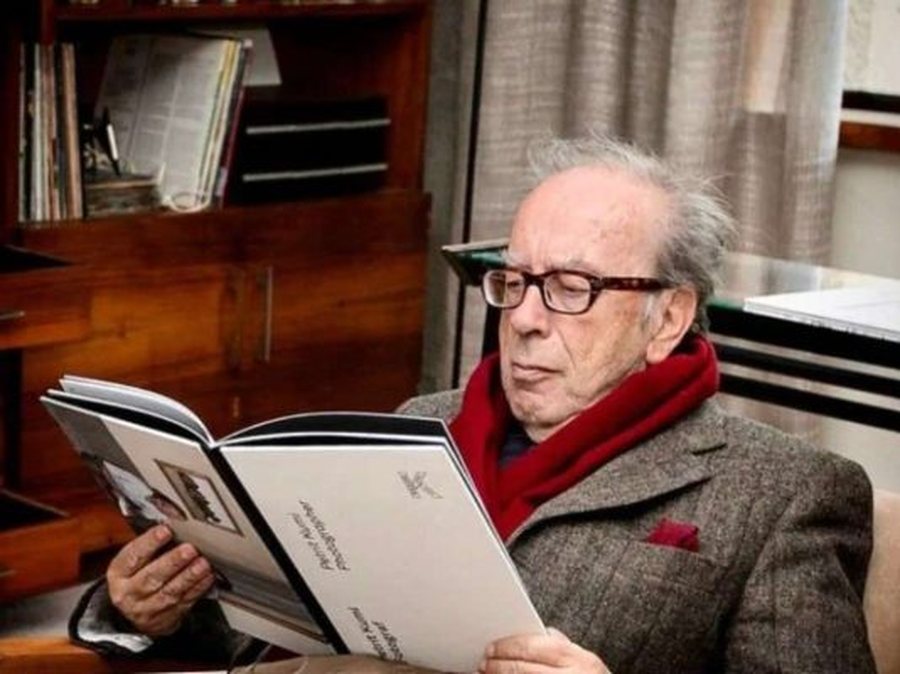
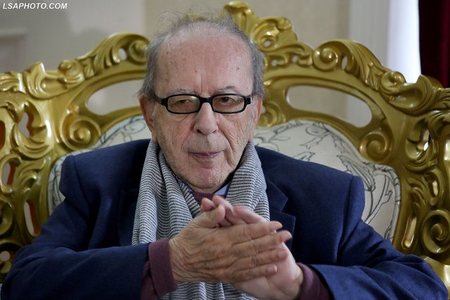
A political refugee in France in 1990, the novelist left a work with a powerful epic spirit, mixing sharp political analysis with yesterday's legends. He died on Monday morning, July 1, from a heart attack in the Tirana hospital.
"If we believe in literature, nothing but literature will be our divine protection", said Kadare.
"If you trust literature, only literature, it will be your divine protection. Nothing can happen to you. By 1990, the year he sought political asylum in France, Ismaïl Kadare managed to make this motto his own, happily using the metaphor in his many books, which were highly critical of totalitarian regimes, while his country, Albania was under the rule of a dictator.
"If you could worship literature and not take the regime seriously, you are saved," Kadare told Nouvel Observateur in 2005.
While promoting the Palace of Dreams in France, the writer decided to seek political asylum. He writes: "In such a duel between a tyrant and a poet, it is always, as we know, the poet who wins, even if, for a time, he may seem defeated."
When the regime finally fell, he returned to the land of the eagles, returning several times a year even though his home remained in Paris. In France, he continues to publish with the same regularity, faithful to Fayard, the home of his original publisher Claude Durand (1938-2015). It was in France that he undertook the Herculean task of revising his entire work, pruning or completing works he had self-censored.
With the fall of the dictatorship, his new novels became shorter and shorter. The micro-novella replaces the sagas, but criticism is no longer necessarily hidden in symbolic form and Albania is always at the center of his writings. In the late 1990s, he became involved in the issue of Albanians in Kosovo. A harsh critic of Serbia, he increases the number of interviews and public speaking engagements.
Then calm will return, lulled by the regularity of his publications. After 'Kukulla' in 2015 where he evokes the figure of his mother, he published in 2017 what is perhaps his most intimate story.
'Breakfasts at the Rostand Cafe' where he presents a collection of texts written during the previous decade living between France and Albania, with which he had ended up making peace.
His last novel, The Dispute published in 2022, emblematic of his entire work, reconstructs the telephone conversation between Stalin and Pasternak during the arrest of the poet Mandelstam in the 1930s.
Kadare's two works "Twilight of the gods of the steppe", "When the rulers quarrel" the French publisher Robert Laffon says that they are a very good picture of what is described as "a normal writer in a mad state"/ Le figaro



Lini një Përgjigje