


 Shkruar nga Pamfleti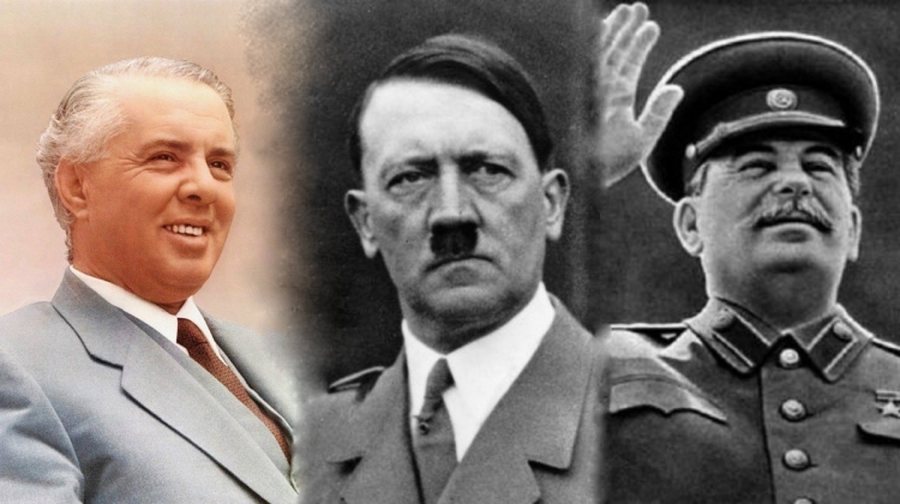
"I waited 28 years, to get a visa to touch Albania", - this was the fate of David Binder, the well-known journalist of "The New York Times", who, through an exclusive interview for "Albania" , talks about the 33-year period of his professional career, as a reporter for Albania and the Eastern Communist bloc, in one of the most prestigious media outlets in the world. The journalist who saw with his own eyes the construction of the Berlin Wall in 1961, but who was again a witness to its collapse and the overthrow of communism, confesses that he got the first information about Albania in the auditoriums of Harvard University.
In this interview, Binder tells for the first time how he got to know Albania; his constant reports about the isolated communist state, the rejection of our mission to the UN to meet with him during 1984 and, finally, the meeting with our ambassador in Belgrade, Kujtim Hysenaj, who after less than a decade, he would become head of the National Intelligence Service.
In the first part of this interview that we are publishing, Binder talks about the reasons that led to the failure of talks on the restoration of diplomatic relations between Albania and the USA in 1973. "Maybe it had to do with the heart attack that Enver suffered Hoxha", says the well-known "Times" journalist, several times a contender for the "Pulitzer", one of the most popular awards in the field of journalism around the world.
Mr. Binder, when did you first hear about Albania? When did you start writing about this country?
I first learned about Albania while studying the history of the Balkans with Professor Robert Lee Wolff at Harvard University. As I started writing about this country, in 1963, when I settled in Belgrade, to work as a journalist for "The New York Times".
At that time, was it very difficult to find information about Albania? What were the routes you used to get information about the isolated communist state? What contacts have you had with Albanian institutions, the Albanian diplomatic mission around the world and foreign diplomats in Tirana?
While staying in Belgrade, I listened to the English edition on "Radio Tirana". Also, I read translations of the Albanian press and comments about Albania in the Yugoslav press. But, shortly before 1984, when I made a telephone request to the Albanian mission to the United Nations, for a meeting with the diplomatic representative, I received a firm answer: "You cannot talk to anyone, at any time."
I visited the Albanian Embassy in Belgrade, starting in the summer of 1963, where I applied for a visa and persisted for 28 years. Finally, I got it in 1990, from Ambassador Kujtim Hysenaj, who was very intelligent and a nice man.
I tried to compensate for the inadequacy of knowing Albanians in their homeland, by finding Albanians in the diaspora; like Steven Peters, of the US Department of State, and Professor Arshi Pipa, whose works I read in English.
I read Albanian literature, finding it translated, including Ismail Kadare's prose and poetry. I even tried to learn a little, even the Albanian language.
I don't know if you have ever met Enver Hoxha?! How would you describe him as a leader? What if you were to compare him to other dictators in the East?
I have never met Enver Hoxha. But I think he was one of the most wicked tyrants in modern history; as cruel as Hitler, Stalin, Mao. He was as bad as Ceausescu, Rakosh and Zhivkov; and in some respects, worse than all of them. He had done a significant job, unifying the Albanian language (albeit at a heavy price, for the Gegs).
You have written several articles that the United States has invited Albania to establish diplomatic relations since 1973. Why did the negotiations fail?
The answer to this question exists in Tirana, not in Washington. Maybe it had something to do with the heart attack that Enver Hoxha suffered in 1973. But, I suspect that it had more to do with Albania's relations with China, which then began to cool.
How did you imagine Albania and how did you see it when you first arrived here?
I knew it was poor, isolated and economically backward, but, in truth, the reality was more shocking, including Enver Hoxha's bunker mania, similar to the front line of the Maginot war. . (defensive front of France, against Germany, during the Second World War, - note ed.).
The biggest surprise on a human level, was that I discovered that most of the Albanians I met were highly educated people, who were well informed about the world, about what was happening beyond their narrow borders, mainly through foreign radio and television. .
Who is David Binder?
David Binder was born to American parents on February 22, 1931, in London. He graduated from Harvard University and then took a BA in European History and Literature in 1953. Binder was a Fulbright Scholar at the University of Cologne in 1953. 54. He did a qualification at the Salzburg Seminary.
Binder is the author of books; "Berlin East and West", published in 1962 and "The Other German - The Life and Times of Willy Brandt" in 1976. He is also a co-author of the "New York Times" editions of "Project Apollo" , for the fall of communism. He worked until 1996 and since that period, he is retired.
David Binder's professional career
David Binder was one of the New York Times' Washington bureau reporters from 1973 until his retirement in 1996. He was first as a diplomatic correspondent, then as a news editor, and again as a correspondent. He continued to work specializing in the coverage of Eastern and Central European affairs. Binder traveled frequently to these states.
His previous assignments for "Times" were: correspondent in Germany, in the years 1967-1973 and correspondent for Eastern Europe, located in Belgrade, in the years 1963-1967. Earlier, he worked in Washington as a diplomatic correspondent and in Berlin, covering the construction of the Berlin Wall in 1961.
Also in 1989 and 1990, he reported the fall of the Wall and the overthrow of the communist system in East Germany, Romania, Bulgaria, Albania and Yugoslavia. David Binder also reported on the civil wars in Croatia, Bosnia and the conflict in Kosovo. In addition to the "New York Times", since 1991, he has collaborated with many other American and British newspapers./Memorie.al





Lini një Përgjigje