


 Shkruar nga Pamfleti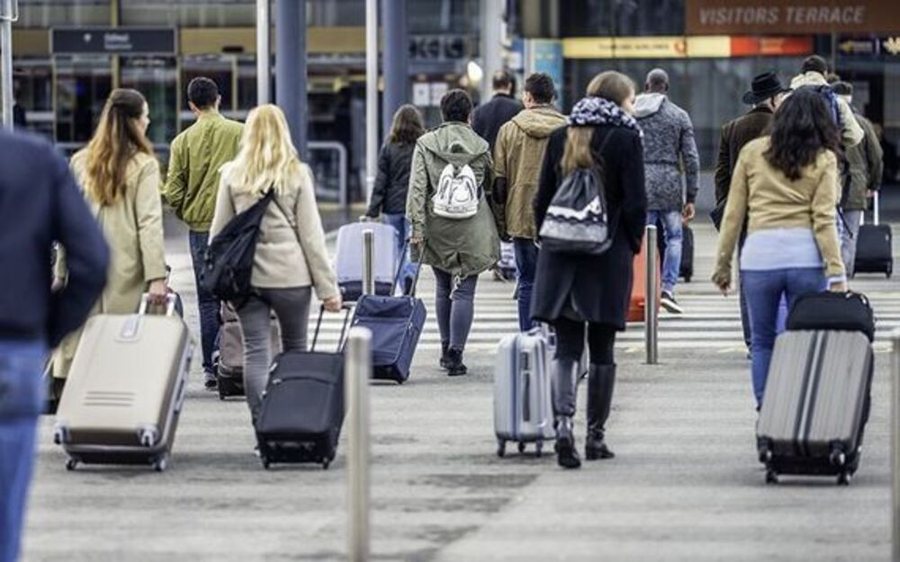
With Albania becoming a favorite tourist destination and welcoming nearly 5 million foreigners in July-September alone, expectations were high for the economy in the third quarter of last year. The results were a bit disappointing.
Gross Domestic Product increased by 3.46%, almost at the same levels as the previous quarter. The final consumption of the population recorded an expansion of only 2%, which was the lowest level since the time of the pandemic. The first explanation for this poor result was informality in tourism.
The second influencing factor was the decline in domestic consumption, as a result of the high influx of immigration in recent years. Imagine that the exodus of local citizens has been so high that it has not been able to be amortized by a record influx of tourists!
After the end of the health pandemic, another pandemic began, that of emigration. The trend, in fact, is not new. Since 1990, thousands of people have left in search of a better life. The first wave of emigration was not felt so much in the economy for several factors.
First, the country had a new population. The country's median age (which divides the population into two equal halves) in that period was 24 years. The country was poor and emigration had a positive effect. Remittances brought by those who fled became an important source of consumption, along with investment and knowledge brought by returnees.
More than 30 years later, Albania is not what it was in the early 90s. Many things have changed for the better, both for the image, as well as for the quality of life and the economic level. But the Albanians still want to leave. After a strong surge in 2022, when asylum applications were the highest since 2016, the numbers appeared to have slowed slightly in 2023.
This lasted very little. Asylum requests, the first indicator of flight, rose again in the final months of 2023, according to Eurostat. Another recent indicator, that of granting citizenships, shows that their number increased by 55% in 2022, reaching the highest level since 2017.
In total, in the last 20 years, about 600,000 citizenships have been granted to Albanians in one of the EU countries, a figure that is as much as 22% who declare that they live in the country (Census results in June will give the exact figure of the remaining population).
This new wave of emigration is proving very harmful to the economy. The country has "aged" and no longer has the energy of the early 90s. Emigration, changing lifestyles and falling birthrates have meant that the median age is reaching 39.
Eurostat announced recently that Albania, although still relatively young compared to developed countries, is aging twice as fast as Europe. The United Nations predicts that in the year 2100, Albania is expected to have the oldest population in the world.
Businesses have forgotten all other troubles and no longer complain about taxes and customs, but about the lack of employees. There is no sector of the economy that is not affected, not only in finding labor, but also in consumption.
Businesses are holding back their expansion or investment plans. Tourism operators, who again expect a boom in foreigners this year, do not know how they will manage to accommodate the demands of tourists. Agriculture had negative growth in the third quarter, as there are no more people left to work the land or herd cattle and imported products are choking the market.
Increasing productivity, a necessity, now that the structure of the economy and the cost of labor is changing, is no longer an advantage, it will be impossible to achieve without a dynamic labor market.
The government is calmer and yet immigration has become a serious concern, as this is a normal trend all over the world. True, everywhere they go, a process that cannot be stopped, but the pace at which they are leaving is very high for the size of the local economy and is expected to cause major imbalances in the future in the labor market, from consumption trends to pension schemes.
Can high immigration flows be stopped?! The EBRD recently said that poor governance is a major driver of emigration. Second, the economic model itself has promoted low-paid jobs. Fortunately, the latter is changing as the market itself needs. Businesses have begun to reflect, in terms of wages, motivation practices, etc.
This is a long-term process and it will take time to reach a new balance. Businesses, as always, will move at a faster pace. The government, first, must accept that this pandemic can become deadly for the economy and start looking for cures as soon as possible. /MONITOR





Lini një Përgjigje