


 Shkruar nga Pamfleti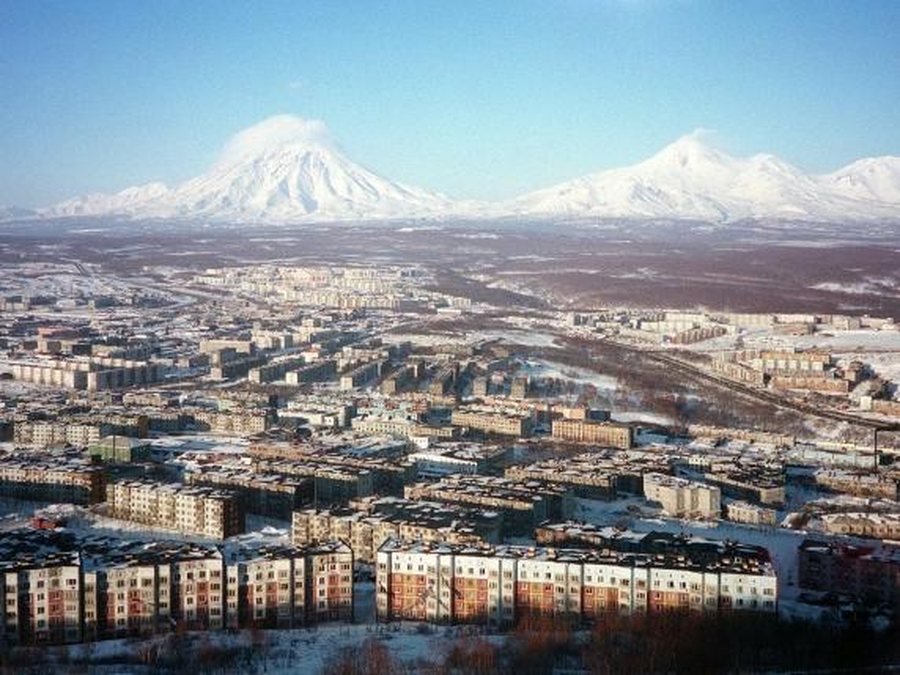
Kamchatka, the isolated peninsula where the earth burns and trembles: from nuclear base to volcanic paradise
The Kamchatka Peninsula, where a very strong earthquake was recorded overnight, is the easternmost part of the Russian Federation, touched by the Pacific Ocean and the Sea of Okhotsk. 1,200 kilometers long, it is inhabited by just over 300,000 people, almost all of them ethnic Russian. A land of fire, ice and silence, isolated from the rest of the country, with no road connection to mainland Russia.
The region is a volcanic paradise, part of the UNESCO World Heritage. With over 160 volcanoes, of which about thirty are active, this is one of the most seismic areas on the planet. Klyuchevskaya Sopka – a colossal mountain 4,750 meters high, rises above a landscape of lava, mist and ice. Next to it, the Valley of Geysers erupts with steam and sulfurous waters, offering a natural spectacle that few have the opportunity to see: not only because of the cost, but also because of the difficult logistics.
Going to Kamchatka is a journey into the unknown. It takes at least eight hours of flight from Moscow, landing in Petropavlovsk-Kamchatsky, the region’s only real city. From there, the interior spreads out like a mosaic of tundra, forests, and mountain ranges, where brown bears outnumber the inhabitants. There are no railways or highways to get to; the peninsula is, in effect, an island.
For strategic military reasons and especially its proximity to the United States, the region was off-limits to foreigners and even Russians until the 1990s. Its location made it suitable for underwater bases, radars and nuclear silos. Some areas of the country still remain inaccessible. But today, the region is trying to create a new identity. Specialized tourism, from trekking to volcanoes, extreme fishing and wildlife watching, attracts only a small number of travelers each year. However, the economy remains fragile, supported mainly by fishing and state subsidies. /Adapted from “Corriere Della Sera”




Lini një Përgjigje