


 Shkruar nga Alba Kepi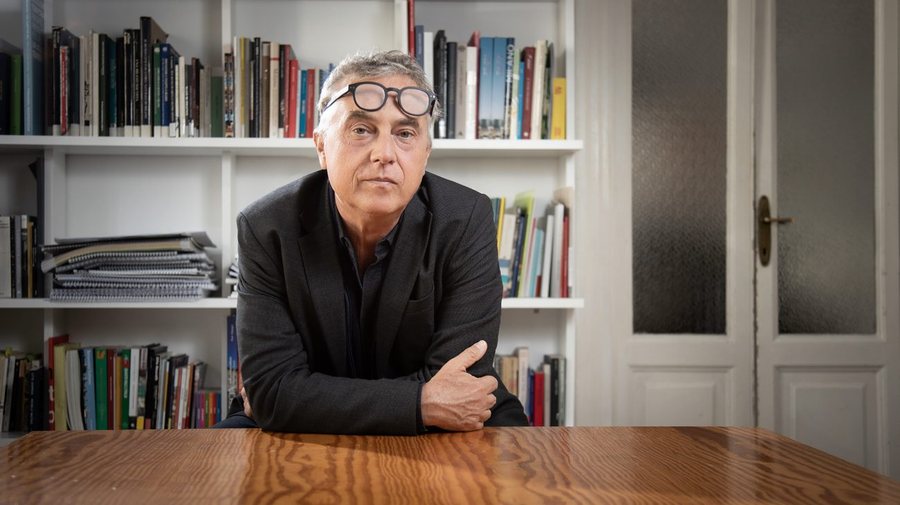
“We don’t want the Milan model.” “Social danger.” These are the words that appeared on several posters placed near the Monti Tiburtini metro station in Rome, with a photograph of Milanese architect Stefano Boeri, who is currently at the center of a fierce debate. Boeri, investigated in an urban planning case in Milan along with other well-known figures, became the subject of anonymous protests expressing apparent dissatisfaction with his urban regeneration project for the Italian capital, “Laboratorio Roma050.”
But who is Stefano Boeri really, and why does a model like Milan's cause so much controversy?
In recent years, Boeri has been the protagonist of some of the most important urban transformations in Italy and beyond. The “Milan Model,” which he helped build, has often been praised for its ability to attract investment, innovation, and economic growth, as well as to manage the complexity of the modern city. But this model has also been accused of creating social inequality and concentrating wealth in exclusive areas.
In Rome, the “Laboratorio Roma050” project attempted to imagine a future of sustainable and inclusive transformation by 2050, with a team of expert and young architects called upon to overhaul the capital. However, there was no shortage of reactions: direct attacks on anonymous posters indicate a part of the city that rejects this vision, perhaps out of fear of rapid change or a broader distrust of urban elites.
The “Roma050” Project: A Vision for the Future of the Capital Amidst Challenges and Controversies
In 2022, Stefano Boeri, the Milanese architect, was invited by the Mayor of Rome, Roberto Gualtieri, and the Urban Planning Councilor, Maurizio Veloccia, to lead a working group composed of expert and young architects, with the aim of drafting a long-term vision for the future of the Italian capital until 2050. This project was called “Laboratorio Roma050 – the future of the World Metropolis” and was Boeri’s own proposal.
The center-left government in Rome decided to build a strategic opportunity around this project, capitalizing on the expertise and reputation of the architect born in 1956. However, the path was not without controversy. A budget of 750,000 euros was allocated to support the work of the group of 13 professionals, including Boeri. This decision, approved by the City Council and managed by “Risorse per Roma”, was sharply criticized by opposition parties such as Fratelli d'Italia and M5S, but also by the local architects' organization, which denounced the lack of transparency and the procedures without open competition for the selection of staff.
However, the work of Boeri and his team of young people began in 2023 and brought the first results on June 22, 2025, with the presentation at the Campidoglio of scenarios for the transformation and urban regeneration of Rome for the coming decades. The plan foresees three main phases:
• “Atlantic of Transformations”, covering the period until 2030,
• “Fresco of the future Rome”, for the period 2030-2050,
• and the “Charter for Rome”, a manifesto summarizing the vision beyond 2050.
This ambitious project aims to revitalize Rome by bringing together urban development, environmental sustainability and social inclusion, giving the city a new perspective, at a time when the capital's challenges are greater than ever.
However, as the plan takes shape, opposition and doubts remain present, reflecting the political tensions and social concerns that accompany any attempt at change in a city with such a deep heritage as Rome. / Syri.net







Lini një Përgjigje