


 Shkruar nga Andrew Day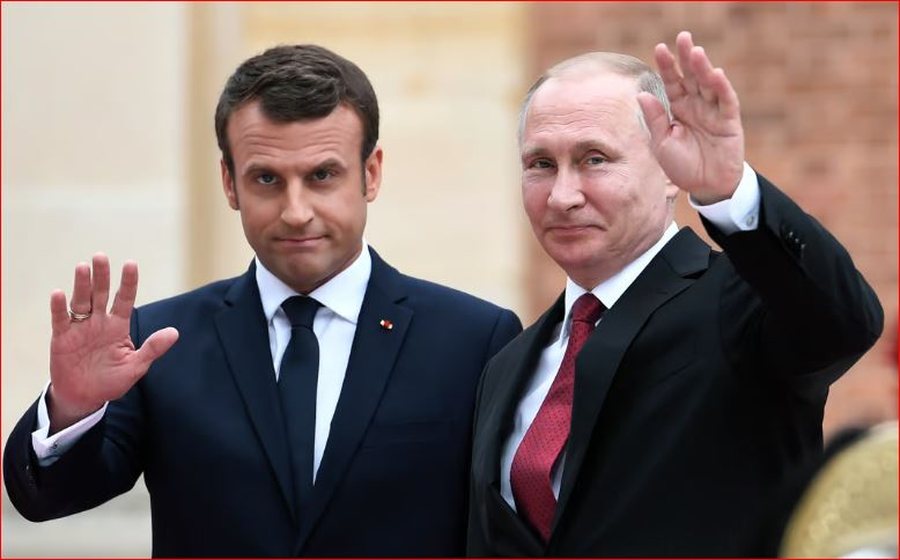
US efforts to NATOize Ukraine, both de facto and de jure, made Putin's occupation of it more possible.
French President Emmanuel Macron is presenting his vision for "a Europe that demands respect, and that guarantees its own security". He says that Ukraine is part of this "European family", and "destined to join the union when the time comes".
These goals - European "strategic autonomy" and a fully European Ukraine - may be more closely related than even Macron realizes. As Ukraine struggles on the battlefield to overcome Russia's advantages in men and equipment, Macron may have the opportunity to first end a war that has devastated Ukraine, second to bring Ukraine into the European Union, and third, to help transform the continent into the "European Power" he envisions.
A recent article in Foreign Affairs magazine confirmed that Russian negotiators agreed during failed negotiations at the start of the war that Ukraine would join the EU as part of a peace deal. Joining the union would fulfill Ukraine's long-standing goal of becoming more integrated into a free and prosperous Europe.
It could also give Kiev the security guarantees it understandably wants, should Moscow attack it again in the future. Less well known than NATO's collective self-defense policy, the EU's common security policy obliges members to assist a member state that has suffered "armed aggression on its territory."
Historically the EU has allowed neutral and non-aligned members to choose not to participate in common security. However, while Moscow would prefer Ukraine to become a neutral state, the post-war settlement would be more stable if Europe reduced Kiev's sense of vulnerability.
Moreover, the EU itself will benefit from the Ukrainian army, already with a great deal of combat experience. Of course, Kiev would receive more security guarantees from America, the world's leading military superpower. However, according to the "Foreign Affairs" article cited above, this is not accepted by Washington.
Fortunately for Ukraine, Europe is now aiming to strengthen its military capabilities in an era of uncertainty and in a world of increasingly polarized power. As Europe prepares for another America First Trump administration, and as we enter the third year of the Russia-Ukraine war, Macron is not the only EU leader promoting military self-sufficiency.
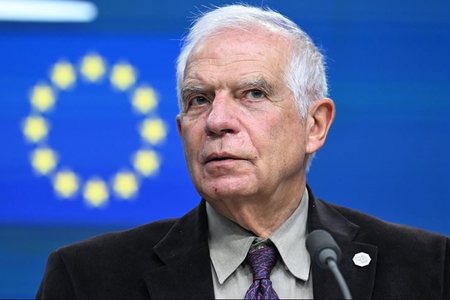
"Russia's attack on Ukraine has fueled a great sense of urgency to increase our defense capabilities," EU foreign policy chief Josep Borrell said in March. A month earlier, EU President Ursula von der Leyen asked Europe to "take responsibility for its own security", noting: "We have no control over elections or decisions in other parts of the world".
A recent article in Politico pointed out that NATO and the EU are increasingly at odds with each other as the latter becomes more active on defense. Some are calling for the next European Commission to appoint the first Defense Commissioner whose role would be to properly fund the European arms industry.
But would an EU commitment to protect Ukraine be credible? Increasingly, the answer is yes, and largely thanks to Macron. On several occasions, the French president has raised the possibility of sending Western forces to Ukraine - a proposal that opposition leaders have described as very sincere, and which Moscow appears to be taking seriously - and recently he suggested that Paris could "Europeanize" its nuclear arsenal, spreading it across Europe under France's nuclear umbrella.
Through these steps, Élysée is trying to create a "strategic ambiguity", so that Putin thinks that the West can even intervene militarily, in case he escalates his aggression against Ukraine. Given Russia's increasingly favorable negotiating position, Moscow may be less willing than it was 2 years ago to give the green light to Ukraine's EU membership.
To make Ukraine's participation in the EU's common security framework more acceptable to Putin, Macron must gather European leaders and pledge that in return, they will block Ukraine's accession to NATO, which Washington has begun to demand since the Bucharest Summit in 2008, despite Russia's strong opposition.
Moreover, the French and Ukrainian presidents must promise that only European countries - and not America - will cooperate militarily with Ukraine after the war. US efforts to NATOize Ukraine, both de facto and de jure, made Putin's occupation of it more possible.
Now to resolve this conflict, that strategic mistake must be undone. The commitment to defend Ukraine without America's support would encourage EU countries to continue to bear a greater burden in the field of defense, as well as to strengthen military cooperation.
It would also allow the United States to free itself from some of its defense commitments to focus more on China. Since Ukraine has a peripheral interest in the security of the United States, Washington should make it absolutely clear that it would not go to war with Moscow if European NATO countries come to Ukraine's defense in the future. response from any new attack by Russia.
And the European capitals must make it clear - to Moscow, Washington and Kiev - that America's obligations in NATO would not cover such a scenario. Of course, the United States would not take kindly to a European vassal seeking control over the Ukraine crisis, but breaking that vassalage is exactly what Macron is aiming for.
And if Europe, Ukraine and Russia agreed to end the fighting, and signed a pact like the one described above, there would be pressure on Washington to distance itself and give peace a chance. Finally, a brutal and destructive war would end, and the sovereign Europe that Macron dreams of would be a few steps closer to reality./ Courtesy: "Pamphlet" , From: "National Interest"


Lini një Përgjigje