


 Shkruar nga Marc Bennetts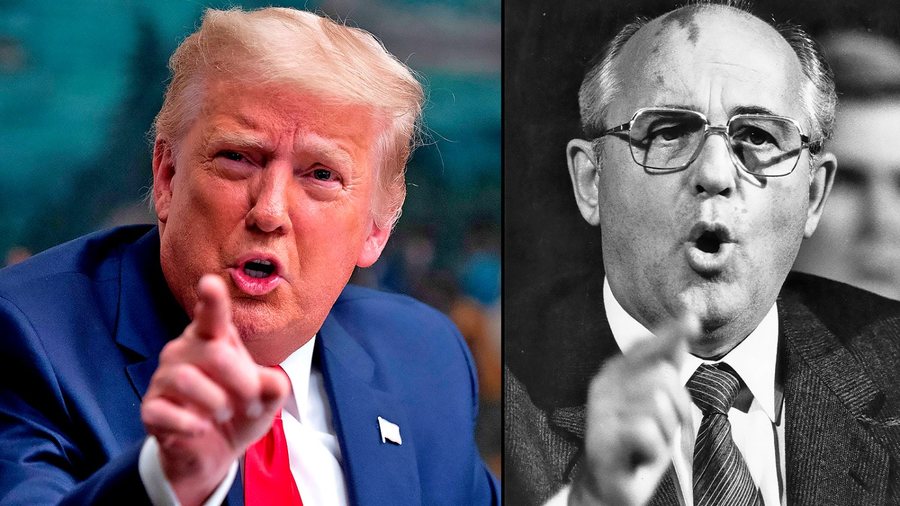
Both leaders overturned decades of entrenched policies in their countries to bring Moscow and Washington closer together, while causing divisions with their traditional allies.
Russians compare MAGA to Perestroika, and hope it will trigger the breakup of the US, as happened 34 years ago with the Soviet Union.
One was a Communist Party official whose rise to power led to the eventual collapse of the Soviet Union. The other is a megalomaniac New York businessman whose return to the White House has shocked Washington and beyond.
Mikhail Gorbachev and US President Donald Trump are separated by decades of time and geopolitical clout. Yet the parallels between the two men's divisive leadership are already being noticed in Moscow.
“Trump is the American Gorbachev!” wrote Zvezda, a television network owned by the Russian Defense Ministry. “And MAGA is the American Perestroika,” it added, referring to Gorbachev’s economic “restructuring” of the Soviet Union.
And the similarities are not hard to spot. Both leaders overturned decades of entrenched policies in their countries to bring Moscow and Washington closer together, while causing divisions with their traditional allies.
Gorbachev's abandonment of Soviet dogma led to a break with hardline communist states such as East Germany, while Trump's increasingly pro-Russian stance on the war in Ukraine has caused much consternation in European countries.
However, while Gorbachev was praised in the West for his role in ending the Cold War, he is blamed and even hated by many Russians for the collapse of the Soviet Union.
But the comparison being made these days in Moscow between the Soviet leader and Trump is not intended to be a compliment, but rather to raise hopes that the president's attack on liberal values will cause the disintegration of the United States as well.
"America of the 21st century is heading towards a serious division in society, between completely different needs and principles of life. The possibility of a civil war cannot be ruled out there," Russian MP Andrey Lugovoi declared last month.
Last year, the Hollywood film “Civil War” was closely watched by pro-Russian officials. Some even saw it as a significant sign. “Hollywood doesn’t make such films without reason,” said former Russian President Dmitry Medvedev, who is still a top security official.
Të martën Yuri Podolyaka, një bloger i njohur ushtarak pro-rus, shkroi në rrjetin social Telegram: “Ajo që po shohim sot në SHBA, më krijon një ndjenjë të fortë Deja Vu-je. Ne e kemi parë diçka të tillë në Bashkimin Sovjetik, në gjysmën e dytë të viteve 1980.E vetmja gjë që do të doja t’i uroja Donaldit është suksesi, në mënyrë që ‘ristrukturimi’ që synon ai për SHBA-në, të përfundojë në të njëjtën mënyrë si i yni”.
Trump dhe Gorbaçov u takuan në vitin 1987 në ambasadën sovjetike në Uashington. Edhe pse Gorbaçovi ishte shumë popullor në Perëndim, Trump nuk ishte i impresionuar nga ai. Shumë kohë para kritikës së tij të fundit ndaj presidentit ukrainas Zelensky, që u etiketua si një hero nga udhëheqësit perëndimorë pas pushtimit të Rusisë në vitin 2022, Trump e cilësoi “një katastrofë” qeverisjen e udhëheqësit reformist sovjetik.
“Rusia është jashtë kontrollit dhe udhëheqja e di këtë. Ky është problemi im me Gorbaçovin. Ai nuk është një udhëheqës mjaftueshëm i fortë”- deklaroi ai në vitin 1990 në një intervistë për revistën “Playboy”.
Trump mund ta shohë Rusinë e presidentit Putin si më të përputhshme me shijet e tij, nëse do marrë pjesë në paradën ushtarake të Ditës së Fitores në Moskë më 9 maj, e cila do të festojë 80-vjetorin e humbjes së Gjermanisë naziste.
Kremlini ka thënë se Trump do të ishte i mirëpritur. Një shëtitje në Moskë nga Trump, do të ngjallte kujtimet jo vetëm të presidentit Reagan që vizitoi Sheshin e Kuq me Gorbaçovin në vitin 1988, por edhe seancat e improvizuara të takimeve dhe përshëndetjeve të Gorbaçovit me turmat entuziaste gjatë vizitës së tij në SHBA në vitin 1990.
Megjithatë, përmirësimi i marrëdhënieve midis Moskës dhe Perëndimit me nxitjen e Gorbaçov, çoi në një lehtësim të tensioneve ndërkombëtare, dhe për pak kohë edhe premtimin për një botë më paqësore. Në të kundërt, afrimi i madh i Trump me Kremlinin, ka shtuar frikën në Evropë, se ajo mund të jetë objektivi i ardhshëm i Putinit, nëse Uashingtoni firmos një marrëveshje paqeje në Ukrainë sipas kushteve të Rusisë.
Në një takim urgjent të udhëheqësve evropianë javën e kaluar në Paris, kryeministri polak Donald Tusk tha:“Një kapitullim i detyruar i Ukrainës, do të nënkuptonte një kapitullim të gjithë komunitetit të Perëndimit. Ne do të përballemi me të gjitha pasojat negative të këtij skenari. Dhe askush të mos pretendojë se nuk e sheh këtë”.
Nina Hrushov, analiste e marrëdhënieve ndërkombëtare në Nju Jork, dhe njëherazi stërmbesa e Nikita Hrushovit, i cili udhëhoqi Bashkimin Sovjetik në vitet 1953-1964, është shprehur: “Nëse e krahasojmë Trumpin me Gorbaçovin, atëherë a po e pranojmë se rendi perëndimor është në shtratin e vdekjes? Nëse është kështu, dhe revolucioni i Trump është Perestrojka në kahun e kundërt, atëherë situata në Amerikë do të përkeqësohet, dhe po ashtu edhe në mbarë botën”.
But Trump's soft approach to relations with Russia doesn't have to be all bad news. The last remaining nuclear arms treaty between Moscow and Washington, NEW START, is set to expire next year, and talks on its replacement haven't even begun.
Failure to do so would almost certainly lead to a new arms race between East and West. Russia's rapprochement with the US under Gorbachev led to the signing of a historic arms treaty in 1991.
Could Trump repeat that feat? Jon B. Wolfsthal, an American nuclear expert, wrote in an article for the Bulletin of the Atomic Scientists website that “a nuclear arms deal could bolster Trump’s claim that he deserves a Nobel Peace Prize ... one of his oldest desires.”
In this respect, Trump would be emulating Gorbachev. The last Soviet leader was awarded the Nobel Prize for ending the Cold War./ Adapted from “Pamphlet” by “Sunday Times”



Lini një Përgjigje