


 Shkruar nga Pamfleti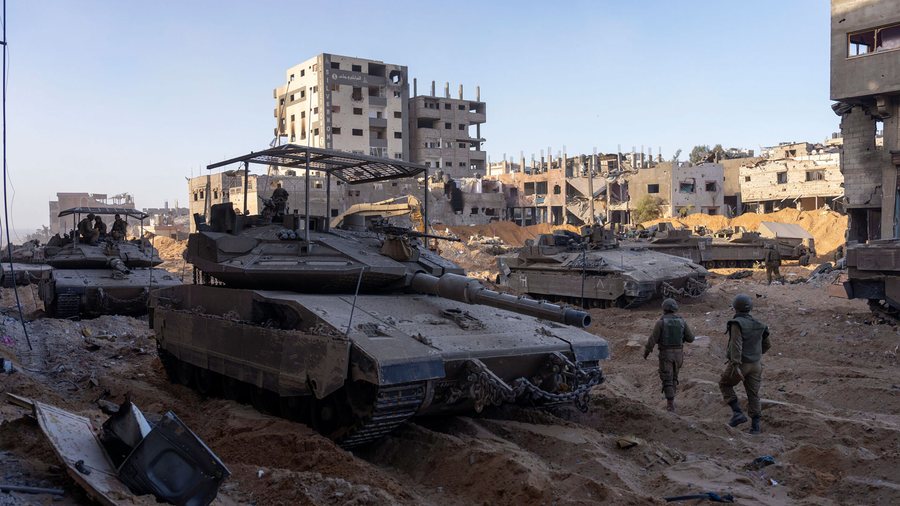
The situation in Iraq is unstable and "ready" for further escalation, but neither Iran nor the US is eager for a full-scale war...
Iraq has increasingly become a staging ground for attacks between Iran-backed forces and the United States amid Israel's brutal war in Gaza, with fears growing of a serious escalation.
The United States said on Tuesday it had launched strikes against Iran-linked groups in Iraq, amid a chaotic 24 hours in the region that saw a top Iranian general killed in Syria. In this regard, Al Jazeera has taken a look at the key recent developments and what they may mean for Iraq and the wider region.
In the early hours of Tuesday, the US military said it launched strikes against three sites used by Kataib Hezbollah, a major armed group linked to Iran, and other groups in Iraq. They came about half a day after Kataib Hezbollah, which is part of the umbrella group of the Islamic Resistance in Iraq, claimed responsibility for a major attack on a US base in Erbil in northern Iraq.
Most notably, Washington said three US soldiers were wounded in the attack which used a suicide drone in one direction, with one service member suffering critical injuries. The United States says its presence in Iraq and Syria is mostly aimed at combating the resurgence of the militant group ISIL (ISIS). US bases in Iraq and Syria have been the target of more than 100 attacks by Iran-aligned forces since the Gaza war began on October 7, but the attacks had not previously left any US service members seriously injured. The US Central Command, in charge of operations in the Middle East, claimed that its strikes on Tuesday "destroyed the target facilities and likely killed a number of Kataib Hezbollah militants" without causing civilian casualties. What happened to the Iranian general?
The attacks by the Iraqi groups came hours after Iran's top commander in Syria, Islamic Revolutionary Guard Corps (IRGC) Brigadier General Razi Mousavi, was killed in midday strikes.
Three rockets, widely believed to have been fired by Israel, targeted his home in Sayyida Zeinab south of the Syrian capital.
The district is home to the most important Shiite shrine in Syria, attracting millions of pilgrims each year.
IRGC service members operating in Syria are known in Iran as "protectors of the shrine" and Mousavi was responsible for their coordination. As a senior member of the IRGC's elite force, he was also a key actor in supporting the "axis of resistance" in the Levant, having been active there since the 1980s.
Mousavi was close to Qassem Soleimani, Iran's top general and a key architect of its regional influence, who was killed by a US drone strike in Iraq in 2020.
Senior Iranian officials and military commanders, including President Ebrahim Raisi, have vowed that Mousavi will retaliate.
All of this is happening as other members of the Iran-backed axis, including Lebanon's Hezbollah and Yemen's Houthi movement, have hit back at Israel in an avowed effort to halt its war that has killed more than 20,000 Palestinians, mostly women. and children. What does this mean for Iraq?
The situation in Iraq is volatile and "poised" for further escalation, but neither Iran nor the US is eager for a full-scale war, according to Tehran-based Middle East scholar and author Ali Akbar Dareini .
"Until now, both Iran and the US have acted within the framework of rational actors because they are aware of the dangers of an all-out military conflict," he told Al Jazeera.
Dareini noted that the US has a presidential election while its international standing has been hit and public opinion has shifted against its support for Israel following the devastation in Gaza.
“In an election year, it would completely eliminate Biden's chances for re-election if American soldiers are killed. And a wider military confrontation would lead to more instability and a conflict whose consequences would be unpredictable and cause huge costs for both sides," he said. / Al Jazeera




Lini një Përgjigje