


 Shkruar nga Pamfleti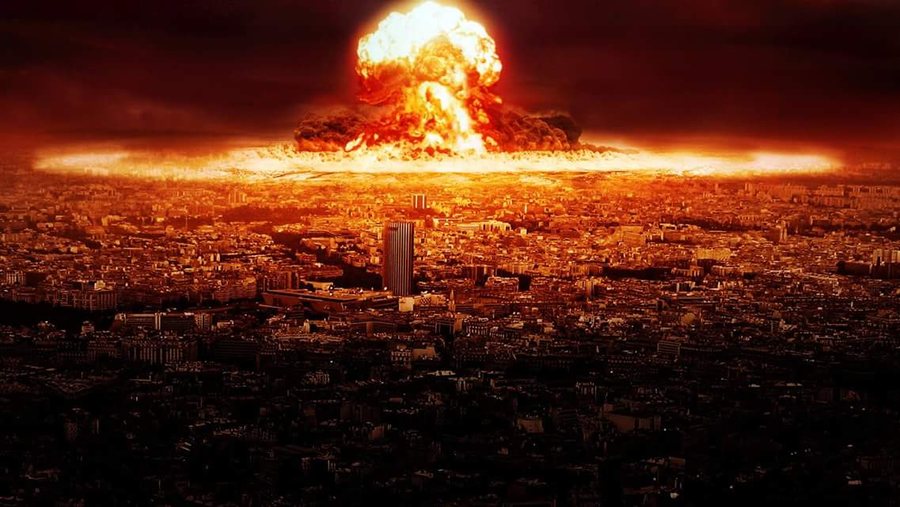
Nuclear tensions have risen since the invasion of Ukraine, with Russia and other nuclear-armed powers reportedly updating disused weapons testing sites. Now, Russian lawmakers have voted to begin the process of undoing a treaty that bans such tests. Will we see a return of the world's most destructive weapons?
The moratorium against nuclear tests rests on an international agreement. The Limited Test Ban Treaty was signed by Great Britain, the US and the Soviet Union in 1963, banning tests of these weapons in the atmosphere, underwater or in outer space, but allowing underground tests. Then, in 1996, the Comprehensive Nuclear-Test-Ban Treaty (CTBT) theoretically banned underground testing as well.
However, the CTBT is unfinished. Despite 178 countries having ratified it, the treaty will not officially enter into force until eight more countries act. China, Egypt, Iran, Israel and the US have signed but not ratified the agreement, while India, Pakistan and North Korea never signed it.
Despite this, nuclear test bans have proven effective. More than 2,000 tests were conducted between the first US explosion, Trinity, in 1945 and the drafting of the CTBT. Since then, India and Pakistan each conducted a series of tests in 1998, and North Korea is the only country to have tested a nuclear weapon in the 21st century, with the last occurring in 2017.
However, the Russian invasion of Ukraine and the ongoing war may have changed her view on testing. Russia ratified the CTBT in 2000, but on October 17 its lower house of parliament, the Duma, passed a measure revoking ratification. Duma Speaker Vyacheslav Volodin said that the decision was taken because the US has not ratified the treaty and "the irresponsible attitude of the US towards global security issues".
Further readings and votes are needed to formally revoke Russia's ratification of the treaty, and it is expected to remain a signatory, but it is another sign that the country may resume the testing that ended in 1990, with the final dissolution of the Soviet Union. In recent months, Russia has been testing new nuclear delivery systems – without warheads – and there have been prominent voices domestically calling for nuclear tests to resume.
In a recent speech, Russian President Vladimir Putin said: "As a rule, experts say, with a new weapon, you need to make sure that the special warhead will work without failures."
All three major nuclear powers appear to be preparing for tests. CNN reports that expansion and modernization have taken place at China's testing base in the Xinjiang region, at Russia's in an archipelago in the Arctic Ocean, and at the US test site in the Nevada desert. Speaking to CNN, Jeffrey Lewis, who works at the Middlebury Institute of International Studies in California, said that "there are indeed many indicators that suggest that Russia, China and the United States may resume nuclear testing."
Although nuclear weapons are back on the political agenda, there is no logical reason to test a bomb, says Andrew Futter at the University of Leicester. This is because the need to test decreases as designs are validated and data is collected. "The technology has changed, but the basic science has not," he says. Most nuclear-armed states can run computer simulations to explore what will happen with new projects, he says.
"The problem is, what logic suggests will happen sometimes differs from reality," says Futter. /New Scientist – Bota.al





Lini një Përgjigje