


 Shkruar nga Thoma Gëllçi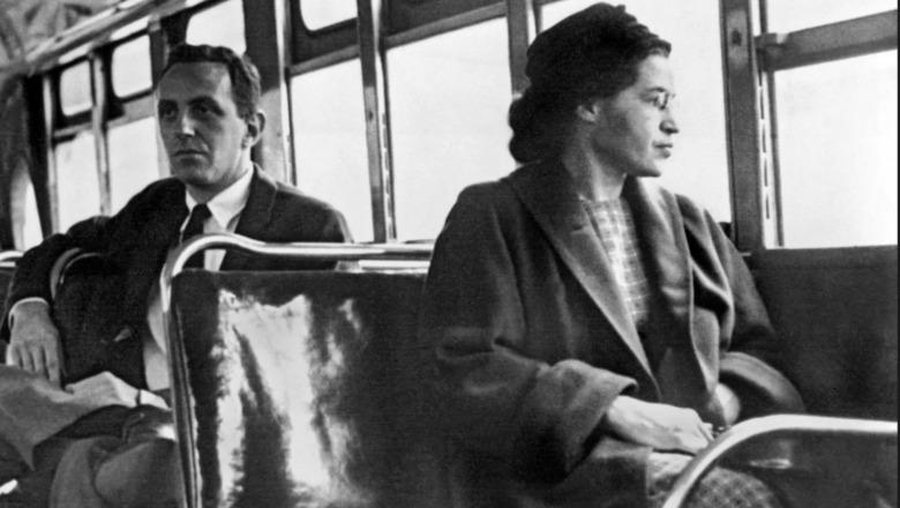
“People often say I didn’t get up because I was tired, but that’s not true. I wasn’t physically tired… The only thing I was tired of was giving up.” – Rosa Parks
In Detroit, where I live, I often walk down a street called Rosa Parks Boulevard. Even when I happen to take a bus to go somewhere from the central bus station in Detroit, it's called the Rosa Parks Transit Center.
Rosa Parks is a name that is easily remembered and sticks in the mind. During my travels in America, I have rarely visited a city where I did not find a street, a square, a highway, a school, or a building named after her.
I found it interesting that Rosa Parks' name is not only honored in the United States. In France, one of the important train and express line stations north of Paris bears her name.
Curiosity led me to learn more about this woman. What had she done to have her name placed on so many streets, squares, and stations, not only in America, but also abroad?
The answer begins on December 1, 1955, in the city of Montgomery, Alabama.
At the time, public buses were segregated by race. The front was for whites, while African-Americans had to sit in the back. Even when they sat in their assigned area, they could be forced to get up if the white seats were full.
Rosa Parks was 42 years old and worked as a seamstress. She was returning from work that afternoon. She was sitting in the front row of the black section. When the bus filled up, the driver asked the four African-American passengers to stand up so that a white man could take her seat.
Three of them stood up. Rosa Parks did not stand up.
At that moment, she was just one person facing an entire system. Facing her was the driver, the police, the law, the administration, custom, and a social order that had declared discrimination normal.
She had no power, no money, no institution to run, and no crowd to command. She had no television cameras behind her, no analyst studios, no social media to count likes. She had only the conviction that she shouldn't stand up.
The driver called the police and Rosa Parks was arrested.
Of course, there were those who called her action senseless. Some may have thought it was foolish to end up in prison for a seat on a bus. Others may have mocked her, saying that one woman alone could not change a system supported by laws and the state.
Ndoshta edhe atëherë kishte njerëz që i kërkonin protestës program të plotë qeverisës, strukturë drejtuese, afate, zëdhënës të përsosur dhe garanci se gjithçka do të përfundonte me sukses. Sepse, siç ndodh zakonisht, ka njerëz që nuk marrin pjesë në asgjë, por janë shumë të zotë për t’u shpjeguar të tjerëve se si duhet të protestojnë.
Rosa Parks nuk u ngrit nga vendi. Ky ishte i gjithë “programi” i saj në atë çast.
Më vonë, ajo do të shpjegonte se nuk kishte refuzuar sepse ishte e lodhur fizikisht. Ishte lodhur duke u dorëzuar. Ky ishte thelbi i veprimit të saj. Ajo nuk po kundërshtonte një pasagjer. Po kundërshtonte një sistem që e trajtonte si qytetare të dorës së dytë.
Arrestimi i saj shkaktoi zemërim në komunitetin afro-amerikan të Montgomery-t. Por zemërimi nuk mbeti vetëm një reagim emocional. Ai u kthye në organizim dhe veprim të përbashkët.
Liderët vendas, mes tyre edhe një pastor i ri, ende pak i njohur në atë kohë, me emrin Martin Luther King Jr., organizuan bojkotin e autobusëve publikë.
Afro-amerikanët vendosën të mos i përdornin më autobusët e qytetit. Shkonin në punë në këmbë, ndanin makinat, organizonin transport të përbashkët dhe ndihmonin njëri-tjetrin. Bojkoti zgjati 381 ditë.
Në fillim ishte vetëm Rosa Parks. Pastaj u bënë mijëra.
Por rëndësia e protestës nuk qëndron vetëm te numri i njerëzve që iu bashkuan. Rëndësia qëndron te drejtësia e kauzës dhe te vendosmëria për ta çuar atë deri në fund.
Numrat janë shpesh argumenti i parë që përdoret kundër një proteste. Thuhet se janë pak, se të tjerët nuk kanë dalë, se shumica hesht, se sheshi nuk është mbushur ose se një fotografi nga një kënd i caktuar tregon më pak njerëz.
Sipas kësaj logjike, Rosa Parks nuk duhej të kishte refuzuar të ngrihej, sepse në atë çast ishte vetëm. Duhej të priste që të mblidheshin disa mijëra veta në autobus, të bëhej një sondazh dhe pastaj të vendosej nëse diskriminimi ishte vërtet i padrejtë.
Por e drejta nuk bëhet e drejtë vetëm kur e mbështet shumica. Edhe padrejtësia nuk bëhet e pranueshme vetëm sepse shumica hesht.
Çdo protestë e madhe ka nisur nga një numër i vogël njerëzish. Shpesh ka nisur nga një person i vetëm që ka thënë “jo”, ndërsa të tjerët janë përshtatur, kanë heshtur ose janë tallur.
Numrat mund ta bëjnë protestën më të fortë, por nuk e bëjnë kauzën më të drejtë. Kauza është e drejtë ose e padrejtë, pavarësisht se sa njerëz ndodhen në shesh ditën e parë.
Historia e Rosa Parks e tregon qartë këtë. Ajo nuk e ndryshoi sistemin vetëm sepse qëndroi ulur. Refuzimi i saj u bë i fuqishëm sepse të tjerët e kuptuan se çështja nuk ishte vetëm e saj. Ishte çështja e të gjithë atyre që poshtëroheshin çdo ditë.
Në nëntor 1956, Gjykata e Lartë e Shteteve të Bashkuara la në fuqi vendimin që e shpallte segregacionin racial në autobusët publikë antikushtetues. Pas 381 ditësh, bojkoti fitoi.
The system that seemed invincible was forced to change. Not because it suddenly became better, but because citizens refused to continue feeding it with their obedience, silence, and money.
Today, Rosa Parks' name is found on streets, squares, schools, and transit stations. The people who might have called her stupid, stubborn, or irresponsible are forgotten. The driver who called the police to defend an unjust law is a name that almost no one remembers. The judge who convicted her is also forgotten. The thousands who sent her threatening letters, those who fired her from her job, those who forced her to leave her hometown and settle in Detroit are also forgotten.
Only the woman who was tired of the injustices and could not stand it any longer is remembered. Even the bus on which she sat is now on display at the Henry Ford Museum in Dearborn, Michigan, as a reminder that such an event really happened and to tell the world what even one person can do when he stands up to protest.




Lini një Përgjigje