


 Shkruar nga Mary Dejevsky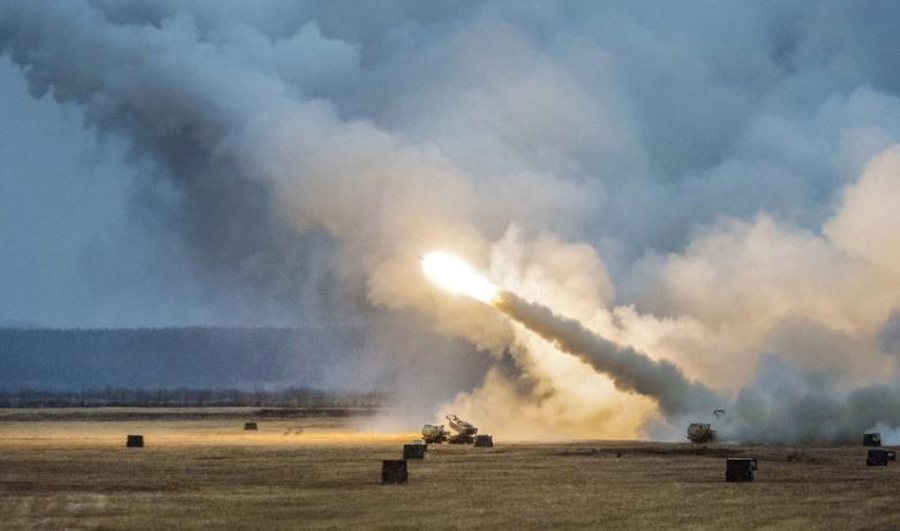
One cannot ignore the fact that a growing sense of readiness by all sides to resort to arms is spreading from Gaza...
For the 11th day in a row, Europe woke up to the news of overnight airstrikes that caused deaths, injuries and major infrastructure damage in one of the many volatile regions in the east of our continent.
The latest attacks were carried out by Pakistan's military in a region bordering Iran, and were explained as retaliation for Iranian attacks in a border region of Pakistan 2 days earlier. The reported casualties in both attacks were in the single digits. So by any military standards, though not mere human standards, relatively small.
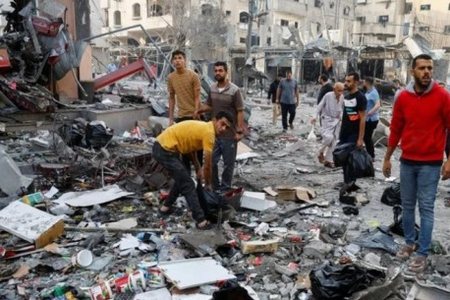
However, it is difficult to escape the impression created by the situation of a military conflict that is inevitably expanding in the east and south, although not yet in the north and west. And if we go back just a little bit, Hamas' massacre of Israelis on October 7, and Israel's all-out military response, can be seen as turning the small part of the Gaza Strip into the epicenter of a conflict that could involve many regions, that are hundreds of kilometers away.
So far the alarm expressed internationally seems to have been inversely proportional to the real dangers. The Hamas attacks were followed by dire warnings that it could be the spark that ignites a major regional conflict; and that it was only a matter of time before Iran became directly involved, perhaps through its proxy, Hezbollah, in South Lebanon.
But before too long, we could be on the brink of the next world war. Voices circulating in the United States at the time, including Donald Trump's former national security adviser John Bolton, suggested that this was a good opportunity for the US to intervene directly and neutralize the perceived threat from Iran once and for all. .
But such a scenario assumed that Iran would be involved, directly or indirectly, which, to the apparent surprise of many, did not happen. Its Supreme Leader declared that Iran had no intention of getting involved in this war. Meanwhile, even the most radical in the United States lowered their voices, perhaps knowing the dangers of contributing to a new military adventure in a foreign country, at the beginning of a year that will close with presidential elections.
Three months later, the conflict in Gaza has evolved in directions very different from those originally envisaged, and the risks have been contained. It is true that there has been limited fighting in southern Lebanon as well, but not in the sense of Hezbollah's larger attacks on northern Israel, but in the form of political assassinations, such as that of Hamas' number 2 and a senior commander of Hezbollah.
Responsibility for the second was claimed by Israel, and the response from both Hezbollah and Iran remained only verbal. Then we saw an intervention by the Houthis, who have controlled most of Yemen for 10 years. They launched missiles and drones at ships passing through the Red Sea, one of the critical points for global maritime trade.
The Houthis, who are mainly armed by Iran, said they were acting in solidarity with the Palestinians and were only striking ships linked to Israel or its allies. At that point, the US and Great Britain appointed themselves regional security watchdogs and launched several missile attacks on Houthi positions in Yemen.
But throughout, they insisted that their operation had nothing to do with the conflict in Gaza but with freedom of navigation and retaliation (due to the Houthi attack on a British warship).
Meanwhile, Iran was turning its attention to enemies closer to home. Over the past 2 weeks, he has carried out airstrikes in the adjacent territories of all neighboring countries - in Syria, Iraq and most recently in Pakistan - causing protests and reactions from the countries in question. However, everything was done to keep the issue from escalating, being downplayed - not only by Iran, but also by those who warned most loudly about Iran's hostile intentions in October.
Iran's attacks in recent days on its neighbors have been read by analysts as symptoms of small local crises caused by ISIS terrorists, Iranian rebel groups located along the border by gangs of drug traffickers, etc. In short, this is Iran pursuing its own small-scale national interests without fearing the wider consequences.
But this was true until the recent clashes with Pakistan, where hostilities are still confined to the border area between them. But they potentially set the stage for a conflict between a nuclear-armed country against another that clearly has nuclear ambitions.
This is accompanied by the risk of expanding the area of conflict beyond what would generally be considered the Middle East, into the Greater Middle East and South Asia, with the risk of it spreading again to Afghanistan, where Western, Chinese and Russian.
It seems to me that there is still a chance that all the disagreements, animosities and divisive rivalries that are now at play will be contained and that the Israeli-Palestinian war in Gaza will produce some small and medium-sized regional conflicts, but not a giant conflagration that would directly involve any of the world's great powers.
And it is possible to interpret what the Houthis and Iran are doing by exploiting a general climate of instability, with the aim of pursuing their objectives: the Houthis to consolidate their position in Yemen; Iran to strengthen the power of the regime against internal and external enemies.
But it is not clear that any of them would use military force, without the sense that the international rules that had kept the peace for many years have now been suspended, starting with the Hamas attacks and hostage-taking on October 7 and continuing with the devastating counter-response of Israel.
It seems that so far, Iran is resisting what could be seen as a golden chance to emerge as the dominant power in the region by uniting all its militias. But he may be too weak to do so. Tehran has not openly intervened against Israel from South Lebanon.
He has supported Houthi actions from a distance, not wanting to jeopardize the possibility of reaching a peace deal with the Saudis over the Yemeni Civil War. Its missile attacks are limited to nearby border areas and those it disputes.
Furthermore, internal security is far from perfect. Evidence of this is the latest attack in Kerman, claimed by ISIS, on the anniversary of the death of the head of the Revolutionary Guard, Qasem Soleimani, as the unrest over the harsh punishments for women who do not cover their hair when they go out in public is still simmering.
However, the fact that a growing sense of readiness by all parties to resort to arms is spreading from Gaza cannot be ignored. What will we see, when after some time we analyze the developments of the last few months: a multitude of small interests being pursued on the margins of an enduring and intractable conflict over territory between Israel and the Palestinians, a collection of interests and actions that remain distinct and failing, or a sequence of movements which are inevitably escalating, and which will appear in the history texts as the causes of the next world war? As is often the case, it would probably be a wise approach to hope
for the best but to prepare for the worst./ Adapted "Pamphlet" from " The Independent "





Lini një Përgjigje