


 Shkruar nga Pamfleti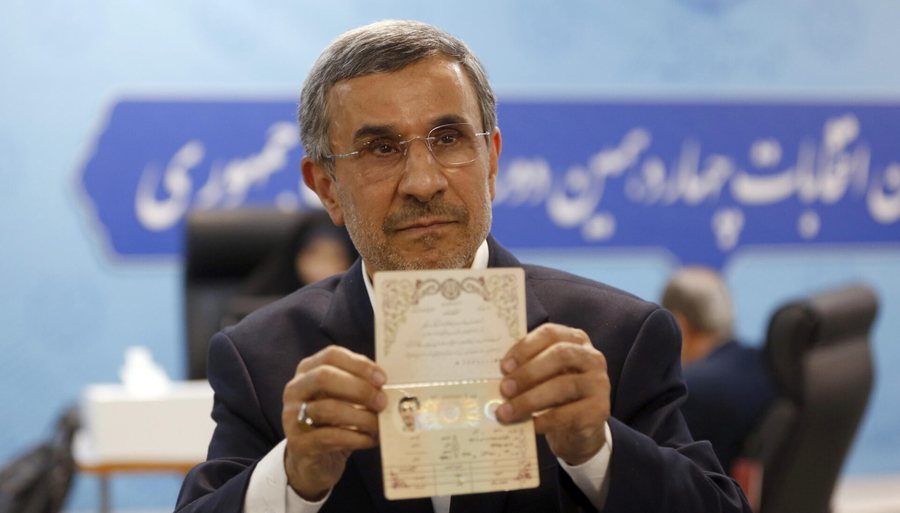
The story published by The New York Times about the alleged recruitment of Mahmoud Ahmadinejad by Mossad presents a number of elements that cast doubt on the feasibility and credibility of the described operation.
The investigation published on July 13 by The New York Times into the alleged Mossad attempt to recruit former Iranian President Mahmoud Ahmadinejad (2005-2013), with the aim of later returning him to power, is undoubtedly intriguing. Whether it is credible is another matter entirely.
The climax of the story would have been reached during the conflict that began on February 28, when an Israeli raid on Tehran enabled Mossad agents to secretly remove Ahmadinejad from his residence and transfer him to a safe location. He then reportedly lost contact with the Israelis, having begun to distrust them. This raises a simple question: if Mossad had him under control, why would they let him leave? If he had escaped, then the operation would have been unprofessional.
Although the story is based on intelligence sources, it presents several elements that raise doubts. The alleged method of recruitment itself is not convincing. The contacts reportedly began in 2022 and continued with meetings in Budapest, disguised as academic conferences, up to two meetings between Ahmadinejad and the then head of Mossad, David Barnea.
Equally questionable is the target itself. In the Iranian power structure, the president is not part of the real decision-making center, which is controlled by the Supreme Leader, the Supreme National Security Council, and the Islamic Revolutionary Guard Corps (IRGC). From an intelligence perspective, it would make more sense to recruit an advisor to the Supreme Leader or a senior IRGC official.
The idea that such a delicate operation would take place in Budapest with the involvement of local sources, or that the Mossad director himself would personally meet with a figure who was constantly monitored by Iranian services, also seems unconvincing. Such operations usually require many years of preparation, while the 2022-2026 timeframe seems too short.

The story was also published at a delicate moment for Israel, amid the ongoing rivalry between military intelligence (Aman) and Mossad, internal tensions within the security services, and on the eve of the October 27 elections. This makes it possible that the leak of information may have also served to fuel internal conflicts.
At the same time, Israeli military intelligence leaders reportedly considered the plan unfeasible, assessing that the overthrow of the regime in Tehran was unlikely and that Ahmadinejad's return to power was an unrealistic objective.
Another question is related to the reaction of the Iranian authorities. If the intelligence of the Revolutionary Guard had discovered evidence of Ahmadinejad's contacts with Mossad, he would most likely not be alive today. On the contrary, he was allowed to attend Ali Khamenei's funeral, which suggests that the regime does not consider him a particularly dangerous figure.
However, if history is taken for granted, it cannot be ruled out that efforts to recruit Ahmadinejad began many years before he became president. Such operations require time, in-depth psychological analysis and continuous information gathering, an area in which Mossad is considered one of the most capable services.
Ahmadinejad was the Iranian president who, with his statements on the Holocaust and Israel, contributed more than anyone else to strengthening the perception of Iran as an existential threat to Israel. Without his figure, the international demonization of Iran after 2005 might not have taken on the same proportions, even though Tehran signed the JCPOA nuclear deal in 2015 and its failure came after the US withdrawal during the first Trump administration.
In the end, there remains a hypothesis as provocative as history itself: could Ahmadinejad have been the ideal cover for a high-level Iranian asset, cultivated for years by Israel? To understand this logic, it is enough to remember one of John le Carré's most famous novels, "The Tambourine". / Adapted from 'Inside Over'






Lini një Përgjigje