


 Shkruar nga Pamfleti
American leadership would indeed be a good idea. But a trip to Europe undermines faith in her.
During my recent visits to Lisbon and Paris, I heard much discussion of American leadership. I remembered what Mahatma Gandhi is said to have said when asked about his view of Western civilization: that it would be a very good idea. I feel the same way about American leadership: it would be a very good idea.
This is a view that appears to be widely shared within the European elite, although few of the continent's leaders dare to say it out loud. One of the essential elements of leadership is an inspiring destination. And where exactly would the US and its allies want to go?
A good answer to this question can be found in the report "Global Trends 2040" of the National Intelligence Council, which predicts 5 scenarios for 17 years. Arguably the most desired is the "Renaissance of Democracies", in which the US leads a revival of what was once called the free world.
But it is worth reviewing the other four destinations, the ones that should actually be avoided: First, a "changing world", with China as the main country, but not globally dominant.
Second, "a competitive coexistence," where the US and China advance and compete for leadership in a 2-block world.
The third scenario portrays a world in which globalization has disappeared and economic and security blocs emerge to protect states from growing threats. The fourth scenario, tragedy and mobilization, is about a story of bottom-up, revolutionary change at the end of devastating global environmental crises.
For me, the most surprising thing is that two years after the publication of the document, we are already in scenario No. 3: The US-China rivalry and other interstate relations are being channeled into a competition for markets, resources, and brand reputation.
Also, strengthened economic interdependence reduces the risk of great powers pursuing armed conflict. Most of them engage in influence operations, corporate espionage, and cyberattacks that allow them to achieve their goals without risking wars with devastating consequences.
The central security challenge is how to keep geopolitical competition between the United States and China from undermining the economic cooperation on which their prosperity and the global economy depend. Long-term stability remains at risk from the growing challenges of climate change, which have long been ignored in favor of short-term economic gains.
Now technological innovations and economic development have prompted leaders to believe that they can postpone making the hard choices about the challenge of climate change.
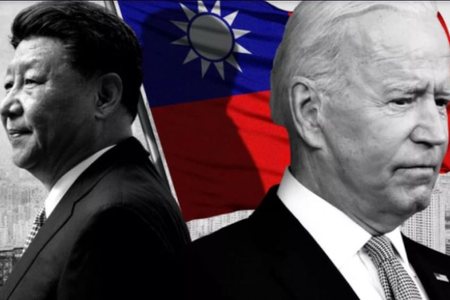
Many Europeans are experiencing the uncomfortable feeling of being caught between 2 superpowers in a new cold war.
They know that China is partly to blame for this. But they see the USA as equally guilty. On the face of it, the US-led transatlantic alliance is doing much better than expected in its response to the Russian invasion of Ukraine launched last year.
But the problem is what can be called "power law", which means that the contributions of the 38 countries supporting Ukraine in this war are not distributed normally, but follow a power law. In other words, there is a very big contributor and there are others who are very small. The very big contributor is of course the USA.
According to the latest data on bilateral commitments from the Ukraine Support Tracker, US aid of all kinds to Ukraine (financial, humanitarian and military) is 7 times greater than that of the country ranked second on the list of aid, Great Britain.
And in total, US aid is 45 percent greater than the other 39 countries combined. The main reason this report is problematic is that any American-led effort abroad depends heavily on the support of American voters. And the latter are unstable in their behavior, especially when they think that their country is helping some allies who do not want to spend anything from their own pockets. Nearly 60 years after the publication of Henry Kissinger's famous article "The Troubled Partnership", it is still a problem that US partners are still paying a disproportionate share of the cost of Europe's defense.
So far, 15 months since the start of the full-scale war in Ukraine, the American public is still broadly supportive. According to a recent Harvard Harris poll, only 23 percent think President Joe Biden's administration has done "too much" to counter Russia in Ukraine.
And only 15 percent of Americans think the Biden administration has been "too tough" in its policy toward China. But history shows us that these rates can increase rapidly, especially if the economic situation worsens and as the presidential elections are approaching.
And that brings us to the question of US economic leadership. As long as the US economy is doing better than that of its allies and rivals, Washington has the luxury of continuing to lead in the way we are currently seeing in Ukraine. Apparently things are looking good.
“The Economist” beson se SHBA-ja “po ecën mirë”, teksa po afrohet “kulmi i rritjes së Kinës”. Por nga një vështrim më i afërt duket se panorama është më pak rozë. Siç na e kujtoi klasa politike me lojën e saj të fundit mbi tavanin e borxhit, financat publike amerikane janë në një trajektore të paqëndrueshme.
Deficiti federal parashikohet të jetë mbi 5 për qind të PBB-së për 10 vitet e ardhshme, dhe do të arrijë në 7.3 për qind në vitin 2033. Në vitin 2029, shërbimi i borxhit pritet të tejkalojë shpenzimet e mbrojtjes. Por unë them se kjo mund të ndodhë akoma më shpejt.
Historia e perandorive të dikurshme që shpenzonin më shumë për pagesat e interesit sesa për sigurinë kombëtare nuk është aspak inkurajuese.
Indeksi i besimit ekonomik të Gallup, është aktualisht në nivelin më të ulët që nga shkurti i vitit 2009. Zyrtarisht, SHBA-ja dhe Bashkimi Evropian kanë të njëjtën qasje në lidhje me “ç’rrezikimin” e marrëdhënieve të tyre ekonomike me Kinën. Por privatisht, evropianët kanë dyshimet e tyre.
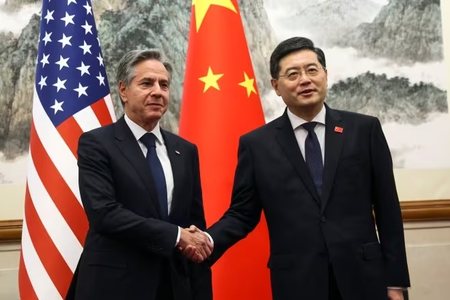
Askush nga ata me të cilët bisedova në Evropë nuk priste shumë nga përpjekjet aktuale të Uashingtonit për të “shkrirë” Luftën e re të Ftohtë me Kinën. Sigurisht, shefi i CIA-s, William Burns, kreu një vizitë sekrete në Pekin për t’u takuar me homologët e tij, dhe Sekretari i Shtetit Antony Blinken pati takime në Pekin fundjavën që shkoi.
Por Ministri kinez i Mbrojtjes, Li Shangfu, refuzoi të zhvillonte bisedime me homologun e tij amerikan Lloyd Austin në samitin e Shangri-La në Singapor dy javë më parë. Në fjalimin e tij në atë takim, Austin paralajmëroi se një konflikt mbi Tajvanin do të ishte “shkatërrues… do të ndikojë mbi ekonominë globale në mënyra që nuk mund t`i imagjinojmë”, teksa përsëriti thirrjet për komunikim më të madh midis ushtrive të dy superfuqive.
Por Li – që është ende nën sanksionet e SHBA të vendosura në 2018 – nuk ishte i interesuar të bisedonte mbi këto çështje. Fjalimi i tij në Shangri-La ishte tejet luftarak në kritikat e tij ndaj SHBA-së për “ndërhyrje me dashje në punët dhe çështjet e brendshme të vendeve të tjera … dhe që shpesh ka vendosur sanksione të njëanshme”.
The only logical conclusion is for American businesses to leave China, not only to eliminate the risks but also to break away from dependence on Beijing. But the problem for America's European and Asian allies is that disengagement from China is very difficult to do.
Just think of the huge investments European car manufacturers have made in Chinese electric car factories. American leadership would indeed be a good idea. But a trip to Europe undermines faith in it. / Taken from "Bloomberg"




Lini një Përgjigje