


 Shkruar nga Pamfleti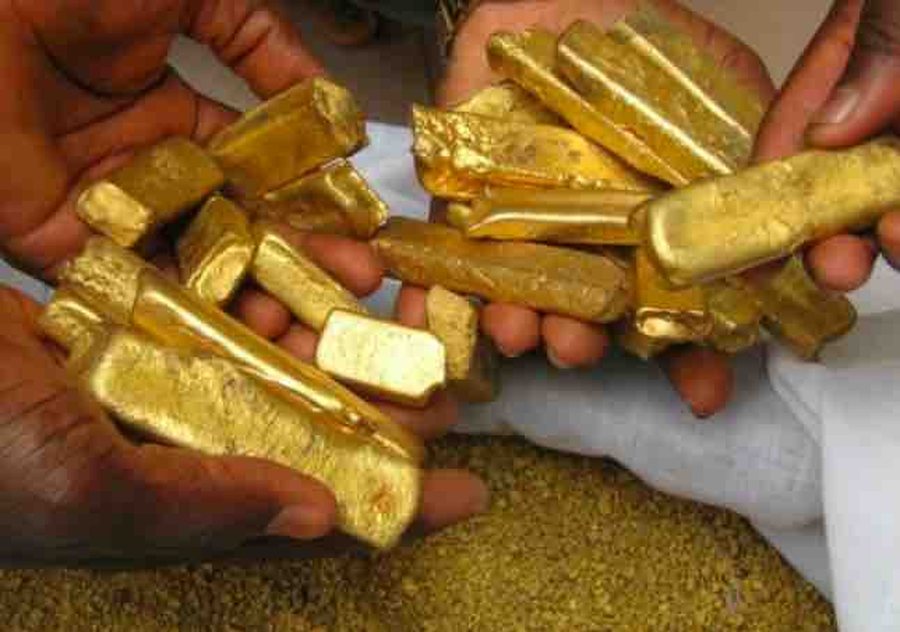
The cursed riches of Africa, the tragic history of the four richest countries in minerals and energy...
Africa, the world’s richest continent in natural resources, holds 40% of the world’s gold reserves, 30% of its minerals, 12% of its oil and 8% of its natural gas. But after more than a century of colonialism and 65 years of decolonization, the majority of its population – over 1.5 billion – still lives in extreme poverty. In this analysis, we shed light on the dramatic reality of four of Africa’s richest countries: the Democratic Republic of the Congo, Angola, Zimbabwe and Nigeria.
Democratic Republic of Congo – Cobalt Kingdom Torn by War and Corruption
After gaining independence from Belgium in 1960, Congo never knew peace. After the assassination of leader Patrice Lumumba with the help of the CIA, dictator Mobutu took power, who in 32 years of rule stole billions and turned the state into personal property. After his departure, another dark cycle began under the Kabila family, which sowed corruption and violence. Ethnic wars and the conflict with Rwanda caused over 5 million deaths.
Even today, in 2025, the country is divided between the formal government in Kinshasa and armed militias that control the mining areas in the east. The US, after Chinese dominance, is strongly entering the race for control of cobalt, coltan and copper, strategic metals for global technology. However, Congo remains one of the poorest countries on the planet, with 75% of the population living on less than $2.15 a day.
Angola – Oil wealth, hostage to a kleptocrat dynasty
After independence from Portugal in 1975, Angola was engulfed in a 27-year civil war. After the MPLA's victory, President Dos Santos built a kleptocratic regime, where oil filled the pockets of the elite and offshore companies, but not the people.
The ghost project of Kilamba, a modern city financed by China, sat empty for years. The state-owned company Sonangol became an instrument of corruption. In 2016, Dos Santos appointed his daughter, Isabel, Africa's richest woman, to head Sonangol, before leaving power in 2017. His successor, João Lourenço, launched a "war" against corruption, but the regime continues with the same party in power for 46 years. Today, despite profits of $33 billion from oil (2023), 80% of refined fuels are imported, while a third of the population lives in extreme poverty.
Zimbabwe – From the hope of liberation to the nightmare of a family autocracy
After gaining independence from British apartheid rule in 1980, Zimbabwe quickly became a personal dictatorship under Robert Mugabe. Initially a liberation hero, he later became a brutal tyrant who destroyed the economy by expropriating land and seizing mineral resources.
In the 2000s, he and his notorious wife Grace controlled the illegal diamond trade. Inflation reached absurd levels, health and education collapsed, and the population sank into poverty. In 2017, after 37 years in power, Mugabe was overthrown by the military and replaced by Emmerson Mnangagwa, known as the "crocodile." But the regime remains repressive and the economy is in crisis, with an unforgivable public debt and 85% inflation.
Nigeria – The giant with feet of clay that exports oil and imports poverty
Africa's most populous country, with 237 million people, Nigeria has enormous oil and gas reserves. But its history is riddled with coups, civil wars and a deep-rooted system of corruption. Politicians and the military have enriched themselves through Western oil companies, while the people face energy shortages, unemployment and violence.
In the Niger Delta region, where giants such as Shell, Chevron and ENI operate, armed groups, linked to local politicians, control the illegal oil trade and kidnappings. The textile industry once employed hundreds of thousands of people, today only three factories remain. Chinese imports and energy shortages have devastated the sector. 40% of the population lives in poverty, while every year 3.5 million young people enter the job market without hope – and with the intention of migrating to Europe. / Adapted from “Corriere Della Sera”



Lini një Përgjigje