


 Shkruar nga Pamfleti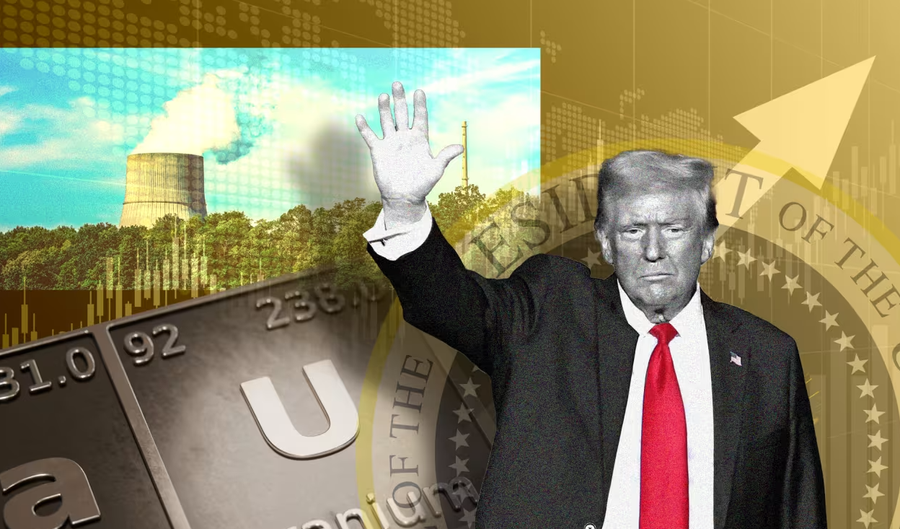
With the right policies, the president could make a nuclear energy boom part of his legacy…
Amid the storm of bad news on the climate front, here's a ray of hope: The winds are changing in favor of a nuclear power revolution, and the United States is well positioned to lead it, if President Donald Trump will let it happen.
American support for nuclear power, which plummeted after the Fukushima accident in Japan in 2011, has largely recovered. About 61 percent of the public now favors the technology, a near-record high. Even many Democrats identify it as a crucial source of clean energy and want to make it easier to build reactors.
New York Governor Kathy Hochul recently told the Wall Street Journal that she supports the Trump administration's goal to streamline the permitting process. "Why does it take a decade?" she said, adding, "that's why nobody's doing it; the barriers are too high."
Resistance abroad is also melting away.
Last month, the World Bank announced that it would end its decades-long ban on financing nuclear power projects. Britain’s Labour government plans to invest billions of pounds in nuclear projects. Even Germany, which abandoned nuclear power in 2011 and closed all of its power plants, is starting to change course: the majority of the country now supports nuclear power, and German officials recently reached a deal to drop their opposition to EU legislation that would treat nuclear power on an equal footing with other renewable energies.
Nuclear power, which remains the world's largest source of non-carbon energy, will be essential to combat climate change. Reactors provide the vast amounts of "always-on" electricity generation that the grid needs.
The United States is the world's largest producer of nuclear power, but its fleet of reactors has been slowly shrinking as power plants have begun to retire. With the demand for electricity growing, new nuclear developments are essential.
Fortunately, Trump sees himself as a champion for nuclear energy, and developers are eager to invest in advanced nuclear projects that promise to be smaller and safer and produce less waste than the giant reactors of the past.
Last year, Congress passed a bipartisan bill that would speed up the lengthy Nuclear Regulatory Commission review process and make it easier for developers to replicate successful reactor designs.
The KKR has begun streamlining the approval process; last year, it issued a construction permit for an advanced nuclear project in Tennessee months ahead of schedule.
Trump is looking to seize the moment. The White House recently announced ambitious goals to begin construction on 10 reactors by 2030 and quadruple the nation’s total nuclear capacity by 2050. The president also signed a series of executive orders to speed up the NRC’s safety review process, rebuild the nuclear fuel supply chain, and help American companies export their technology abroad, which would boost the industry.
But there is a difference between pushing the NRC to be more efficient, it can take more than a decade to get a nuclear project off the ground, and destroying independent nuclear regulation. Trump fired NRC Commissioner Christopher Hanson, despite defenses that he was fired “without cause.” The president directed the agency to work with the U.S. Department of Government Efficiency, or DOGE, to reorganize itself, prompting fears of staff cuts. He also ordered the agency to set shorter deadlines for evaluating licenses and to review the risk model it uses for radiation exposure.
The agency's independence ensures that its regulators prioritize safety over political goals. This protects the public from flawed reactor designs and helps ensure sustained support for nuclear projects.
Another threat comes from Congress. In recent decades, most projects that won regulatory approval were never built because of rising costs and competition from cheap natural gas.
However, Republicans in Congress are working to phase out tax credits under the Inflation Reduction Act that could help meet the development goal. That has prompted warnings from South Carolina Governor Henry McMaster, a Republican, that the changes could derail a project in his state.
Republicans are also seeking to eliminate a Department of Energy loan program for clean energy projects, although the Senate version would create an “energy dominance” loan program for nuclear projects.
Trump should pressure Congress to preserve nuclear programs that could help the industry enter a new phase, and the president should ensure that American nuclear regulation remains world-class.
Otherwise, advanced nuclear power may remain the energy of the future indefinitely. /Adapted from the Washington Post Pamphlet/






Lini një Përgjigje