


 Shkruar nga Diplomatico | Pamfleti.net
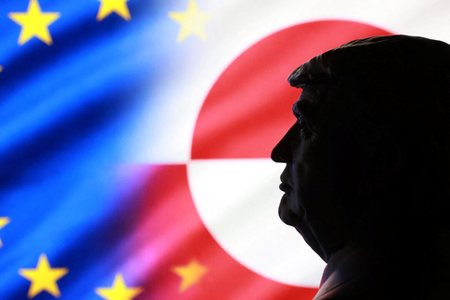
The Great US-EU Fracture Under the Trump Era
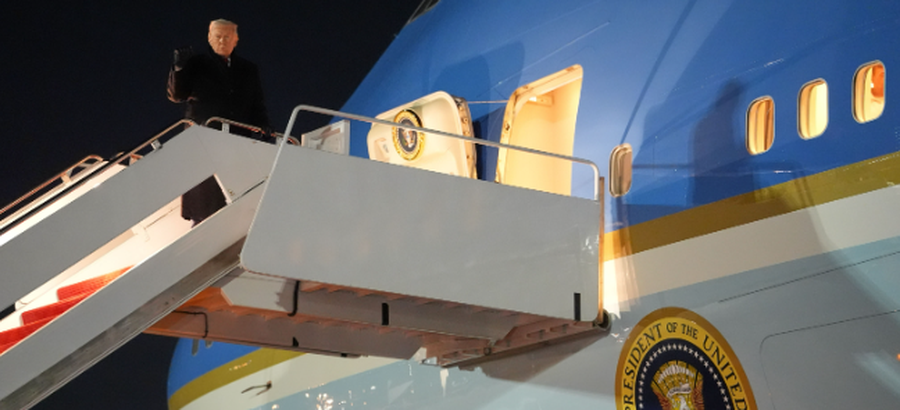
America First is shaking the foundations of an 80-year partnership, while Europe faces the choice between dependence on Washington and strategic autonomy.
The article published by Corriere della Sera brings a direct and unillusioned analysis of one of the most serious geopolitical rifts of recent decades: the real danger to the transatlantic alliance between the United States of America and the European Union, a relationship that has sustained the Western security architecture for nearly 80 years.
At the heart of this crisis lies the return of the "America First" logic under the presidency of Donald Trump, which is undermining the political, economic, and strategic foundations of the Euro-Atlantic partnership.
According to Corriere della Sera, Trump no longer sees Europe as an equal strategic ally, but as a political and economic burden, which must either submit to American interests or face concrete consequences.
Harsh rhetoric against NATO, pressure to increase military spending, threats of trade tariffs, and the instrumentalization of Europe's energy dependence on American LNG are the main elements of this divisive policy. The article emphasizes that this is no longer simply an electoral rhetorical game, but a genuine power strategy aimed at reshaping the Western order according to Washington's short-term interests.
In the analysis of the Italian newspaper, the date of February 6 is mentioned as a symbolic and practical moment where some American decisions could be considered turning points for US-European relations. The main fear in European capitals is not only Trump's political distancing, but the fact that this approach is normalizing the idea that historical alliances are temporary and conditioned by immediate profit. This constitutes a serious shock to European security, which after the war in Ukraine has relied heavily on American guarantees.
Corriere notes that the European response is still fragmented: some countries seek compromise to maintain ties with the US, while others are pushing increasingly towards European strategic autonomy, both in defence and energy. This internal division makes Europe weaker in the face of a Washington that negotiates from a position of strength and does not hesitate to use economic and political pressure as a diplomatic instrument.
In the broader geopolitical context, the article highlights that the transatlantic divide indirectly serves other global actors, particularly Russia and China, which benefit from a less united West and more uncertain about its strategic direction. For small and medium-sized countries, especially in the Balkans, this development is particularly worrying, as the weakening of the US-EU axis increases the space for alternative influences and long-term uncertainty.
In conclusion, Corriere della Sera describes the current situation as a “major fracture”, not yet irreversible, but serious enough to call into question the alliance model that has guaranteed Western stability since World War II. If Trump’s policy continues along these lines, Europe will be forced to choose between controlled dependence on the US and the construction of a strategic autonomy that, although difficult and costly, is increasingly emerging as a historical necessity./ Pamphlet


Lini një Përgjigje