


 Shkruar nga José Ignacio Torreblanca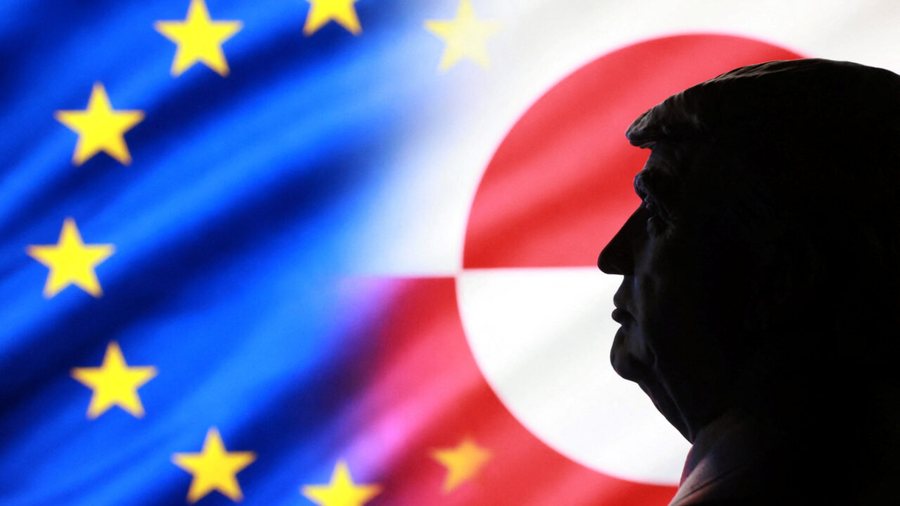
The US president is determined to annex Greenland. If European leaders do not act decisively, this act could destroy not only NATO, but also the European Union...
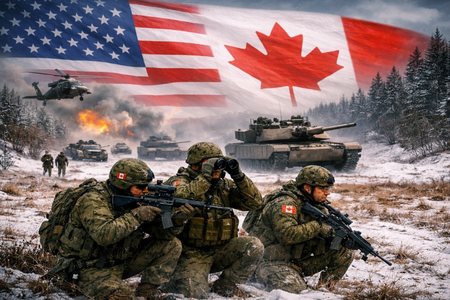
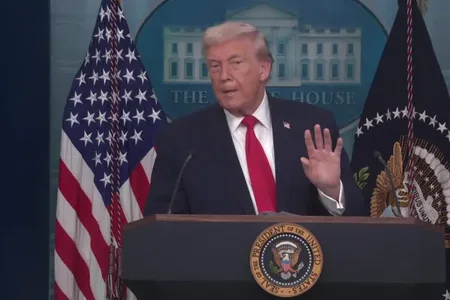
The US president’s obsession with Greenland shows no signs of abating. Earlier this month, Trump said that “we need it for our national security.” Then, on January 17, he announced new tariffs on European countries that sent troops to the Danish territory. What was once unthinkable, a US annexation of Greenland, is moving dangerously close to reality, threatening the very foundations of NATO and the EU. For NATO, the collective security of its members would be undermined if the US were to direct its power against its allies.
But NATO is also a political organization. One day after annexation, its existence would be meaningless. NATO would no longer be an alliance of democracies, but a 21st-century copy of the Warsaw Pact, complete with its own version of Brezhnev's doctrine of "limited sovereignty."
By carrying out the annexation, Trump would offer Russia and China the strategic victory they have sought for decades, without even firing a shot. But NATO would not be the only victim. The annexation of Greenland would destroy the core value of EU solidarity.
Worse, the division among member states over how to respond could deal a potentially fatal blow to the EU: one group seeking to turn its back and move forward, another calling for sanctions against the US but failing to find sufficient consensus to act.
Meetings of the European Council and the Council of the EU would be accompanied by accusations and counter-accusations, bringing EU political and policy processes to a near standstill. Even if NATO and the EU survived the initial institutional shock, political life in Europe would become bleak and further polarized.
After all these blows, the bloc would be weaker than ever and would gradually disintegrate. Across Europe, anti-NATO and anti-American forces on the far left would win a debate they have lost for nearly 80 years, successfully portraying NATO as an instrument of American imperialism intent on keeping Europe divided and defeated.
Any reference to Russian imperialism in Ukraine or to the need to invest heavily in defense could be met with a counter-accusation or, worse yet, calls to negotiate a peace settlement with Moscow.
On the far right, supporters of European sovereignty would be encouraged by this humiliation. It would prove their claim that international law and globalist institutions cannot guarantee sovereignty.
It would also reinforce their call to abandon them in favor of nation-states, which they see as the only legitimate and effective political entities in a world governed solely by power. In Britain, accepting the annexation of Greenland would likely be fatal to the current Labour government, further paving the way for a Reform party victory, and accelerating the country's disengagement from European politics and defense.
After the US annexation of Greenland, the EU would resemble a multinational regime similar to that of Vichy France during the Nazi occupation, accepting weakness and insignificance to avoid confronting the occupying power.
For all these reasons, Europeans must act decisively to prevent the US from annexing Greenland. They must clearly state that annexation would trigger the following measures:
1. Diplomatic crisis
The EU must show Washington that the annexation of Greenland would cause a major diplomatic crisis and a fatal blow to the transatlantic alliance and the continued American military presence in Europe.
While this presence is vital to European security, it is also essential for the US military to project force globally. As a first response, ambassadors from EU countries should be withdrawn from Washington and US ambassadors should be threatened with an invitation to leave if the annexation is not reversed.
2. Activation of Article 42.7
The EU should activate Article 42.7, its mutual assistance clause in the event of armed aggression. It requires all member states to provide assistance to any member in difficulty. EU and NATO members should call on the North Atlantic Council to meet immediately to demand the annulment of the annexation.
If the US refuses, EU and NATO members should expel US military attaches from their countries and invite other NATO members to follow suit. If annexation proceeds, US civilian and military personnel in Europe should be confined to their bases.
Negotiations on the future of the US military presence in Europe should begin based on the goal of Europeans fully owning NATO and using it to build a meaningful European defense.
3. Activation of the anti-blackmail instrument
The EU should activate the anti-blackmail instrument as soon as possible and make public the actions it will take. US companies operating in annexed Greenland, including those in the energy, transport, financial and digital services sectors, should be fined half of their European revenues for as long as the annexation continues.
In addition, all negotiations on defense and technology contracts with the U.S. should be suspended. Finally, the EU should change its procurement rules for digital services to give priority to European firms.
The “Buy Europe Act” would help the EU achieve technological sovereignty and reduce America's ability to impose itself on the bloc.
4. Personal sanctions
In addition to sanctions adopted in the context of the Russian invasion of Ukraine, American officials involved in the annexation—including senior political leadership and members of Congress who support it—should face travel bans and asset seizures, including Trump's golf courses and other properties.
5. Internationalization of the conflict
Finally, EU governments should internationalize the conflict by referring the annexation to the International Court of Justice, the International Criminal Court, and the UN General Assembly, with the express purpose of imposing legal responsibility on the US and its officials.
These measures are intended to make annexation extremely costly for the U.S. Of course, they would also be costly for the EU, but they would demonstrate a willingness to bear significant costs to uphold the principle that borders cannot be changed by force, whether by Russia to annex Crimea or other Ukrainian territory, or by the U.S. to annex Greenland.
Not all NATO or EU members would be willing to follow this path. Some would try to veto or water down these measures. However, these divisions should not paralyze Europe.
A smaller grouping of states willing to resist aggression - led by France and Germany - could form the core of a more coherent European political and security project aimed at building a safer and more sovereign continent. / Adapted from "Pamphlet" by the "European Council on Foreign Relations"


Ky Jose' qënka antieuropiani dhe antiamerikani më i thekur në planet. Ose këtë shkrim ja ka formuluar shërbimet sekrete antiatlantike.