


 Shkruar nga Pamfleti
The debate over Russian assets and shared debt has highlighted divisions between Rome and Berlin during the EU summit.
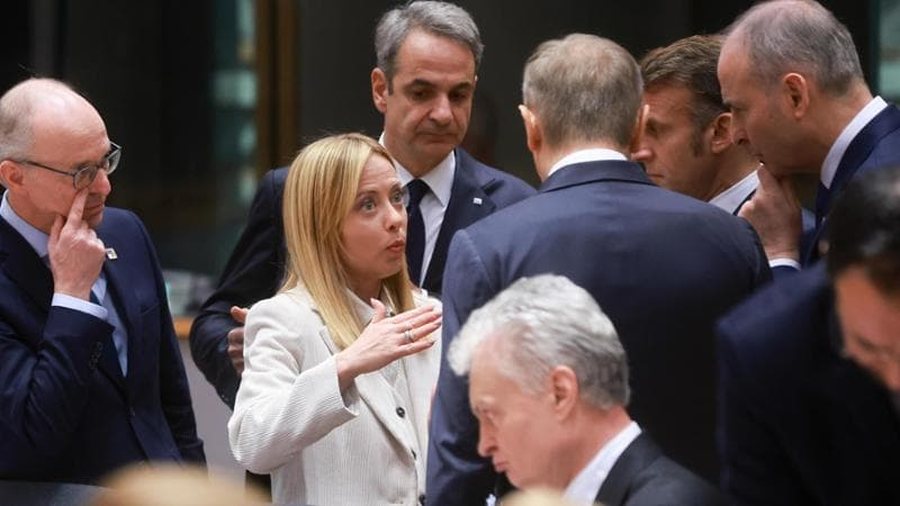
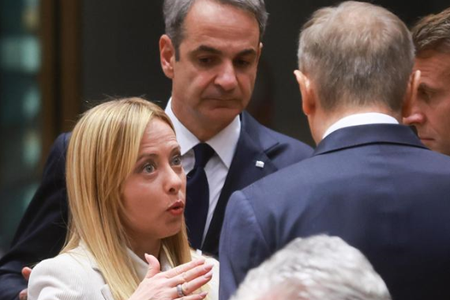
During the intense hours of the European Council, tensions between Italy and Germany have been evident over how the European Union should continue its financial support for Ukraine over the next two years. The use of frozen Russian assets and the possibility of taking on joint European debt have been at the heart of the debate.
According to Italian diplomatic sources, Corrie della Sera writes that Berlin is supporting the line of punishing Russia for war crimes using a "moral argument", but behind this stance, according to Rome, economic and political calculations are hidden, especially Germany's refusal to accept joint European debt to finance aid to Kiev.
The main discussions took place in the evening hours and after the leaders' dinner, when the issue of the use of frozen Russian assets and financial mechanisms for supporting Ukraine was addressed. The final decision was not reached until late at night, reflecting the complexity of the agreement, described by European sources as one of the most complicated of this legislature.
Italian Prime Minister Giorgia Meloni has expressed technical and legal reservations about the unblocking and use of Russian assets, positions she also presented in the Italian Parliament ahead of the summit. Italy, supported by the governing majority, including the League, has urged caution about the legal and financial consequences of such an action.
A key role in the negotiations has been played by Belgium, which holds around 185 billion euros in frozen Russian assets. According to Italian sources, Germany is exerting strong pressure in this direction, while Belgium has demanded strong guarantees for any decision related to the unblocking of these funds.
Italy has also put on the table an alternative plan, the so-called “plan B”, which envisages a European loan with national guarantees, without touching Russian assets and only with the participation of interested countries. This option is also viewed with interest by the United States, while it requires the unanimous approval of all 27 member states. In this context, Hungary’s position remains unclear, with the possibility that Budapest will not block the decision, but will not contribute directly to Ukraine either.
On the sidelines of the Council, according to the ANSA agency, an informal trilateral meeting was also held between European Commission President Ursula von der Leyen, German Chancellor Friedrich Merz, and Prime Minister Meloni, although Palazzo Chigi has not officially confirmed it.
Italy and Germany have entered this European Council with opposing positions on other issues, including the Mercosur agreement. In this case, Italy's request for a postponement prevailed, with the Commission temporarily canceling several initiatives to address the concerns of the Italian agricultural sector.
As for Ukraine, despite deep differences over financial instruments, neither Rome nor Berlin have questioned the need to continue supporting Kiev. However, the debate over the modalities and sources of this assistance has continued late into the night, reflecting internal divisions within the European Union.




Lini një Përgjigje