


 Shkruar nga Pamfleti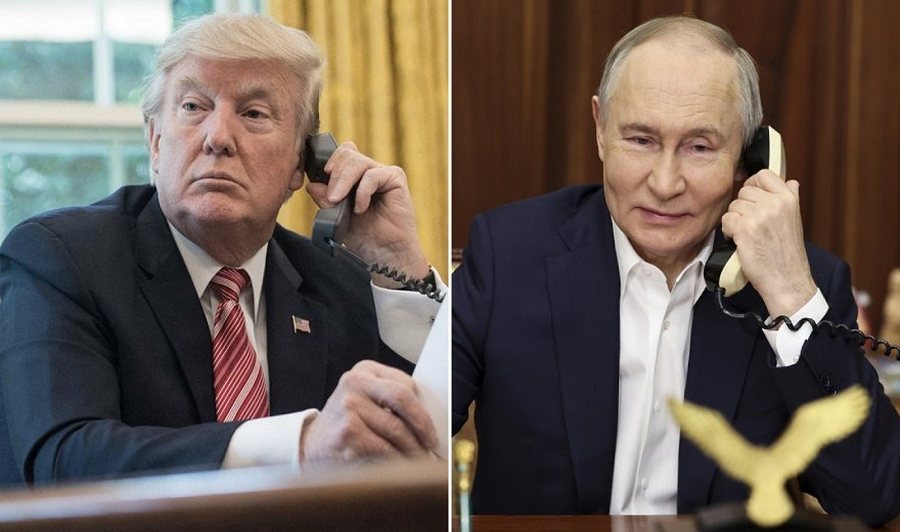
Behind the scenes, both can offer each other strategic distractions: Trump from the war and Putin from his ambitions in Europe!
The Trump-Putin phone call this week has everyone worried, especially Ukrainians. However, no one was surprised. Donald Trump has spent more time talking on the phone with Vladimir Putin than he has ever spent with NATO or G7 allies. Communication by phone has become routine between the two presidents. It all happens without Europeans noticing and does not seem to be given much importance.
Tariffs and defense budgets aside, Trump has little interest in getting the Europeans involved in either Iran's nuclear program or in pushing the Democratic Republic of Congo and Rwanda toward peace while securing access to their mineral wealth.
The same goes for Putin, even when Europe is directly concerned. This is happening over the heads of Ukrainians, and that is the real concern. The shadows of doubt from this phone call will tell the future of Kiev. This phone call just two days after the suspension of $7 million in US military aid, is not a good sign.
It all depends on what the two presidents actually discussed. Neither is worried about war, to tell the truth. In fact, it's a contest of who can lie the most convincingly. What we do know is what they want us to believe.
Putin will not retreat
The two once again spoke of a solution to the conflict, but Putin has no intention of backing down from his goals: more annexed territory, the overthrow of Zelensky, and a politically compliant Ukraine.
For Trump, this means that the issue must be resolved by Kiev and Moscow. The US president is increasingly distancing himself from any role as a mediator.
US President Donald Trump expressed disappointment after a phone call with his Russian counterpart, Vladimir Putin.
"I'm very disappointed with the conversation I had (on Thursday) with President Putin, because I don't think he's there ," Trump said.
He added that there are no signs from Putin that he wants to stop the three-year war with Ukraine.
"I don't think he's looking to stop, and that's too bad ," the US president continued.
Recall that Putin was the first to casually announce, during a visit to a trade fair of Russian goods, that: “Since I will be talking to the American president today, I will mention these brands to promote them in the American market.” Trade promotion is not usually a presidential issue, unless Trump is involved and the deal is worth $10 million or more.
US-Russia trade is currently at an all-time low. But perhaps something is changing. Trump has said more than once that restoring good relations with Moscow could lead to a strategic bilateral partnership in energy and economics. As a sign of goodwill, he completely lifted the tariffs announced on April 2.
However, it seems unlikely that Trump, who was busy trying to push his "big and beautiful" mega-budget through Congress, and Putin, had the time or desire to talk about future trade.
Behind the scenes, the two can offer each other strategic distractions: Trump from war and Putin from his ambitions in Europe; Putin from war in Iran and Trump from his ambitions for territory in the Western Hemisphere, such as Greenland or the Panama Canal.
Putin doesn't need Trump to "sell" Kiev. What he needs is for Trump to keep Ukraine in suspense. None of this is openly acknowledged, but neither is lifting a finger to end the war.
All he needs is for Trump to keep Ukraine on hold, delay promised aid, and avoid making plans for future support. Which is exactly what is happening.
After the sudden and inexplicable suspension of anti-aircraft systems and precision missiles, Kiev is guessing when and how much help will arrive. Meanwhile, Russia is intensifying its military offensive and launching heavy bombardments on Ukrainian cities and infrastructure.
Trump appeared to disagree with Emmanuel Macron's European approach during his phone call with the Russian president two days ago, in which the French president had asked for continued support for Ukraine. Macron's earlier call for an immediate ceasefire was ignored.
The Washington-Moscow phone call also serves another purpose: to sideline the Europeans, by mutual agreement. A mix of Moscow's military pressure, Washington's strategic disengagement, and Europe's limited ability to provide assistance is weighing on Kiev. This seems to be Ukraine's most difficult moment in three and a half years of war./ Adapted from "Pamphlet" by "WorldCrunch"




Lini një Përgjigje