


 Shkruar nga Enrico Franceschini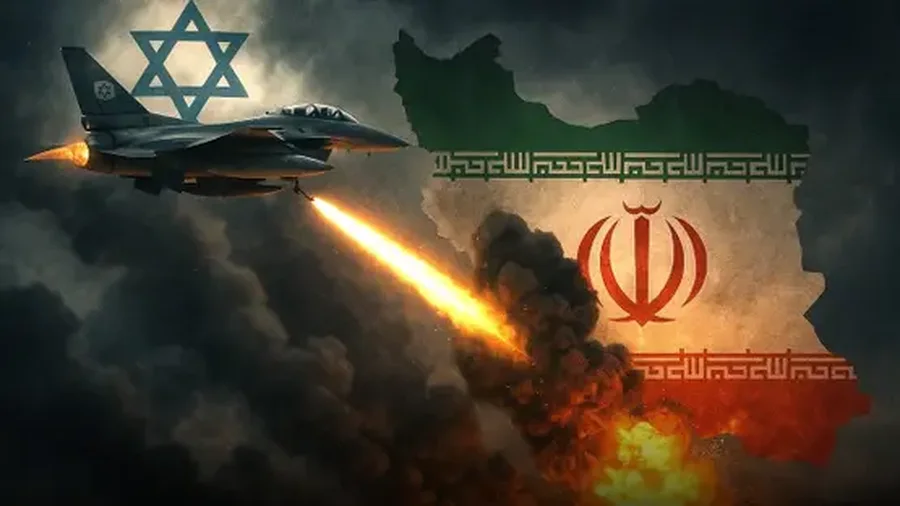
Cyprus, the island divided between Turkey and Greece, has always been a strategic crossroads...
Iranian drone attacks, British bombers rushing to shoot them down, French and Italian ships arriving to defend the island: with Cyprus's involvement in the war between Iran, Israel and the United States, Europe is practically entering the conflict. Located 70 kilometers south of Turkey and 100 kilometers west of Syria, the third largest island in the Mediterranean (after Sicily and Sardinia) has long been a tourist destination, a landing point for Russians seeking second passports and a hub for spies. In the past, it was the scene of a civil war between the Greek majority and the Turkish minority that divided it in two, an issue that is still unresolved. But membership in the European Union now calls our continent into military engagement in the struggle between Tehran, Jerusalem and Washington.
British military bases
Conquered by Alexander the Great in 334 BC, then part of the Roman Empire for centuries, then the Byzantine Empire, from 1473 to 1571, Cyprus remained under the rule of the Maritime Republic of Venice. After a long period of Turkish rule, it fell under the control of the Ottoman Empire and, following the Russo-Turkish War of the late 19th century, was assigned to the British Empire, of which it remained a colony until 1960, when it gained independence. However, the United Kingdom has since retained territorial possession of two small enclaves on the island, the military bases of Akrotiri and Dhekelia, which are included in the British Overseas Territories (the others include several islands in the Atlantic and Pacific, including the Cayman Islands, Bermuda, South Georgia and Pitcairn).
Royal Air Force (RAF) fighter-bombers, which patrol the eastern Mediterranean and parts of the Middle East for “defensive operations,” as British Prime Minister Keir Starmer called them, have been flying from those two military bases in recent days, shooting down several drones launched by Iran and its Lebanese ally, Hezbollah. After returning from one of these attacks, as reported this morning by the London press, a British pilot who had shot down a drone celebrated his success by drinking “a dawn beer” on the runway next to his fighter jet. Then he went to bed to prepare for another night shift.
Why is Cyprus targeted?
In June 2024, Sheikh Hassan Nasrallah, then leader of Hezbollah, the pro-Iranian Lebanese paramilitary movement, explicitly threatened to attack Cyprus if the island was used by Israel as a base to attack its militias. While there is no evidence that the Jewish state is using it, the threat became more concrete earlier this month as tensions between Iran, the United States and Israel increased, when the United Kingdom sent six F-35 fighter jets to the island, where ten Typhoon fighter jets were already stationed.
On March 1, an Iranian drone struck a hangar at the British military base in Akrotiri, prompting a partial evacuation. That same day, the RAF intercepted two other drones that were about to arrive on the island. On March 4, Larnaca International Airport was temporarily closed after an unidentified object was spotted flying from Lebanon, which was subsequently shot down by a Greek F-16 fighter jet. Iran’s Revolutionary Guard claims that the British bases are being targeted because the UK allows them to be used for supplies and maintenance for the US Air Force involved in the conflict, claiming that US air forces have been massively relocated to the island (in reality, Downing Street has so far banned Trump from using his military bases anywhere).
Cyprus is not a member of NATO, but Britain is, so an attack on its bases could justify invoking Article 5 of the Atlantic Alliance, which stipulates that an attack on one of its countries is tantamount to an attack on all and requires a collective response. “We will defend every inch of our territory,” NATO Secretary General Mark Rutte declared on March 3. In addition to reinforcing British forces by sending ships and aircraft to its bases, NATO’s defense of Cyprus has been increased by the mobilization of naval units from Greece, France, Italy, Spain and the Netherlands.
The 1974 civil war
Greeks and Turks have coexisted in Cyprus for centuries, but tensions between the two communities increased after the island's independence in 1960. In 1974, a coup by the ethnic Greek majority, supported by the military junta that plotted the coup in Athens, triggered military intervention by Turkey. After an initial phase in which its forces were limited to establishing a coastal outpost in the northernmost part of the island, and despite the subsequent fall of the coup-plotting junta in Greece, Turkey continued to illegally occupy 36 percent of Cyprus, a percentage of territory far greater than that occupied by the Turkish minority at the time. Thus was born the Turkish Republic of Northern Cyprus, although no country in the world recognizes it except Turkey.
Today, Cyprus has a total population of 1.377 million, of whom approximately 200,000 are Turkish Cypriots. Although de facto divided into two parts, a division that extends to the capital Nicosia, separated by several checkpoints through which passage is permitted, the whole of Cyprus has been de jure part of the European Union since 2004. That same year, in a referendum, a majority of Turkish Cypriots voted yes to the reunification of the island, but a majority of Greek Cypriots voted no. The victory of opposition candidate Tufan Erhurman in the 2025 presidential elections in the Republic of Northern Cyprus has reopened the possibility of reunification in the future.
Russians, Israelis and spies
In addition to Greeks and Turks, there is a third ethnic group making its presence felt in Cyprus: the Russians. Nearly 50,000 Russian citizens have moved to live in the Greek part of the island, taking advantage of a simplified system for obtaining a second citizenship, namely a European Union passport, which allows them to travel and settle in all EU countries. This right is particularly important since Russia's invasion of Ukraine has practically prevented holders of only Russian citizenship from obtaining a tourist or residence visa in Europe.
Attracted by the mild climate, tax breaks for foreign investors, business opportunities and a similar Orthodox religion, many Russians have found a second home in Cyprus. It has not always been well received by the local population, as the Russian presence has also brought with it the mafia, speculation and violence: money laundering and illegal activities cast a shadow over this large and visible minority, which lives in luxury residences and has set up a range of services, from restaurants to nightclubs, in their own language and to their own taste.
Another notable presence is Israel: the Jewish state is geographically nearby and historically, wealthy Israelis have sought refuge and tranquility in Cyprus during periods of war in their country, as well as a break from regional tensions. In 2023, the acquittal of five young Israelis in a trial in Cyprus, where they had been arrested and accused of raping a British woman, caused a sensation.
For all these reasons, there is still an important "community" on the island: between military bases, dirty business and ethnic tensions, Cyprus is a crossroads of international espionage in the Mediterranean. An ideal breeding ground for intelligence agencies from various countries, from the British MI6 to the Israeli Mossad, not to mention the Russian FSB, a successor to the Soviet KGB.




Lini një Përgjigje