


 Shkruar nga Gregorio Sorgi dhe Hans von der Burchard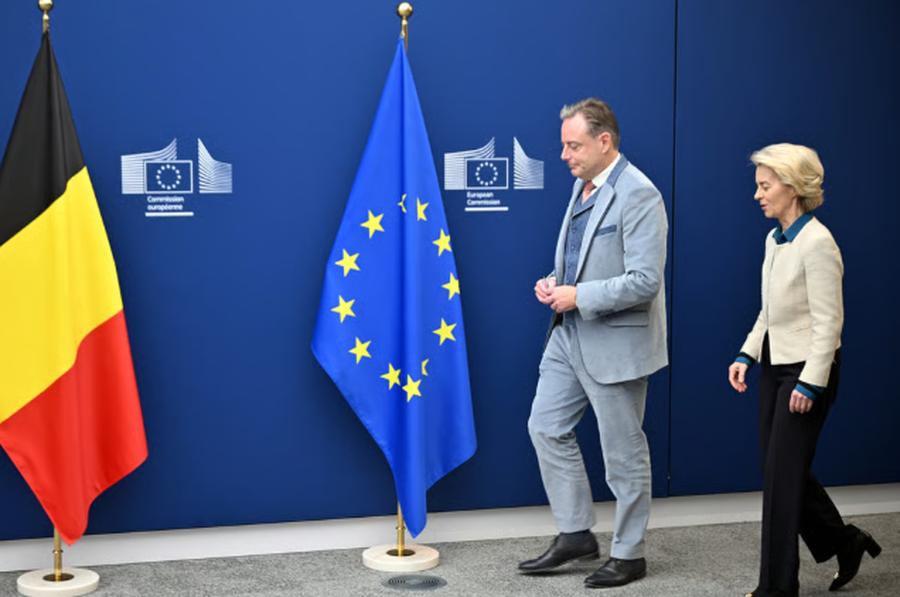
Belgium strongly denies that it is doing anything wrong.
Frustrated EU countries have increased pressure on Belgium to release 140 billion euros of frozen Russian reserves held in Brussels.
They accuse Bart De Wever's government of not fully disclosing what it does with the tax revenues from these assets.
The European Commission wants the 27 EU countries to agree to send Russian reserves as a reparations loan to Kiev at a crucial European Council meeting on December 18 in an effort to save the Ukrainian economy.
But Belgian Prime Minister Bart De Wever continues to resist. He even escalated his opposition on Thursday evening, saying that Belgium would be responsible if Moscow takes back the billions.
However, five diplomats from various European countries complained that Belgium appears to have a secondary agenda in holding Russia's money because of the tax generated.
They noted that Belgium was violating an international commitment, made last year, to reveal what it was doing with the tax from frozen reserves, which were supposed to go to Ukraine.
Diplomats said the money was still flowing into the Belgian national budget, making it impossible to determine whether Belgium is fully fulfilling its commitments to Kiev.
The diplomats spoke on condition that they - and the countries they represent - remain anonymous. Belgium strongly denies any wrongdoing.
If Belgium continues to oppose sending frozen funds to Kiev, diplomats said, EU member states will increasingly use meetings on the eve of the European Council summit to ask whether Belgium is benefiting from tax revenues or delaying payments to Ukraine.
They also questioned whether Belgium is using regular tax revenues to support Ukraine, as other European countries do, or is simply relying on taxes from Russian reserves.
“ In light of this continued procrastination, the question arises whether there is a real understanding that it is Europe’s security that is at stake here. And given the data, there are doubts whether Belgium is keeping its promise to send Ukraine its windfall tax profits ,” a senior EU diplomat told POLITICO.
The Belgian government rejected the diplomats' criticism, saying that all taxes earned from Russian reserves held at the Euroclear bank in Brussels are "destined" for Kiev.
She did not directly answer the question of whether everything had already been paid.
“ The Belgian government has pledged to allocate all corporate tax revenues from interest income on Russian immovable assets in Euroclear to support Ukraine. For 2025, these revenues are currently estimated at around 1 billion euros ,” a Belgian official said.
The Belgian government also insisted that the money paid to Ukraine came from Belgian federal government sources beyond the asset tax.
Since Russian assets are held by the Brussels-based depository, Euroclear, the Belgian government imposes a 25 percent corporate tax on profits generated from interest on the assets.
“This funding is entirely intended for Ukraine and goes towards providing military support, military equipment, training, etc., as well as limited civilian items such as ambulances ,” the Belgian official continued.
Part of the frustration among Belgium's EU allies is that this lack of transparency was supposed to be resolved last year.
In 2024, several Western countries accused the Belgian government of using part of the tax revenue from assets to cover ordinary budgetary needs. In response to this criticism, the previous Belgian government pledged to transfer the tax revenue to an EU and G7 financial instrument for Ukraine.
But Belgium never kept that promise. When asked why it was not using the special instrument to be transparent about the funds, the Belgian government did not respond.
A second senior EU diplomat, critical of Belgium, has an explanation for this.
" Tax revenues are already part of their domestic budget and they don't want to give them up ," he says./ Adapted from "Pamphlet", taken from "Politico"





Lini një Përgjigje