


 Shkruar nga Pamfleti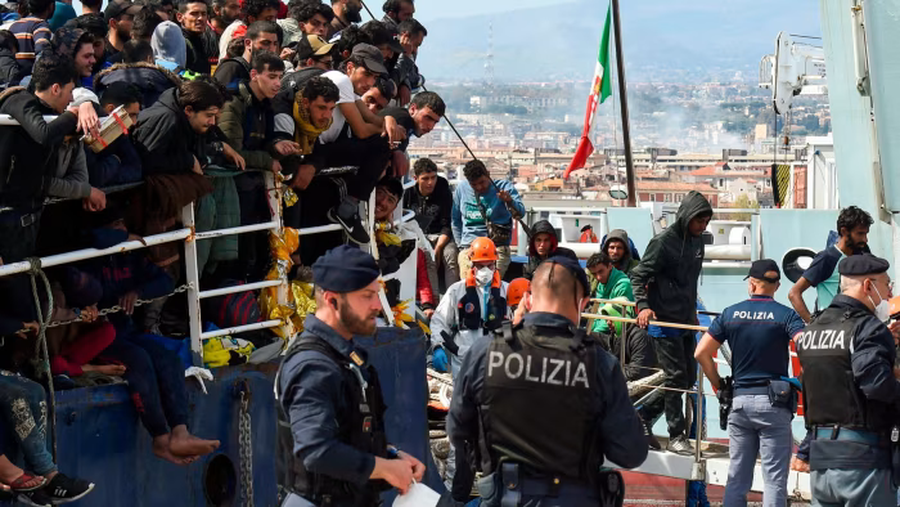
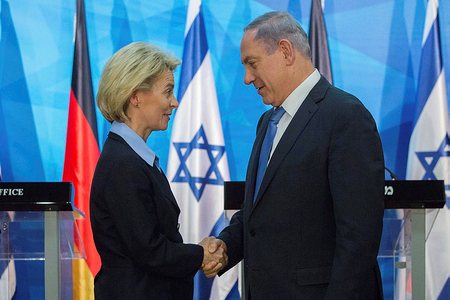
The European Commission's new concept of "safe third countries" should come as no surprise. After all, Ursula von der Leyen embraced the idea last year during her campaign for a second term as commission president.
The shift to the right in national politics in recent years and in last year's European Parliament elections has translated into a sharp conservative turn with numerous initiatives to restrict rights and accelerate the removals of asylum seekers.
Ultimately, it will be up to the courts to decide whether these more restrictive policies are in line with European and international law. But here’s an interesting question: can the EU, or at least its member states, succeed where Britain failed in creating a Rwanda-style policy for processing asylum claims abroad?
The influx of 2.5 million asylum seekers into the EU in 2015-16 profoundly changed European politics, fueling populist movements and pulling center-right parties to the right. A further wave of asylum seekers in the early 2020s has deepened governments’ determination to tighten measures. And it’s not just conservative governments. Germany’s center-right Chancellor, Friedrich Merz, this week praised Denmark’s Social Democratic Prime Minister, Mette Frederiksen, for her “truly exemplary,” some would call tough, approach to asylum.
Austria is the latest country to take unilateral steps. The 112,000 applications it received in 2022, the second-highest per capita number in the EU after Cyprus, helped propel the far right to victory in last year’s federal election. Now the main coalition government is taking tougher measures. It is suspending the right to family reunification for urgent national security reasons and says it will introduce a quota system next year for close family members who want to join refugees in the country.
Austrian Chancellor Christian Stocker told the FT last month that EU asylum law was no longer fit for purpose, despite being revised only last year with new rules yet to come into force. Like other European leaders, he suggested that the absolute right to protection in EU countries and the other rights that go with it were no longer appropriate in an era of mass population movements.
Brussels to the rescue
In fact, the European Commission has taken several measures to restrict asylum rights over the past six months, with Stocker's former colleague, Austrian Magnus Brunner, leading the effort as migration commissioner.
He gave Poland the green light to push back asylum seekers entering from Belarus, saying migration flows are being “weaponized” by Minsk and Moscow to destabilize EU countries. He says governments should have more flexibility to suspend asylum rights in such cases.
In March, the commission proposed new EU-wide rules to speed up the return of rejected applicants, with broader grounds for their detention and the possible creation of “return centres” in third countries. In April, the commission designated Bangladesh, Colombia, Egypt, India, Kosovo, Morocco and Tunisia as “safe countries of origin”, making it easier to return rejected asylum seekers from there, an idea supported by Italy’s Prime Minister, Giorgia Meloni.
And, most importantly of all, last month she proposed significant changes to the rules around so-called “safe countries”. This will make it easier for EU governments to return asylum seekers to countries they had travelled through. It will also allow them to send them under “agreement” to third countries where their claims can be assessed, similar to Britain’s failed Rwanda scheme. They will still have to show that the country was safe and that individual claims will be dealt with properly.
The commission’s new concept of a “safe third country” should come as no surprise. After all, Ursula von der Leyen embraced the idea last year during her campaign for a second term as commission president. But it has been denounced by human rights groups as a European attempt to offload the migration problem onto other, often poorer, countries that may already be bearing a heavier burden of refugees. See this assessment from the European Council on Refugees and Exiles and this one from Amnesty.
It still needs to be approved by the European Parliament and the Council of Ministers, but there are conservative majorities in both. If approved, it would give EU governments cover to seek deals with outsourcing. Denmark, for example, put its Rwanda scheme on hold until an agreement with the EU could be reached. But the plan is likely to be challenged in the courts.
There have been many heated discussions and proposals from European governments. But many of these efforts have failed due to legal obstacles or political differences. The French government passed a draconian immigration law at the end of 2023 with the support of the far right, only to have it overturned by the Constitutional Council. Meloni’s plan to lease part of its asylum processing to Albania has been repeatedly blocked by Italian courts. Far-right leader Geert Wilders brought down the Dutch government last week over its alleged failure to crack down on asylum applications.
Merz’s promise to turn back undocumented asylum seekers at Germany’s borders has been partially overturned by a court in Berlin. Like his Austrian and Polish counterparts, Germany’s Interior Minister, Alexander Dobrindt, says that asylum restrictions can be justified on urgent grounds of national security. What actually constitutes an emergency is likely to be a key legal battleground in the coming months.
Governments are openly expressing their frustration at what they see as anti-democratic legal restrictions on immigration policy. In a joint letter last month, Meloni, Frederiksen, Stocker and six other EU leaders criticised the European Court of Human Rights for rulings that had “far expanded the scope of the convention compared to its original intentions”. In response to their attack, Alain Berset, the secretary general of the Council of Europe, which oversees the court, defended the impartiality of its judges./ Adapted from “Pamphlet” by “Financial Times”





Lini një Përgjigje