


 Shkruar nga Pamfleti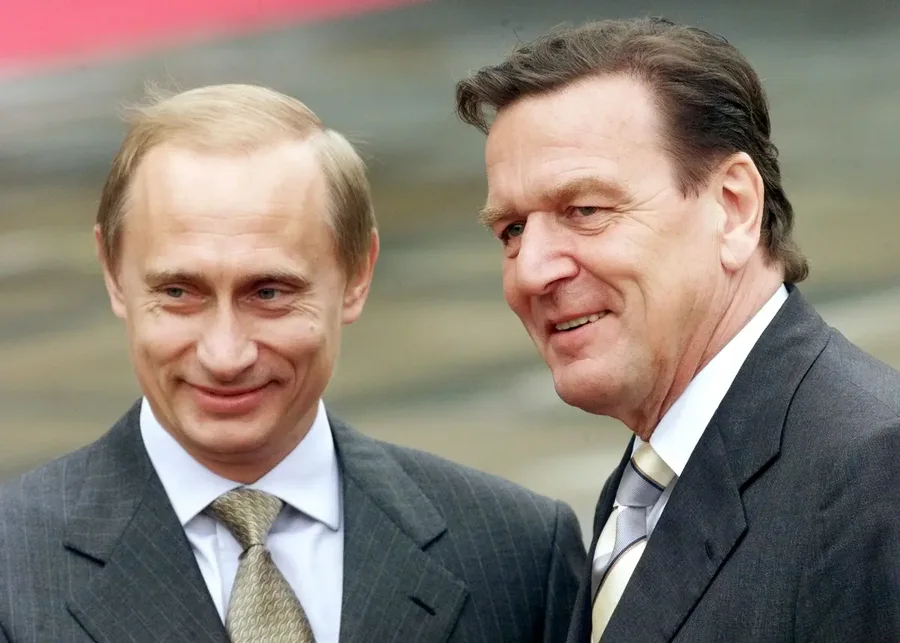
The mistakes in Germany's Russia policy under the Schröder and Merkel governments are too serious not to demand constant explanations. Former Stern Moscow correspondent Katja Gloger and her husband, former Spiegel editor-in-chief Georg Mascolo, present "an investigative history of German Russia policy."
The Kremlin guest house accommodation, with which Putin pampered the Schröder couple; Putin's speech to the German Bundestag in September 2001, with which he successfully charmed Berlin politicians; Germany's dependence on Russian gas; Merkel's rejection of the accession process of Ukraine and Georgia at the NATO summit in 2008; Nord Stream 2; Putin's annexation of Crimea and eastern regions of Ukraine; the failed Minsk I and Minsk II agreements, the list goes on...
However, what makes the book worth reading is its access to sources: both authors gained access to the relevant files of the Federal Foreign Office (FA) long before the usual embargo period for government documents expired. They analyzed publicly available sources from these agencies and spoke to politicians, representatives of the ministerial bureaucracy and business leaders. Only Schröder and Merkel declined to be interviewed. This material reveals, for the first time, the full extent of the "failure" of German policy towards Russia.
A previously unknown highlight is the German-Russian defense technology project, launched in March 2009 and pursued at the request of Russia, which was not even rejected by the German government. The plan was to create eight German combat training centers for the Bundeswehr in Russia, "the most modern training facilities in Europe" and, according to the then Defense Minister, de Maizière, "the heart of the Bundeswehr."
Deleted emails
Only after the annexation of Crimea in 2014 were the already advanced preparations for the project abandoned. Gloger and Mascolo's account makes it clear once again with what underhanded tactics and empty promises the German federal governments pushed the Nord Stream 2 project forward: against the will of the EU Commission, almost all EU member states and the US administrations under Trump I and Biden. Scholz remained loyal to the project until the invasion of Ukraine in February 2022, before Habeck, as the responsible minister, finally refused to grant the necessary certification.
In their research, the authors encountered the usual difficulties: deleted messages and emails, important instructions written only on easily removable sticky notes that had disappeared, and a chancellor who, at best, indicated her approval with a green line in the margins of documents. The people involved in the relevant processes had different memories of the events or no longer remembered them at all.
When asked whether the German government should have signaled resistance to Putin's aggressive policies much earlier, Steinmeier's former Secretary of State answers: Yes, of course, "but who in Berlin, Brussels and Washington was ready to do this then?" This statement is false. The Greens, all of Brussels and Washington were against the Nord Stream 2 project, but Gloger and Mascolo conveniently overlook this fact.
Without a doubt in Kiev
Former Chancellor Scholz personally presented Gloger and Mascolo's book in Berlin. The "agreement" between politics and the media is evident here: the content in the critique provides valuable channels of communication with key decision-makers for the future. A sometimes uncritical reproduction of conversations and documents runs through the entire book.
And this culminates in a rather inaccurate general conclusion: the government apparatus and ministries correctly assessed and analyzed Putin's policies. But it was the politicians themselves who ignored this expertise and therefore failed. It is said that the Federal Intelligence Service (BND) already possessed an accurate profile of Putin in the 1990s. At the same time, the BND did not take reports from American intelligence agencies about the concentration of tens of thousands of Russian soldiers very seriously.
The BND’s “competence” culminated in its chief’s trip to Kiev in February 2022, completely unaware of the situation, and then his difficult extraction from Kiev the night after the invasion. The Foreign Ministry also ignored several developments in Putin’s policies and rule. Anyone who did not see Russia through the lens of Schröder and Steinmeier’s policies was unlikely to advance his career there.
The battle for the dominant interpretation of the failures of German policy towards Russia is at its peak. The files of the Federal Chancellery and the Ministry of Defense remain sealed, while the Foreign Ministry is publishing some files in advance. Given their importance for current politics, a parliamentary investigation and a radical shortening of the embargo period for these files, as demanded by the authors themselves, are long overdue. /Adapted from NZZ /


Lini një Përgjigje