


 Shkruar nga Pamfleti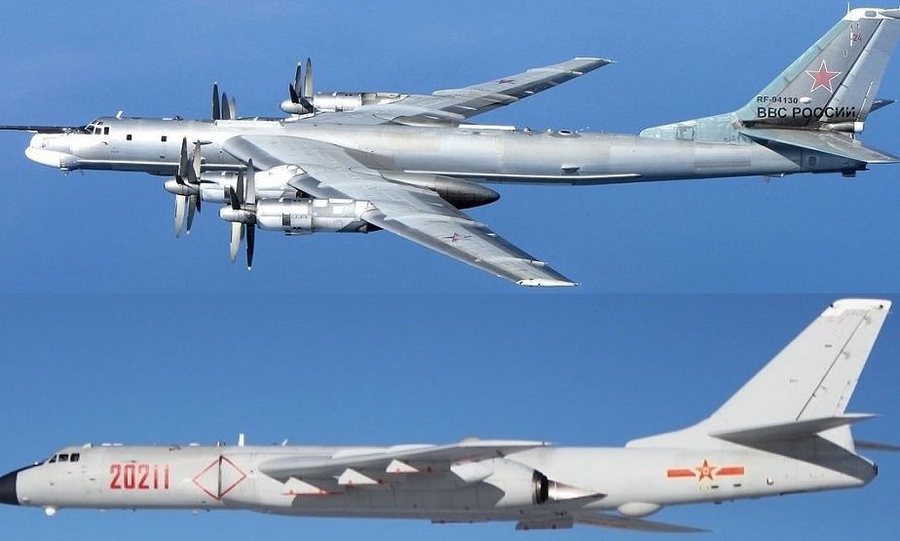
The People's Liberation Army Air Force of China and the Russian Aerospace Forces conducted an air patrol in the Asia-Pacific region, at a time of rising tensions in Northeast Asia and the ongoing conflict between Russia and NATO in Ukraine.
Chinese H-6K medium-range bombers and Russian Tu-95MS intercontinental bombers conducted an eight-hour air patrol over the Sea of Japan, East China and Western Pacific Oceans. China and Russia are the only countries that currently produce strategic bombers, the H-6 and the intercontinental Tu-160 respectively. Along with the United States, which has not produced bombers since 2000, they are the only countries that have such aircraft.
Coordinated military exercises over the western Pacific by Russian and Chinese long-range bombers are an undeniable display of joint strategic power.
????RUSSIA–CHINA BOMBER FLEET JUST SENT A MESSAGE TO THE WEST
— Jim Ferguson (@JimFergusonUK) December 10, 2025
Russian and Chinese long-range bombers have conducted coordinated military exercises over the western Pacific—an unmistakable display of joint strategic power.
This was not routine flying.
It was strategic signalling:… pic.twitter.com/HwwhLC2Haj
In short, as many analysts agree, Beijing and Moscow are openly testing interoperability, common goals, and coordinated operations. The timing coincides with rising tensions over Taiwan and Japan.
And the question that arises is: when the bomber fleets of the two nuclear powers move as a formation over the Pacific, should the West interpret this as evidence for regional escalation?
Joint patrols in the past
As militarywatchmagazine.com reports, China and Russia have conducted several joint bomber patrols since the late 2010s, with a significant milestone in their development being the deployment of H-6 bombers from Russian soil and, in July 2024, the first patrol with Chinese bombers operating off the coast of Alaska using bases in Russia.
The H-6's flight range has been significantly improved during its service, with the inclusion of new, more efficient engines and the use of more advanced composite airframe materials, increasing fuel efficiency and carrying capacity.
Chinese aircraft have also incorporated increasingly sophisticated and long-range missiles, including cruise missiles and ballistic missiles, enabling attacks throughout the Pacific, including the continental United States. The entry into service of the YY-20 refueling aircraft and the rapid increase in the number of aircraft available have also provided aerial refueling capabilities, allowing the H-6 to operate at greater distances in the Pacific.








Lini një Përgjigje